Could US Senator Mark Warner’s Warnings Set a Dangerous Precedent in Venezuela and Greenland?
Synopsis
US Senator Mark Warner raises alarms about the Trump administration's actions in Venezuela, warning of dangerous international precedents and implications for Greenland. He emphasizes the need for congressional oversight and discusses the potential consequences of military interventions, shedding light on crucial geopolitical issues that could reshape international relations.
Key Takeaways
Senator Mark Warner warns about the implications of U.S. actions in Venezuela.
Military intervention risks undermining international norms.
Concerns raised over the potential chaos in Venezuela's economy.
Discussion on Greenland highlights the complexities of U.S. foreign policy.
Warner emphasizes the need for congressional oversight in military decisions.
Washington, Jan 9 (NationPress) Expressing significant alarm over the actions of the Donald Trump administration in Venezuela, a prominent Democratic Senator warned on Thursday that these moves could establish a perilous international precedent. He also indicated that the recent discussions surrounding Greenland now hold more substantial ramifications in light of these developments.
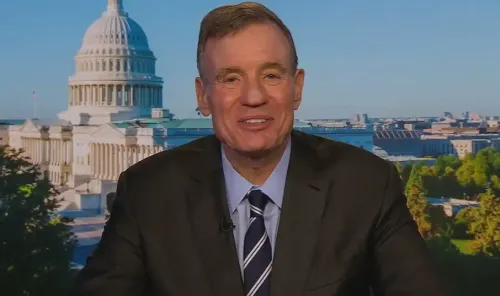
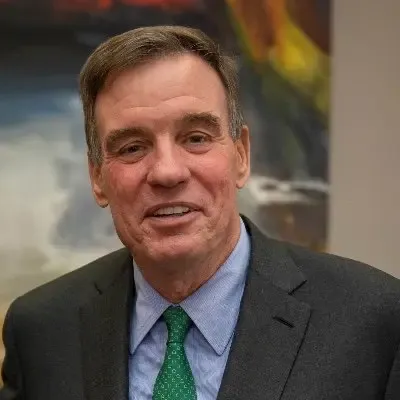
Senator Mark Warner, who chairs the Senate Select Committee on Intelligence, informed reporters that he had been briefed on the situation in Venezuela. He acknowledged that President Nicolás Maduro is indeed “a bad actor,” and that the region would be “better off without him.”
Nevertheless, he emphasized that the efforts to oust Maduro represent “a military operation” rather than a lawful one, invoking the War Powers Act and necessitating congressional oversight.
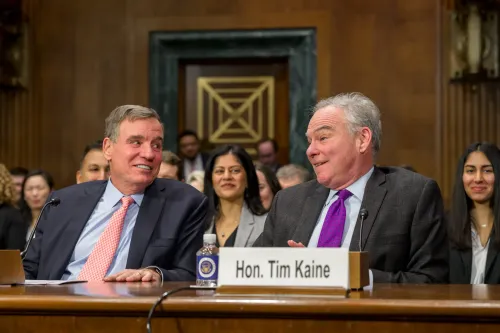
Warner, also a co-chair of the Senate India Caucus, expressed his intention to support a War Powers Resolution spearheaded by Senator Tim Kaine, which would mandate the President to obtain congressional approval prior to any additional actions in Venezuela.
He raised concerns about whether the United States should permit the President to “govern the nation” without legal or fiscal limitations, warning that such a strategy could bypass Congress’s constitutional responsibilities.
In addition to legal issues, Warner pointed out that the Venezuela operation poses a risk to international standards. He noted that forcibly removing a foreign leader based on U.S. beliefs about that leader's transgressions sets a precedent that could undermine global safeguards.
“There is undeniably a precedent being established that diminishes America’s capacity to argue from a moral standpoint,” he commented, referencing hypothetical scenarios involving Russia or China.
Warner also questioned the long-term implications and strategy of U.S. involvement in Venezuela. He remarked that the administration has claimed Venezuelan oil would finance the operation, yet stated that the U.S. typically does not act as a nation-state to seize and exploit another country’s resources. He queried how long the U.S. would maintain a substantial naval presence off Venezuela’s coast and what the daily expenses would be for American taxpayers.
He cautioned that Venezuela's fragile economy could descend into chaos if government employees ceased receiving pay, raising the possibility of U.S. intervention to restore order. Warner mentioned that these unresolved matters were among the critical points he was still trying to clarify.
Addressing the issue of Greenland, Warner remarked that President Donald Trump’s earlier comments about acquiring the territory were once dismissed as jokes but now seem more serious in light of recent foreign policy actions. He noted that the U.S. already functions under a treaty with Denmark that permits a significant military presence and access, including a base in Greenland.
Warner questioned the rationale behind the administration adopting what he described as a threatening stance when existing agreements are in effect. He cautioned that any aggressive maneuver toward Greenland would jeopardize the NATO alliance, asserting that if the U.S. were to intimidate a smaller ally “merely because it desires a portion of its territory,” it would undermine the alliance itself.
He stated that U.S. military actions against Greenland would “ruin NATO,” which he called the most successful alliance since World War II, arguing that such an outcome would only benefit adversaries like Russia, China, and Iran. Warner concluded by stating that he believes the majority of lawmakers, including Republicans, would oppose a military venture against a NATO ally.
Point of View
I find Senator Warner's insights crucial as they highlight the delicate balance of power and the need for accountability in U.S. foreign policy. His call for congressional oversight reflects a broader concern for maintaining democratic processes while navigating complex international challenges. The implications of these actions could resonate far beyond Venezuela.
NationPress
19 Sept 2026
Frequently Asked Questions
What did Senator Warner say about Venezuela?
Senator Warner expressed grave concerns over the Trump administration's actions in Venezuela, emphasizing that military intervention could set a dangerous precedent.
Why is Greenland relevant in this discussion?
Warner indicated that discussions about Greenland now have more serious implications due to U.S. actions abroad, warning against aggressive posturing.
What does Warner propose regarding U.S. military action?
He supports a War Powers Resolution that would require the President to seek congressional approval before any further military action in Venezuela.