Is the Tax Rate on Air Purifiers Exclusively the GST Council's Domain?
Synopsis
In a significant legal stance, the Centre has asserted in the Delhi High Court that the GST on air purifiers is solely managed by the GST Council. This raises critical questions about the intersection of judicial authority, federalism, and public health, making it a pivotal issue for citizens concerned about air quality.
Key Takeaways
The GST Council has exclusive authority over GST rates and classifications.
Judicial intervention in tax matters can violate constitutional principles.
The current GST on air purifiers is 18 percent , not the highest slab.
Public interest litigation raises concerns about regulatory reclassification .
Air quality issues are pressing, affecting public health and safety.
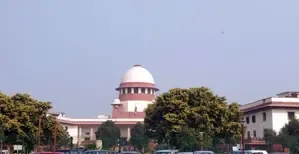
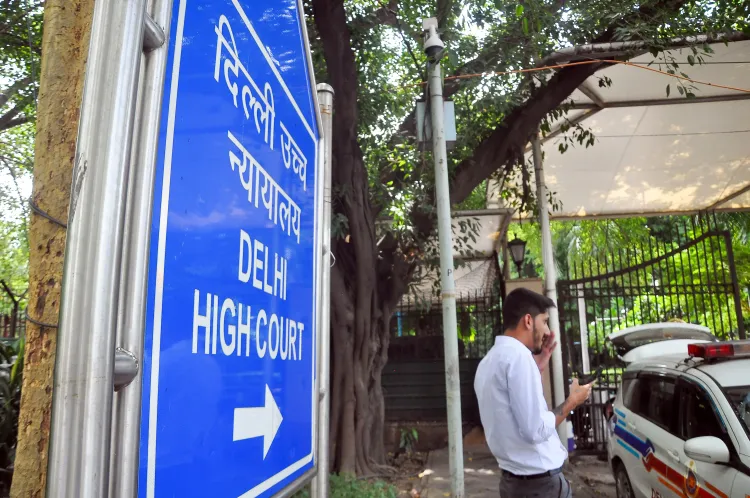
New Delhi, Jan 9 (NationPress) The Centre informed the Delhi High Court that issues concerning the rate, categorization, and potential reduction of Goods and Services Tax (GST) on air purifiers are strictly under the jurisdiction of the GST Council. It warned that any judicial intervention on these matters would be both constitutionally improper and infringe upon the principles of cooperative federalism.
In a comprehensive counter-affidavit submitted in response to a public interest litigation (PIL) advocating for a decrease in GST on air purifiers and their classification as “medical devices”, the Union government stated that the GST Council is a constitutional entity established under Article 279A of the Constitution and is the only body authorized to make recommendations on GST rates, exemptions, and classifications.
The Centre emphasized that the constitutional framework does not allow for any other organization or authority to make competing recommendations on matters specifically assigned to the GST Council. It asserted that any court-ordered determination of GST rates would circumvent the carefully structured constitutional process.
“It is established legal precedent that courts cannot replace constitutionally designated decision-makers, especially regarding economic policy and fiscal structuring,” the affidavit stated.
“Decisions regarding GST, especially concerning rates, emerge from a complex process of cooperative federalism, balancing the fiscal interests of both the Union and the States. Judicial involvement in such issues would likely disrupt this constitutionally mandated process and upset the federal balance,” the response document elaborated.
It warned that any instruction from the Delhi High Court to alter GST rates, call a meeting of the GST Council, or force the Council to evaluate or adopt a specific outcome would be tantamount to the Court overstepping its authority and infringing upon the principle of separation of powers.
Regarding the classification system, the Centre noted that air purifiers are classified under tariff heading 8421, which incurs an 18 percent GST, while medical devices are categorized under headings 9018 to 9022, attracting a reduced rate of 5 percent following recent adjustments by the GST Council.
“Air purifiers do not fall under the highest tax slab; they are subjected to an 18 percent GST, whereas the highest slab is 40 percent,” the affidavit clarified. The Union government added that the issue of GST on air purifiers is currently under parliamentary consideration, following recommendations from the Department-related Parliamentary Standing Committee on Science and Technology, Environment, Forests, and Climate Change.
“Addressing the current petition at this time would lead to a parallel examination of issues that are already pending under parliamentary review,” the affidavit stated.
Describing the PIL as a “colorable and motivated effort”, the Centre asserted that the true aim of the PIL was not to reduce GST but rather to achieve a regulatory reclassification of air purifiers as medical devices. “The arguments for accessibility and public health serve as a mere pretext to pursue a fundamentally different regulatory goal,” the affidavit claimed, warning that such reclassification could limit public access and foster monopolistic conditions.
The matter is set for a hearing tomorrow in the Delhi High Court.
During the previous hearing on December 26, a Vacation Bench led by Justices Vikas Mahajan and Vinod Kumar granted the Centre ten days to submit its counter-affidavit after Additional Solicitor General (ASG) N. Venkataraman, representing the Union government, requested additional time for a detailed response.
During the proceedings, ASG Venkataraman raised significant concerns regarding the validity of the PIL filed by advocate Kapil Madan, arguing that the petition was “loaded” and had been submitted without including the Union Health Ministry, despite seeking directives that would impact public health policy.
“We convened an urgent meeting yesterday. We have reservations about this PIL. We are uncertain about the motivations behind this petition. This does not qualify as a PIL. The health department is not even a party to it,” the Centre's legal representative stated.
On the contrary, the petitioner countered the Centre's objections, referencing the recommendations from the Parliamentary Standing Committee and asserting that air purifiers are being taxed incorrectly under the applicable GST slab.
“A straightforward reading of the notification indicates that they belong to a different category and are being improperly taxed,” advocate Madan argued, emphasizing that any delay would only exacerbate the challenges faced by residents in the national capital.
However, the Delhi High Court noted that it could not issue final directives in the matter without first receiving a counter-affidavit. “It is not feasible for the court to make a determination without a counter-affidavit,” the Vacation Bench remarked.
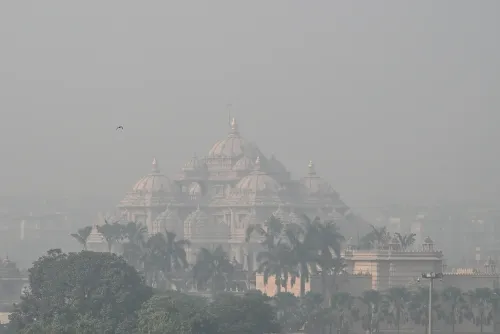
Previously, a Bench led by Chief Justice Devendra Kumar Upadhyaya and Justice Tushar Rao Gedela had urged the GST Council to convene a meeting promptly to deliberate on the possibility of lowering the 18 percent GST on air purifiers, stating that a 5 percent rate could be warranted given the deteriorating air quality in the Delhi-NCR region.
Chief Justice Upadhyaya had criticized the Centre over the escalating air pollution crisis in Delhi, suggesting that if clean air cannot be guaranteed for citizens, at a minimum, the GST on air purifiers should be reduced. “This is the least you can do. Every citizen needs fresh air. If you cannot provide it, at least decrease the GST. Offer a temporary exemption for 15 days and treat this situation as an emergency,” he instructed the Centre's legal team.
Point of View
It's vital to underscore that the current discourse surrounding the GST on air purifiers highlights the delicate balance of authority between the judiciary and legislative bodies. The emphasis should remain on ensuring public health while respecting constitutional mandates. A collaborative approach can lead to solutions that benefit all stakeholders without compromising the established federal framework.
NationPress
1 Oct 2026
Frequently Asked Questions
Why is the GST on air purifiers a legal issue?
The GST on air purifiers has become a legal matter because the Centre argues that any changes to the tax rate should be made solely by the GST Council, emphasizing the importance of constitutional processes.
What is the current GST rate on air purifiers?
Air purifiers are currently subjected to an 18 percent GST, while medical devices have a reduced rate of 5 percent.
What was the Centre's stance in the Delhi High Court?
The Centre maintained that judicial intervention in determining GST rates would disrupt the cooperative federalism framework established by the Constitution.
What are the implications of the current PIL?
The PIL seeks to lower GST rates on air purifiers, but the Centre argues that its true aim is to reclassify them as medical devices, which could have broader regulatory implications.
How does this issue impact public health?
With worsening air quality in urban areas, the taxation of air purifiers directly affects accessibility and affordability, making this issue critical for public health.