Should the GST Council Meeting on Air Purifiers Be Held Physically?
Synopsis
The Centre asserts that GST Council meetings regarding air purifiers must be held in person, as the Delhi High Court hears a PIL for their classification as medical devices. The case highlights the urgent need for action against worsening air quality in Delhi, with implications for public health policy.
Key Takeaways
GST Council meetings must be held physically.
Air purifiers are deemed essential during pollution crises.
High GST on air purifiers limits accessibility.
Legal processes need to align with public health needs.
Next hearing is set for January 9, 2026.
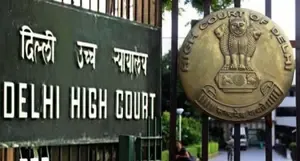
New Delhi, Dec 26 (NationPress) The Central government informed the Delhi High Court on Friday that any meeting of the Goods and Services Tax (GST) Council regarding the reduction or elimination of GST on air purifiers must occur in person, rather than via video conferencing.
A Vacation Bench, comprising Justices Vikas Mahajan and Vinod Kumar, granted the Centre ten days to submit its counter-affidavit. This request was made by Additional Solicitor General (ASG) N. Venkataraman, representing the Union government, who asked for time to provide a comprehensive response to a public interest litigation (PIL) that seeks to classify air purifiers as “medical devices.”
“Mr. ASG representing the Union of India stated that the GST Council meeting, if convened, must be physical and cannot be conducted via video conferencing. He also indicated that a detailed counter affidavit needs to be presented,” recorded the Justice Mahajan-led Bench, allowing the petitioner the freedom to submit a rejoinder subsequently.
During the proceedings, ASG Venkataraman expressed significant concerns regarding the maintainability of the PIL filed by advocate Kapil Madan, arguing that the petition was “loaded” and had been submitted without involving the Union Health Ministry, despite its implications for public health policy.
“We held an urgent meeting yesterday. We have concerns about this PIL. We are uncertain about the motives behind this petition. This is not a PIL. The health department is not even a party,” the Centre's legal representative stated.
Emphasizing that the GST Council is a constitutional authority featuring representatives from all states and union territories (UTs), ASG Venkataraman asserted that any voting or discussion must take place physically.
“All states and UTs must reach a consensus. The Finance Ministers are members. If any decision requires a vote, it can only be executed in person,” he contended.
The ASG warned that instructing a reduction in GST without adhering to the established protocol could result in a “Pandora's box.”
“A Parliamentary committee has made recommendations. There is a procedure to follow. We are not making any assertions at this moment. Whether we will reduce the GST or not is still undecided. A constitutional issue is at stake,” the Centre's lawyer added, proposing that the PIL could be viewed as a representation to the GST Council.
Conversely, the petitioner countered the Centre's objections by referencing the recommendations of the Parliamentary Standing Committee on Environment, Forest, and Climate Change, arguing that air purifiers are incorrectly taxed under the current GST category.
“A straightforward reading of the notification indicates that they belong to a different schedule and are being improperly taxed,” advocate Madan stated, adding that any delay would extend the suffering of residents in the national Capital.
However, the Delhi High Court noted that it could not issue definitive directions on the issue without a counter-affidavit.
“At this moment, it is not feasible for the court to make a decision without a counter affidavit,” remarked the Vacation Bench.
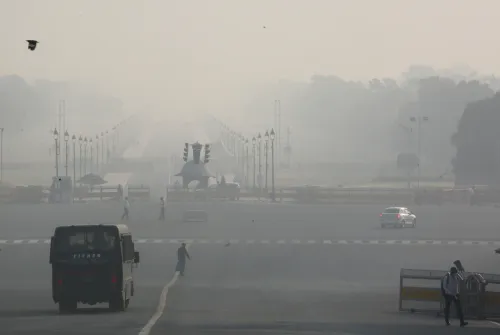
The matter is now scheduled for further hearing on January 9, 2026. Earlier, a Bench led by Chief Justice Devendra Kumar Upadhyaya and Justice Tushar Rao Gedela urged the GST Council to meet promptly to contemplate reducing the 18% GST on air purifiers, stating that a 5% rate could be more suitable given the deteriorating air quality in Delhi-NCR.
The Bench criticized the Centre for the escalating air pollution crisis in the national Capital, asserting that if clean air cannot be guaranteed for citizens, at the very least, the GST on air purifiers should be diminished.
“This is the least you can do. Every citizen deserves access to fresh air. If you cannot provide it, then at least lower the GST. Consider a temporary exemption for 15 days and treat this situation as an emergency,” it emphasized to the Centre's counsel.
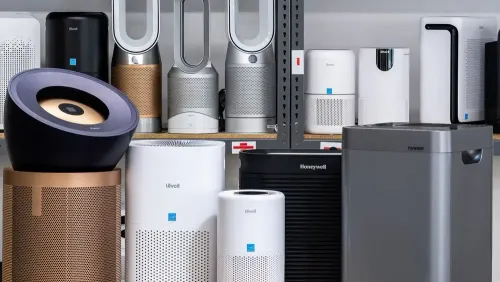
The PIL submitted to the Delhi High Court claimed that air purifiers have become essential during extreme pollution levels, and imposing the highest tax rate makes them financially unfeasible for many.
According to the petition, air purifiers equipped with High-Efficiency Particulate Air (HEPA) filters serve a preventive medical function by reducing exposure to PM2.5, PM10, and other harmful pollutants that worsen respiratory and cardiovascular conditions.
The plea, filed by advocates Gurmukh Singh Arora and Rahul Matharu, argued that levying an 18% GST on such devices, even when public health advisories acknowledge their necessity during pollution crises, contradicts the right to life under Article 21 of the Constitution.
Point of View
It's crucial to highlight the intersection of health and policy in this case. The call for a meeting to discuss air purifiers reflects the urgent need to address public health in the face of rising pollution. It is essential that legal processes align with our societal needs, ensuring that citizens have access to necessary health devices without excessive financial burdens.
NationPress
19 Sept 2026
Frequently Asked Questions
Why must GST Council meetings be held physically?
The Centre argues that the GST Council, as a constitutional body, requires physical meetings for voting and deliberation due to its structure, which includes representatives from all states and union territories.
What is the status of the PIL regarding air purifiers?
The PIL seeks to classify air purifiers as medical devices and to lower or eliminate the GST on them, highlighting their necessity amidst severe pollution levels.
What are the potential implications of the GST on air purifiers?
Imposing a high GST on air purifiers makes them financially inaccessible to many, contradicting public health advisories that recognize their importance during pollution emergencies.
When is the next hearing for this case?
The Delhi High Court has scheduled the next hearing for January 9, 2026.
What recommendations did the Parliamentary committee make?
The Parliamentary Standing Committee on Environment, Forest and Climate Change recommended reconsideration of how air purifiers are taxed, suggesting they be categorized differently.