Should the Delhi HC Lower the 18% GST on Air Purifiers?

Synopsis
The Delhi HC has taken a decisive step in addressing the alarming air quality crisis by urging the GST Council to reconsider the hefty 18% GST on air purifiers. As pollution levels rise, the court emphasizes the need for immediate action to make these essential devices more accessible to the public.
Key Takeaways
Delhi High Court emphasizes urgency in addressing air quality.
Potential reduction of GST on air purifiers could enhance accessibility.
Government urged to consider public health during tax policy decisions.
Need for swift action in light of environmental crises.
Public interest litigation highlights vital health considerations.
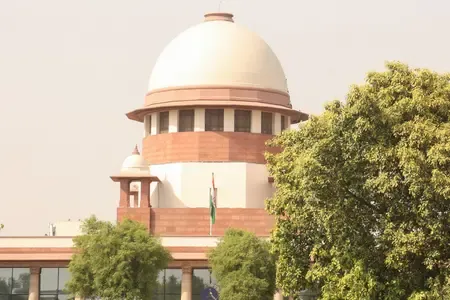
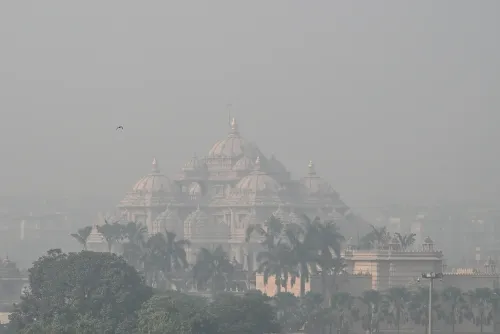
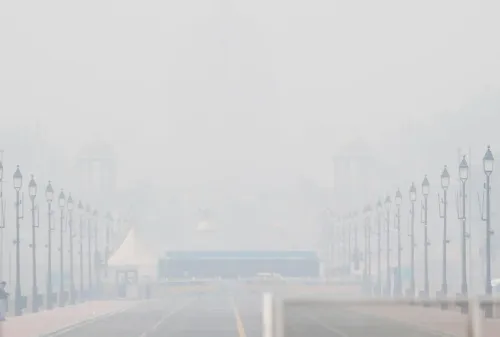
New Delhi, Dec 24 (NationPress) Acknowledging the deteriorating air quality in the national capital and its neighboring NCR regions, the Delhi High Court on Wednesday urged the Goods and Services Tax (GST) Council to hold a meeting promptly to discuss the possibility of reducing the current 18% GST on air purifiers.
The Bench, led by Chief Justice Devendra Kumar Upadhyaya and Justice Tushar Rao Gedela, noted that given the essential functions of air purifiers, a 5% GST rate could be more appropriate.
During the proceedings, the court was reviewing a public interest litigation (PIL) filed by advocate Kapil Madan, who requested that air purifiers be classified as medical devices and that the GST be lowered from 18% to 5% due to the ongoing air pollution crisis.
The Delhi High Court acknowledged a report from the Parliamentary Standing Committee on Environment, Forest and Climate Change, which suggested that the government should either eliminate or reduce the GST on air purifiers and HEPA filters.
In response to the petition, the court stated, “Considering the concerns raised and the standing committee's recommendation, we direct that the GST Council should address the matter of lowering or abolishing GST on air purifiers as soon as possible.”
The court recognized the Union government's argument that the GST Council, comprising members from all states and Union Territories, may require time to convene. Nonetheless, the Delhi High Court emphasized the urgency of the situation.
“Given the air quality crisis in Delhi and surrounding areas, it is imperative for the GST Council to meet at the earliest,” the Bench ordered, indicating that if an in-person meeting was unfeasible, it could be conducted via video conference.
During the afternoon session, the Centre's counsel stated that any tax rate decision must be made by the GST Council, which is led by the Union Finance Minister.
The case is slated for further discussion on December 26, during which the Union government counsel will be required to report on how soon the GST Council can convene to make a decision.
Earlier in the day, the Delhi High Court criticized the Centre for the worsening air quality, asserting that if clean air cannot be guaranteed for residents, at the very least, the GST on air purifiers should be reduced.
“This is the bare minimum you can do. Every citizen deserves clean air. If you cannot provide it, at least lower the GST. Consider a temporary exemption for 15 days and classify this situation as an emergency,” it was remarked.
The Bench also questioned why the Centre was not using emergency powers to offer temporary relief.
“Why can’t this be brought before the GST Council immediately? When is the GST Council meeting? Is this proposal being considered?” it inquired, scheduling the matter for a further hearing at 2:30 p.m. to allow the Centre's counsel to gather necessary instructions.
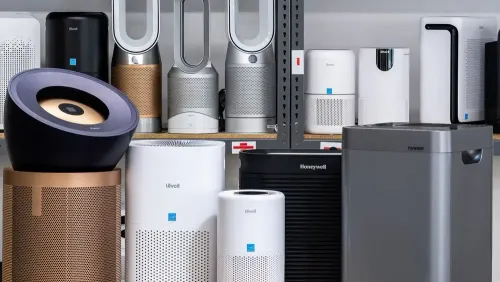
The PIL argues that air purifiers equipped with High-Efficiency Particulate Air (HEPA) filters serve a preventative medical function by minimizing exposure to PM2.5, PM10, and other harmful pollutants that can worsen respiratory and cardiovascular issues.
According to the petition, air purifiers have become essential during high pollution periods, and imposing the maximum GST rate makes them unaffordable for many individuals. The petition, submitted by advocates Gurmukh Singh Arora and Rahul Matharu, contends that the 18% GST on these devices, despite public health advisories recognizing their importance during pollution emergencies, infringes upon the right to life as stated in Article 21 of the Constitution.
Point of View
It's crucial to note that this call from the Delhi High Court reflects a growing recognition of the public health crisis posed by air pollution. Lowering the GST on air purifiers could significantly improve accessibility for many citizens. The court's emphasis on the urgency of the situation is a timely reminder of the need for swift policy responses in the face of environmental challenges.
NationPress
19 Sept 2026
Frequently Asked Questions
What is the current GST rate on air purifiers?
The current GST rate on air purifiers is 18% .
Why is the Delhi High Court addressing the GST on air purifiers?
The Delhi High Court is addressing the issue due to the critical air quality situation in Delhi and the need for affordable access to air purifiers.
What did the Parliamentary Standing Committee recommend?
The Parliamentary Standing Committee recommended either abolishing or reducing the GST on air purifiers and HEPA filters.
When is the GST Council expected to convene?
The GST Council is expected to convene at the earliest possible time to discuss the matter.
How do air purifiers help public health?
Air purifiers equipped with HEPA filters reduce exposure to harmful pollutants, thereby helping to prevent respiratory and cardiovascular diseases.