Will Hybrid Hearings Help as Delhi-NCR Faces 'Very Poor' Air Quality?
Synopsis
As air quality in Delhi-NCR reaches alarming levels, the Supreme Court advocates for hybrid hearings to minimize exposure to pollution for court participants. The CJI's emphasis on a long-term solution highlights the seriousness of the air crisis affecting millions in the capital.
Key Takeaways
Supreme Court recommends hybrid hearings to address health concerns.
Chief Justice Surya Kant stresses the seriousness of Delhi's air quality crisis.
Focus on a long-term strategy rather than short-term solutions.
Multiple factors contribute to air pollution, not just stubble burning.
The court calls for an actionable report from the CAQM.
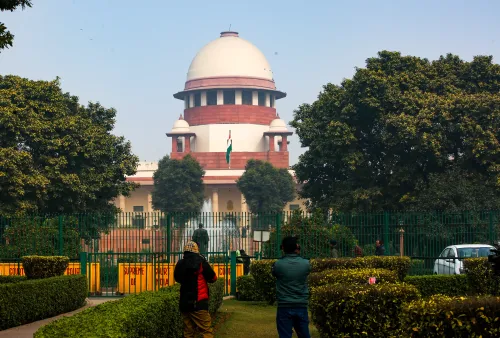
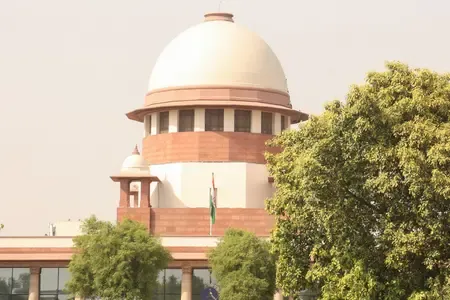
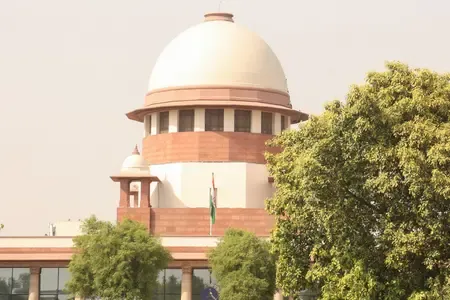
New Delhi, Dec 14 (NationPress) In light of the current weather and the worsening air quality in the capital, the Supreme Court has recommended that members of the Bar and litigants consider using the hybrid mode of appearance for cases scheduled before the court, wherever feasible.
A notice from the Supreme Court Registry mentioned that this recommendation came from the Chief Justice of India (CJI) Surya Kant, encouraging the adoption of video conferencing for suitable cases if it proves convenient.
This advisory has been shared with the Supreme Court Bar Association, the Supreme Court Advocates-on-Record Association, various notice boards, and other relevant entities to ensure broad circulation.
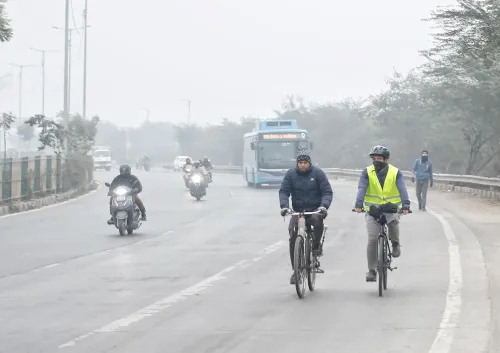
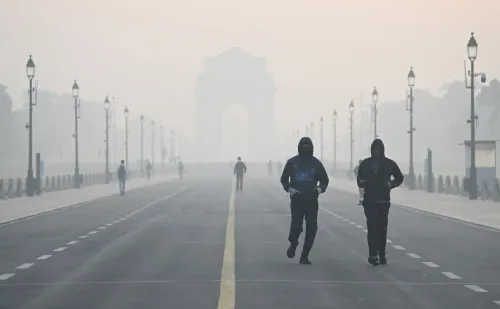
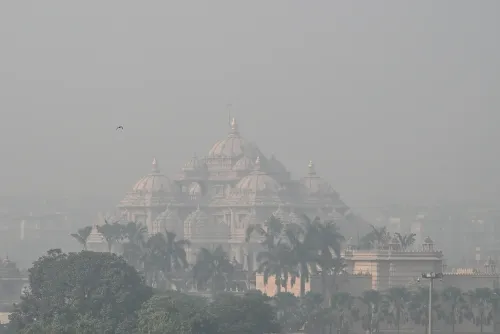
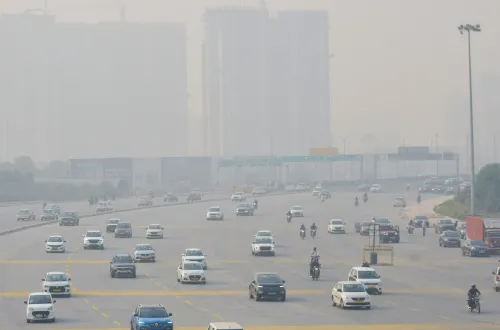
Earlier this month, the CJI Kant-led Bench voiced significant concern regarding Delhi’s hazardous air quality, stating that it could not remain a “silent observer” while millions of residents are exposed to polluted air.
During a public interest litigation (PIL) focused on air pollution control in Delhi, the Bench, which includes Justice Joymalya Bagchi, instructed the Commission for Air Quality Management (CAQM) to present an “actionable” report that addresses the ongoing air crisis.
The CJI Kant-led bench also warned against oversimplifying pollution causes by solely blaming stubble burning, emphasizing that various factors, including construction activities and vehicle emissions, exacerbate the situation.
“We don’t want to focus solely on stubble burning, as that would unfairly burden those not represented in court,” the apex court stated.
In a previous session, the apex court underscored the necessity for a “long-term strategy” to address Delhi-NCR’s recurrent air pollution issue rather than temporary measures each winter.
“You can propose solutions, but they should not just last for a few days or weeks; we require a long-term plan to gradually reduce this problem every year,” the CJI Kant-led Bench communicated to the Centre.
Last month, Justice P.S. Narasimha urged lawyers to transition to virtual hearings due to the “extremely serious” levels of pollution in Delhi, warning that the situation could lead to “permanent damage.”
“The situation is dire! Why are you all still appearing in person?” Justice Narasimha commented. “We have virtual hearing facilities available. Please make use of them. This pollution poses a risk of lasting harm,” he added.
Point of View
It is imperative to highlight the Supreme Court's proactive approach in addressing the severe air quality crisis in Delhi-NCR. The recommendation for hybrid hearings reflects a thoughtful consideration of public health during these challenging times. It is crucial for all stakeholders to recognize the multifaceted nature of pollution and work collaboratively towards sustainable solutions.
NationPress
23 Sept 2026
Frequently Asked Questions
What prompted the Supreme Court to recommend hybrid hearings?
The recommendation was made due to the deteriorating air quality in Delhi-NCR, affecting the health of court participants.
Who issued the advisory on hybrid hearings?
The advisory was issued by the Supreme Court Registry under the directions of Chief Justice Surya Kant.
What is the main concern regarding Delhi's air quality?
The primary concern is the toxic air that millions of residents are forced to breathe, which poses serious health risks.
What factors contribute to Delhi's air pollution?
Multiple factors contribute, including stubble burning, construction activities, and vehicular emissions.
What did the Supreme Court say about long-term solutions?
The Supreme Court emphasized the need for a comprehensive long-term strategy rather than temporary fixes for air pollution.