CM Rio seeks GoI support for Nagaland infrastructure push

Synopsis
Nagaland Chief Minister Neiphiu Rio has sought central government support for five infrastructure priorities — the Trans-Nagaland Foothill Road, air connectivity, railway expansion, urban mobility, and power upgrades — as the state pushes for accelerated development under India's Act East Policy framework.
Key Takeaways
CM Neiphiu Rio has formally sought Government of India support for critical infrastructure projects in Nagaland .
The request covers five sectors: the Foothill Road (Trans-Nagaland Highway) , air connectivity, railway expansion, urban mobility, and power infrastructure.
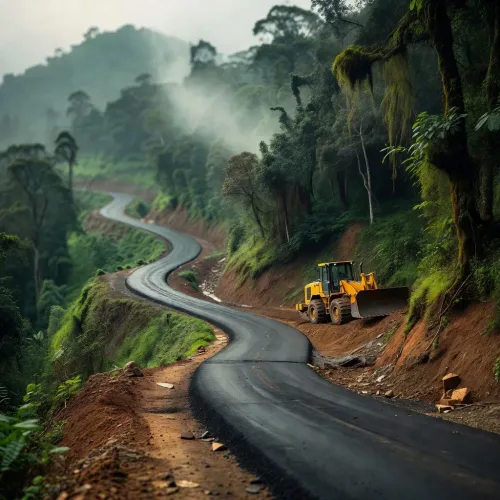
The Trans-Nagaland Highway is proposed as an arterial road along the foothills to improve intra-state connectivity across districts.
The outreach aligns with the Act East Policy (2014) and Bharatmala Pariyojana (2015) , both of which prioritise Northeastern infrastructure.
Next Union Budget allocations and any DPR clearance for the Trans-Nagaland Highway will signal the central government's response.
Nagaland residents and Northeast businesses stand to benefit most if the projects receive central approval and funding.
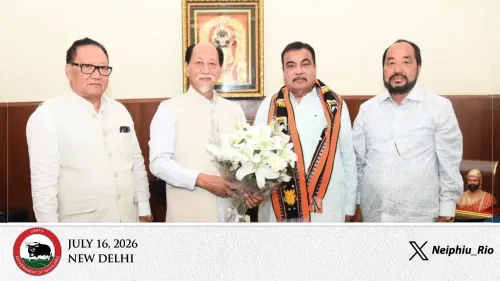
Nagaland Chief Minister Neiphiu Rio on Thursday, June 11, 2026, publicly disclosed that he has sought the support of the Government of India (GoI) for a range of critical infrastructure projects aimed at accelerating the state's development, including the proposed Foothill Road (Trans-Nagaland Highway), improved air connectivity, railway expansion, urban mobility projects, and power infrastructure upgrades.
Context
Chief Minister Rio stated that he had formally sought central support for infrastructure projects spanning multiple sectors. His post listed five broad categories: the Foothill Road (Trans-Nagaland Highway), air connectivity, railway expansion, urban mobility, and power infrastructure. The disclosure signals an active round of engagement between the Nagaland government and the federal administration in New Delhi.
Nagaland has historically faced limited rail and air links, making road and power infrastructure central to its economic integration with the rest of India. The state's remote terrain and sparse transport network have long constrained commerce, mobility, and access to public services for its residents.
Policy Backdrop
The Government of India introduced the Act East Policy in 2014, prioritising road, rail, and air connectivity projects across the Northeast, including Nagaland. The Bharatmala Pariyojana, approved in 2015, further aimed to develop highways and expressways in the region, with segments relevant to Nagaland's foothill corridors falling under its ambit.
The proposed Foothill Road (Trans-Nagaland Highway) is envisioned as an arterial highway along the foothills of Nagaland, designed to improve intra-state connectivity and reduce travel time across districts. Such projects typically require central funding and approvals from ministries including Road Transport, Railways, and Power, given the limited fiscal resources of Northeastern states.
Stakeholders and Impact
The primary beneficiaries of the proposed projects would be the residents of Nagaland and businesses operating across the Northeast. Improved road and rail links would reduce logistics costs, while better air connectivity would open the state to greater investment and tourism.
Power infrastructure upgrades are equally significant: reliable electricity supply is a foundational requirement for industrial activity and quality of life. Urban mobility projects, if sanctioned, would address growing pressure on town centres such as Kohima and Dimapur as the state urbanises.
Successive central governments have treated Northeastern infrastructure as a strategic priority to enhance economic integration and reduce the region's relative isolation. Nagaland's outreach fits a well-established pattern of centre-state coordination on multimodal connectivity and power-sector upgrades.
What's Next
Attention will now turn to whether the Ministry of Road Transport and Highways moves toward a formal approval or Detailed Project Report (DPR) clearance for the Trans-Nagaland Highway. The next Union Budget allocations for Northeastern highways and railways will be a key indicator of how much traction CM Rio's requests receive in New Delhi.
The breadth of the ask — spanning roads, air, rail, urban mobility, and power — suggests the Nagaland government is pursuing a comprehensive infrastructure agenda rather than isolated project approvals. How quickly the central government responds will shape the pace of the state's development trajectory in the near term.
Point of View
Spanning five distinct sectors, reflects the structural infrastructure deficit that has defined Nagaland's development challenge for decades. It also underscores how the Act East Policy, despite over a decade in operation, has yet to fully close the connectivity gap for states like Nagaland. The outcome will be a test of whether the centre's stated commitment to Northeastern integration translates into project approvals within a tangible timeframe.
NationPress
16 Sept 2026
Frequently Asked Questions
What infrastructure projects has Nagaland CM Neiphiu Rio sought central support for?
CM Neiphiu Rio has sought Government of India support for the Foothill Road (Trans-Nagaland Highway), improved air connectivity, railway expansion, urban mobility projects, and power infrastructure upgrades.
What is the Trans-Nagaland Foothill Road?
The Foothill Road, also called the Trans-Nagaland Highway, is a proposed arterial highway along the foothills of Nagaland intended to improve intra-state connectivity and reduce travel time across districts.
How does the Act East Policy relate to Nagaland's infrastructure?
India's Act East Policy, introduced in 2014, prioritises road, rail, and air connectivity across the Northeastern states including Nagaland, making it the key policy framework under which central funding for such projects is sought.
Why does Nagaland depend on central government funding for infrastructure?
Nagaland has limited state fiscal resources, and major transport and power projects require central approvals and funding from ministries such as Road Transport, Railways, and Power, a pattern common across Northeastern states.
What should one watch for next regarding Nagaland's infrastructure push?
Key indicators include the next Union Budget's allocations for Northeastern highways and railways, and any formal approval or DPR clearance for the Trans-Nagaland Highway by the Ministry of Road Transport and Highways.