CM Rio Links Nagaland Petroleum MoU to Foothill Road Push
Synopsis
Nagaland CM Neiphiu Rio has publicly linked a new petroleum MoU between the Ministry of Petroleum and Natural Gas and Assam to the proposed Foothill Road, arguing that transport infrastructure is essential to realising the hydrocarbon potential of the region's prospective resource belt.
Key Takeaways
CM Neiphiu Rio highlighted the significance of a recent MoU between the Ministry of Petroleum and Natural Gas and the Government of Assam for petroleum exploration and development.
He stated that 'much of the prospective resource belt lies along the proposed Foothill Road ,' directly connecting infrastructure and energy policy.
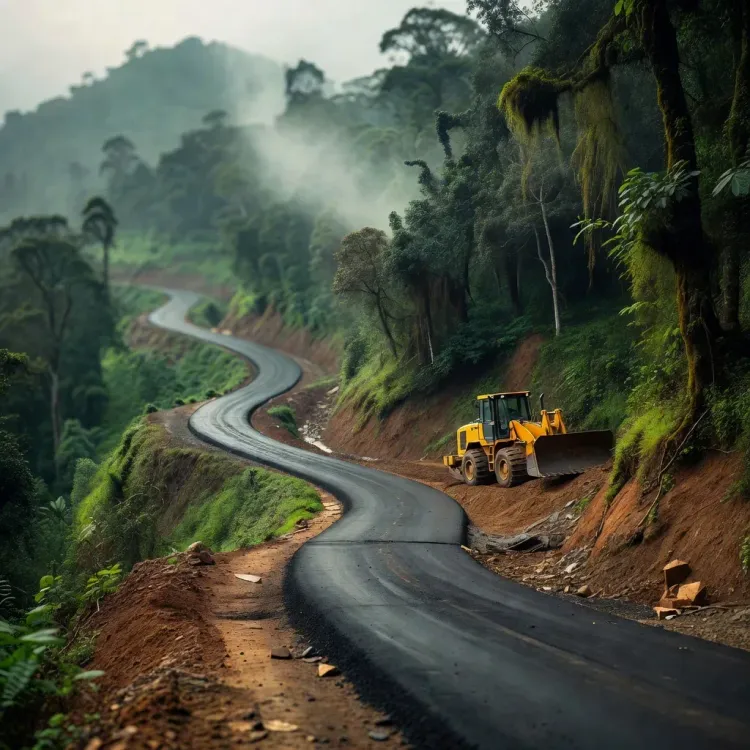
The Foothill Road is a proposed connectivity corridor along Nagaland's foothills, intended to link remote areas and support resource extraction.
The Assam-Arakan geological province , which spans both states, is one of India's most prospective sedimentary basins with exploration history dating to 1889 .
The Hydrocarbon Exploration and Licensing Policy (HELP) introduced in 2016 was designed to unlock frontier basins including those in the Northeast .
Block award processes, environmental clearances, and Foothill Road construction progress will determine how quickly the region's hydrocarbon potential is realised.
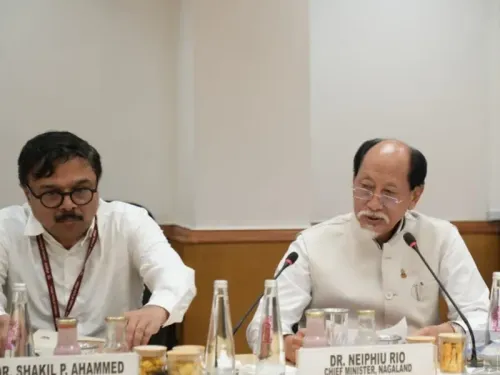
Nagaland Chief Minister Neiphiu Rio on Monday, 15 June 2026 highlighted a recently signed Memorandum of Understanding between the Ministry of Petroleum and Natural Gas and the Government of Assam for petroleum exploration and development, stressing that robust transport infrastructure — particularly the proposed Foothill Road — will be critical to unlocking the economic potential of the region's hydrocarbon resource belt.
Context
Posting on X, CM Rio noted that 'much of the prospective resource belt lies along the proposed Foothill Road,' directly connecting the state's infrastructure ambitions to its hydrocarbon prospects. The remark underscores Nagaland's intent to position itself as an active participant in the MoU's downstream benefits, even as the agreement was signed between the central ministry and Assam. The Foothill Road, a long-proposed connectivity corridor running along Nagaland's foothills, has been advocated by the state government as a transformative project for remote communities and resource-rich zones alike.
Policy Backdrop
Hydrocarbon exploration in the Northeast has a history stretching back to the 1889 Digboi discovery in Assam, with the broader Assam-Arakan geological province recognised as one of India's most prospective sedimentary basins. The Hydrocarbon Exploration and Licensing Policy (HELP), introduced in 2016, replaced earlier licensing rounds and was specifically designed to attract investment into frontier and geologically under-explored basins — a category that includes large parts of Nagaland. Despite the geological promise, difficult terrain and limited road access have historically constrained exploration activity in the state.
The latest MoU between the Ministry of Petroleum and Natural Gas and the Assam government signals renewed central interest in activating these reserves. CM Rio's intervention publicly flags that Nagaland's resource zones are geographically intertwined with this effort, and that the state expects to be part of the development arc.
Stakeholders and Impact
Oil and gas exploration firms operating under central licensing rounds stand to gain access to prospective blocks spanning the inter-state geological belt. Communities along the Foothill Road corridor — many in remote, historically underserved districts — could see dual benefits: improved connectivity from the road itself and economic activity generated by petroleum exploration and ancillary industries. The alignment between the resource belt and the proposed road suggests that infrastructure investment and energy development could be planned in an integrated manner rather than as separate initiatives.
For the Nagaland state government, the MoU and the road project together represent a potential revenue and employment catalyst. The state has long sought to convert its natural resource endowment into tangible fiscal and developmental gains, and CM Rio's public statement appears aimed at ensuring that central planners and the petroleum ministry keep Nagaland's interests within the scope of the MoU's implementation.
What's Next
Attention will now turn to the formal block award processes, environmental clearances, and drilling timelines that must follow the MoU signing before exploration activity can begin at scale. Simultaneously, progress on land acquisition and funding releases for the Foothill Road will be closely watched, as the road's construction timeline directly affects the viability of transporting equipment and output from prospective hydrocarbon sites. CM Rio's framing of the two projects as mutually reinforcing suggests that Nagaland may formally seek inclusion or bilateral coordination in the MoU's implementation framework going forward.
Point of View
Even though the geological resource belt straddles both states. By explicitly tying the Foothill Road — a Nagaland infrastructure priority — to the petroleum MoU, Rio is building a policy case for integrated planning that serves the state's fiscal interests. This reflects a broader pattern in Northeastern politics where state leaders use central policy moments to assert their own developmental claims and lobby for inclusion. The statement also signals to investors and central ministries that Nagaland views energy and connectivity as a single strategic package, not separate silos.
NationPress
14 Sept 2026
Frequently Asked Questions
What is the MoU between the Petroleum Ministry and Assam about?
The MoU is an agreement between the Ministry of Petroleum and Natural Gas and the Government of Assam for petroleum exploration and development activities in the region. Specific terms, signatories, and blocks covered have not been officially detailed in the public domain.
What is the Foothill Road in Nagaland?
The Foothill Road is a proposed road connectivity project running along the foothills of Nagaland , designed to link remote areas and support economic activity including resource extraction in the state.
Why is Nagaland relevant to the Assam petroleum MoU?
Nagaland shares the Assam-Arakan geological province , a prospective hydrocarbon basin, with Assam. CM Rio has noted that much of this resource belt runs along the proposed Foothill Road in Nagaland, making the state a key stakeholder in any regional petroleum development.
What is India's HELP policy for oil and gas?
The Hydrocarbon Exploration and Licensing Policy (HELP) , introduced in 2016 , replaced earlier licensing rounds to encourage investment in frontier and under-explored basins across India, including those in the Northeast .
What needs to happen before petroleum exploration begins in Nagaland?
Block award processes, environmental clearances, and drilling timelines must be finalised following the MoU. Progress on land acquisition and funding for the Foothill Road will also be critical, as road access is essential for moving exploration equipment and output.