CM Rio Flags Nagaland's EAP Opportunities Across Six Sectors
Synopsis
Nagaland CM Neiphiu Rio on 19 June 2026 highlighted the state's opportunities in eight development sectors — from climate resilience to entrepreneurship — and pledged to strengthen Externally Aided Projects implementation to improve quality of life for residents.
Key Takeaways
Neiphiu Rio identified eight sectors — climate resilience, sustainable agriculture, renewable energy, urban development, digital governance, health, skill development, and entrepreneurship — as priority collaboration areas.
The Chief Minister reaffirmed Nagaland's commitment to strengthening EAP (Externally Aided Projects) implementation as a vehicle for improving quality of life.
Nagaland operates under special constitutional provisions of Article 371A and relies on external assistance to supplement central funding in its hilly, tribal terrain.
India's Act East Policy (upgraded 2014) has made Northeastern states focal points for sustainable development and external partnerships.
Progress on these priorities is expected to be tracked through Nagaland's annual budget presentations and regional development forums.
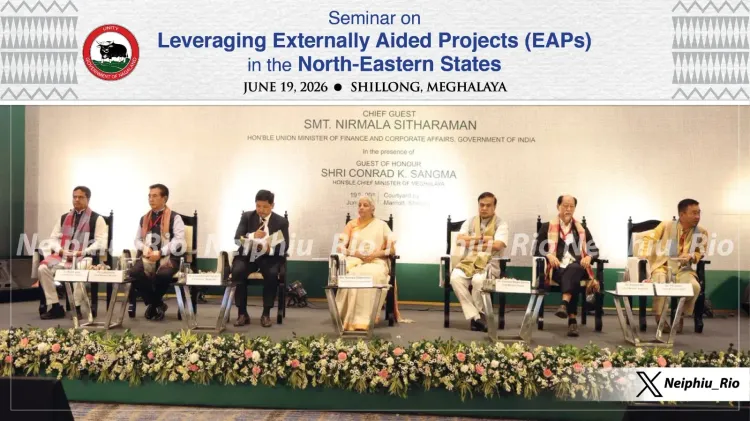
Nagaland Chief Minister Neiphiu Rio on Friday, 19 June 2026, outlined the state's multi-sector development ambitions, identifying immense opportunities for collaboration in climate resilience, sustainable agriculture, renewable energy, urban development, digital governance, health, skill development, and entrepreneurship — while reaffirming Nagaland's commitment to strengthening Externally Aided Projects (EAP) implementation.
Context
Rio stated that Nagaland 'sees immense opportunities for collaboration in climate resilience, sustainable agriculture, renewable energy, urban development, digital governance, health, skill development, and entrepreneurship.' He added that 'the State is committed to strengthening EAP implementation and ensuring they improve quality of life' — a pointed signal to multilateral development partners and the Centre alike.
The post, framed as a reply on X, reflects the Chief Minister's effort to position Nagaland as a willing and capable partner in externally funded development, rather than a passive recipient of central transfers.
Policy Backdrop
India's Act East Policy, upgraded in 2014 from the earlier Look East Policy, has made Northeastern states focal points for connectivity, trade, and sustainable development partnerships. Nagaland, operating under the special constitutional provisions of Article 371A, has historically relied on a combination of central allocations and external assistance to bridge infrastructure and human development gaps in its hilly, tribal terrain.
The EAP mechanism allows Indian states to access funding and technical expertise from multilateral agencies such as the World Bank and the Asian Development Bank, supplementing domestic budgets. India's National Action Plan on Climate Change, launched in 2008, has also guided state-level strategies on resilience and renewable energy — themes that figure prominently in Rio's articulation.
Nagaland's emphasis on digital governance and entrepreneurship alongside traditional sectors such as agriculture and health signals an intent to broaden the EAP portfolio beyond conventional infrastructure spending.
Stakeholders and Impact
The primary beneficiaries of strengthened EAP implementation would be Nagaland's residents, particularly agricultural communities in remote hill districts where access to markets, clean energy, and healthcare remains constrained. Local entrepreneurs stand to gain if skill development and digital governance initiatives translate into improved connectivity and ease of doing business.
For multilateral development partners, the Chief Minister's statement serves as a formal expression of state-level readiness — a prerequisite for advancing project pipelines. The breadth of sectors mentioned suggests Nagaland is seeking a diversified external assistance portfolio rather than a single large-ticket project.
What's Next
Concrete progress on these stated priorities is likely to surface in Nagaland's annual budget presentations and at regional development forums, where new memoranda of understanding with partner agencies are typically announced. Observers will watch whether the multi-sector intent translates into specific project sanctions and disbursements under the EAP framework in the coming fiscal cycle.
If Nagaland succeeds in broadening its EAP portfolio across climate, digital, and health domains, it could serve as a template for other Northeastern states navigating similar geographic and resource constraints.
Point of View
Spanning digital governance and entrepreneurship alongside traditional areas like agriculture and health, suggests an intent to modernise the state's EAP portfolio in line with post-pandemic development priorities. This mirrors a wider pattern among Northeastern states that are leveraging the Act East Policy framework to attract international technical and financial partnerships as a counterweight to geographic isolation. Whether the stated commitment translates into sanctioned projects will be the real test of Nagaland's external engagement strategy.
NationPress
19 Sept 2026
Frequently Asked Questions
What are EAPs and how do they benefit Nagaland?
Externally Aided Projects (EAPs) allow Indian states to access funding and technical expertise from multilateral agencies such as the World Bank and the Asian Development Bank, supplementing domestic budgets. For Nagaland, EAPs are especially important given the state's hilly terrain, limited internal resources, and the need to bridge infrastructure and human development gaps.
What sectors did CM Neiphiu Rio highlight for collaboration?
Chief Minister Neiphiu Rio identified eight sectors: climate resilience, sustainable agriculture, renewable energy, urban development, digital governance, health, skill development, and entrepreneurship.
What is the Act East Policy and how does it relate to Nagaland?
India's Act East Policy, upgraded in 2014 from the earlier Look East Policy, prioritises connectivity, trade, and sustainable development partnerships for Northeastern states including Nagaland. It provides the broader framework within which EAP-funded projects in the region are pursued.
What is Article 371A and why does it matter for Nagaland's development?
Article 371A of the Indian Constitution grants Nagaland special protections over its customary law, land ownership, and resource management. These provisions shape the legal and governance context within which external development projects must be designed and implemented in the state.
When did Neiphiu Rio make this statement about Nagaland's development priorities?
Chief Minister Neiphiu Rio made this statement on Friday, 19 June 2026 , via a post on X (formerly Twitter).