CM Rio Outlines Long-Term Sports Vision for Nagaland

Synopsis
Nagaland Chief Minister Neiphiu Rio on 3 July 2026 reaffirmed a long-term state strategy to build sports infrastructure on par with the best in India and provide world-class training to Nagaland athletes, framing the push as a mission to bring glory to both the state and the nation.
Key Takeaways
CM Neiphiu Rio publicly reaffirmed a long-term state strategy to transform sports in Nagaland on 3 July 2026 .
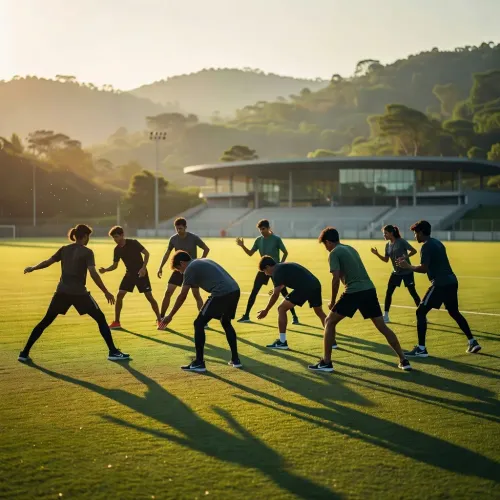
The vision targets sports infrastructure 'on par with the best in the country' and world-class athlete training.
Nagaland is a beneficiary state under the Central government's Khelo India scheme, launched in 2017 to build grassroots sports infrastructure.
The push mirrors wider efforts by northeastern states to close infrastructure gaps and channel central funding into facilities.
Performance at upcoming National Games and Khelo India events will be the measurable test of the strategy's impact.
The state's predominantly tribal youth population stands as the primary beneficiary of any sustained infrastructure investment.
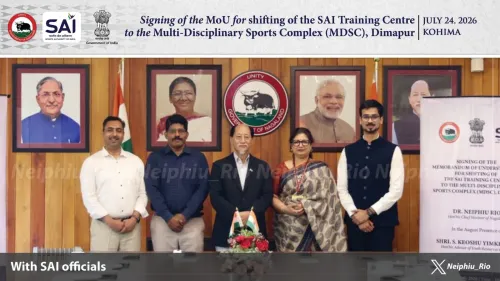
Nagaland Chief Minister Neiphiu Rio on Friday, 3 July 2026, reaffirmed the state government's commitment to a comprehensive, long-term strategy aimed at transforming sports infrastructure and athlete training across Nagaland, signalling an ambitious push to elevate the northeastern state's standing in national and international sporting arenas.
Responding to a post on X, CM Rio stated: 'We have put in place a long-term strategy to transform sports in the State. Our vision is to build sports infrastructure on par with the best in the country and provide our sportspersons with world-class training to help them excel and bring glory to the State and the nation.'
Context
Nagaland, a predominantly tribal state in India's Northeast, has historically faced significant gaps in sports infrastructure compared to more developed states. Youth and sports development have increasingly become policy priorities for the state government, with CM Rio's Nationalist Democratic Progressive Party (NDPP)-led administration framing athletic excellence as a vehicle for both youth empowerment and state pride.
The statement comes at a time when northeastern states are asserting greater ambition in national sporting competitions, seeking to convert their well-documented enthusiasm for football, boxing, and other disciplines into podium finishes at events such as the National Games and Khelo India competitions.
Policy Backdrop
The Central government launched the Khelo India scheme in 2017 specifically to build grassroots sports infrastructure and identify talent across states, with northeastern states among the targeted beneficiaries. The programme has provided a funding and institutional framework that state governments, including Nagaland, can leverage to build facilities and coaching pipelines.
CM Rio's articulation of a 'long-term strategy' aligns with the broader national priority of developing regional sporting hubs to improve India's international outcomes. Northeastern states have been increasingly positioned as untapped reservoirs of athletic talent, particularly in combat sports, archery, and football, making infrastructure investment in this region a strategic national interest as much as a local one.
Stakeholders and Impact
Nagaland's athletes and youth stand as the primary beneficiaries of any sustained infrastructure push. The state's young population, with a strong cultural affinity for competitive sports, has long sought access to training facilities and coaching standards comparable to those available in larger Indian states.
If the strategy translates into concrete projects — upgraded stadiums, training academies, and talent identification programmes — it could meaningfully alter the competitive prospects of Nagaland's sportspersons at the national level. The ripple effects would extend to coaches, sports administrators, and local economies in districts where facilities are developed.
What's Next
The key test for CM Rio's stated vision will be the rollout of specific, funded infrastructure projects and measurable improvements in Nagaland's performance at upcoming editions of the National Games and Khelo India events. Observers will watch whether the long-term strategy is backed by budgetary allocations and timelines in the state's forthcoming policy announcements.
As northeastern states collectively raise their sporting ambitions, Nagaland's ability to convert political commitment into on-ground infrastructure will serve as a benchmark for the region's broader aspirations in Indian sport.
Point of View
A politically effective register in a state where questions of identity remain live. Without specifics on timelines, funding, or project names, however, the statement remains aspirational rather than programmatic. The real measure will come when budget lines and ground-breaking ceremonies follow the rhetoric.
NationPress
1 Oct 2026
Frequently Asked Questions
What is Nagaland CM Neiphiu Rio's sports strategy?
CM Neiphiu Rio has stated that Nagaland has put in place a long-term strategy to build sports infrastructure on par with the best in India and provide world-class training to its athletes, though specific project details have not yet been publicly announced.
What is the Khelo India scheme and does Nagaland benefit from it?
The Khelo India scheme was launched by the Central government in 2017 to develop grassroots sports infrastructure and identify talent across India, with northeastern states including Nagaland among the targeted beneficiaries.
Why is sports development important for Nagaland?
Nagaland has historically faced infrastructure gaps compared to other Indian states, but its predominantly tribal youth population has a strong cultural affinity for competitive sports, making investment in facilities and training a significant opportunity for youth empowerment and national representation.
How will Nagaland's sports progress be measured?
Analysts and observers will watch Nagaland 's performance at upcoming National Games and Khelo India events, as well as concrete state budget allocations and infrastructure project announcements, as indicators of whether the long-term strategy moves from vision to implementation.