Owaisi Slams Bengal Govt for Linking Ration to Voter List
Synopsis
AIMIM president Asaduddin Owaisi has accused the West Bengal government of denying PDS ration and welfare benefits to residents excluded during the Special Intensive Revision of electoral rolls, arguing the move violates the National Food Security Act and disproportionately harms women, SCs and Muslims.
Key Takeaways
Owaisi alleged on June 6, 2026 that West Bengal is denying PDS ration and welfare benefits to people excluded during the Special Intensive Revision (SIR) of the electoral roll.
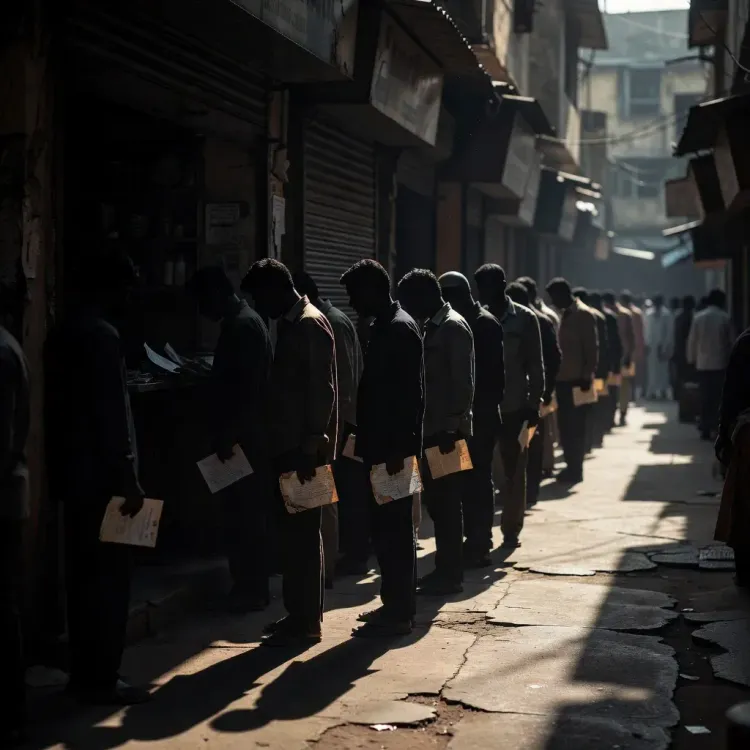
Those marked 'absent' or 'shifted' and those who did not receive voter slips are reportedly among those denied benefits.
The National Food Security Act, 2013 bases PDS entitlements on socio-economic criteria, not voter-list status.
Aadhaar — not the electoral roll — is the legally recognised authentication tool for welfare transfers under Supreme Court rulings.
Owaisi flagged women, Scheduled Castes and Muslims as the communities most affected by the alleged exclusion.
The post named Suvendu Adhikari , BJP Leader of Opposition, in a political barb over the state's handling of public welfare schemes.
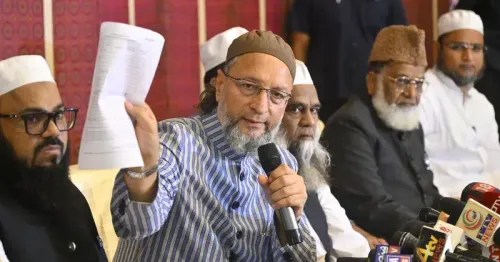
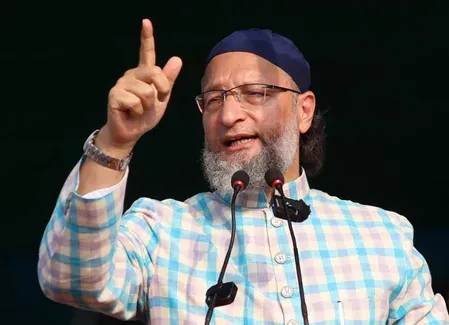
AIMIM president Asaduddin Owaisi on Saturday, June 6, 2026, accused the West Bengal government of denying PDS ration and other welfare benefits to residents excluded during the Special Intensive Revision (SIR) of the electoral roll, calling the move an attempt to cut beneficiary numbers at the cost of the poorest citizens.
Context
Owaisi alleged that the TMC-led West Bengal administration has effectively linked welfare entitlements to voter-list status, with those marked 'absent' or 'shifted' during the SIR — and those who did not receive voter slips during the last election — being denied ration and other scheme benefits. He warned that many in these categories are genuine voters and eligible beneficiaries.
Questioning the logic of the linkage, Owaisi wrote: 'Why should access to ration or welfare depend on whether your name is on the voter list? What is the point of Aadhaar authentication if the voter roll is being used as the deciding factor?' The post specifically named communities bearing the brunt — women, Scheduled Castes and Muslims.
Policy Backdrop
The National Food Security Act, 2013 explicitly bases PDS entitlements on socio-economic criteria, not electoral registration. Welfare eligibility under the Act is determined through surveys and socio-economic data, making any voter-roll linkage a departure from the statutory framework.
Aadhaar was introduced as the primary authentication tool for welfare transfers following Supreme Court judgments in 2017-18, which upheld its use for benefits delivery while limiting its scope to prevent exclusion. Election Commission guidelines on electoral roll revisions have consistently stated that voter-list status does not affect citizenship-based welfare rights.
Several Indian states have faced periodic allegations of using electoral-roll discrepancies to trim welfare rolls, a pattern that critics argue conflates electoral management with social-sector delivery and risks excluding genuine beneficiaries without due process.
Stakeholders and Impact
Owaisi's post directly flags the impact on women-headed families, SC communities and Muslim households — groups that form a significant portion of PDS beneficiaries in West Bengal. Rights groups have long cautioned that any exclusion from food security schemes without a transparent grievance mechanism can push vulnerable households into food insecurity.
Taking a pointed political swipe, Owaisi said: 'The government is acting as if these schemes are Prince Suvendu's personal charity. They are not. They are funded by public money and are the right of every eligible citizen.' The reference to Suvendu Adhikari, BJP Leader of Opposition in West Bengal, appears aimed at highlighting the political dimension of welfare exclusion in a state marked by intense TMC-BJP rivalry.
What's Next
The controversy raises the prospect of legal challenges before the Calcutta High Court or the Supreme Court on the permissibility of linking voter-roll status to welfare delivery. Civil society organisations and opposition parties may also seek a clarification from the Election Commission of India on the permissible uses of electoral rolls in welfare verification.
If the alleged linkage is not reversed, it could set a precedent that undermines the statutory firewall between electoral rolls and welfare entitlements, with implications for welfare delivery in other states where electoral-roll clean-up drives are under way.
Point of View
Drawing the BJP into a controversy that is nominally about TMC governance, and signalling AIMIM's intent to build a minority and marginalised-community voter base in West Bengal. The post also fits a broader national pattern where electoral-roll clean-up drives intersect, sometimes controversially, with welfare delivery infrastructure. If legal challenges materialise, this episode could force a judicial clarification that has implications well beyond West Bengal.
NationPress
22 Oct 2026
Frequently Asked Questions
Can the West Bengal government deny ration if your name is removed from the voter list?
Under the National Food Security Act, 2013 , PDS entitlements are based on socio-economic criteria and are not linked to voter-list status. Denying ration solely on the basis of electoral-roll exclusion would be inconsistent with the Act's provisions.
What is Special Intensive Revision (SIR) of the electoral roll?
Special Intensive Revision (SIR) is a periodic electoral roll clean-up drive conducted by the Election Commission of India to remove duplicate, ineligible or outdated entries. It is an electoral management exercise and, per Election Commission guidelines, does not affect citizenship-based welfare rights.
What did Owaisi say about Aadhaar and welfare benefits?
Owaisi questioned why the voter roll is being used as the deciding factor for welfare access when Aadhaar authentication — upheld by the Supreme Court for welfare delivery — is already in place. He argued this undermines the purpose of the Aadhaar-based system.
Who is Suvendu Adhikari and why did Owaisi mention him?
Suvendu Adhikari is the BJP Leader of Opposition in West Bengal and a prominent political rival of the TMC. Owaisi's reference to 'Prince Suvendu' was a political barb implying the state is treating public welfare schemes as personal patronage rather than statutory rights.
Which communities does Owaisi say are most affected by Bengal's welfare exclusion?
Owaisi specifically named women, Scheduled Castes (SCs) and Muslims as the groups most adversely affected by the alleged linking of welfare benefits to voter-list status in West Bengal.