Owaisi questions how 10 crore excluded voters' children will be added
Synopsis
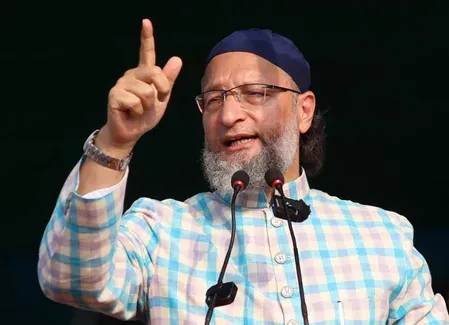
AIMIM president Asaduddin Owaisi on October 13 raised a sharp procedural question about India's Special Intensive Revision of voter rolls, asking how 10 crore excluded adults' 18-year-old children can be enrolled when there is no family anchor entry to map them against.
Key Takeaways
AIMIM president Asaduddin Owaisi posted the challenge on October 13, 2026 .
He questions how 10 crore people absent from the rolls can have their newly eligible children added via the SIR process.
The SIR mechanism typically adds first-time voters by linking them to a family member already enrolled — if that anchor is missing, the pathway breaks.
The concern reflects a broader pattern: opposition leaders have repeatedly flagged structural exclusion risks in India's periodic electoral roll revisions.
The question is directed at the Election Commission of India and its booth-level verification process.
The answer has implications for first-time voters across all communities where parental enrolment gaps exist.
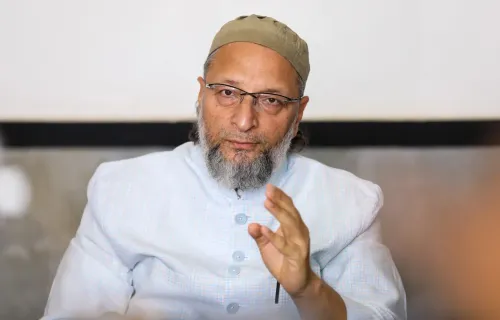
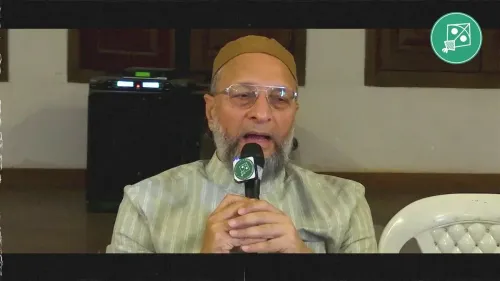
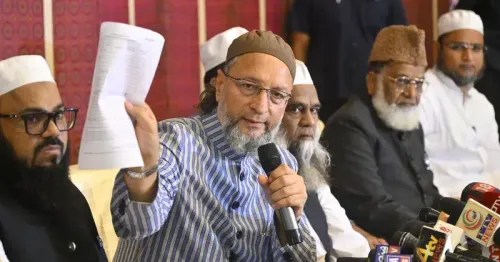
A sharp procedural challenge to India's electoral roll process landed on Tuesday, October 13, 2026, when AIMIM president Asaduddin Owaisi posted a pointed question about the Special Intensive Revision (SIR) of voter lists — asking how the 18-year-old children of the roughly 10 crore people whose names never made it onto the rolls in the first place will ever get added.
Owaisi's post, in Hindustani, cuts straight to the procedural gap: 'SIR mein jin 10 crore logo'n ke naam nahi aaye, unke 18 saal ke bachcho'n ke naam kaise add honge aur unki mapping kisse ki jayegi?' — 'In the SIR, for the 10 crore people whose names did not appear, how will their 18-year-old children's names be added, and who will map them?'
The mapping problem at the heart of SIR
The Election Commission of India's Special Intensive Revision process typically adds first-time voters by linking them to a family member already present on the electoral roll — a guardian or parent whose entry serves as the 'anchor.' That linkage is how booth-level officers locate, verify, and map a new claimant to a household. But if a parent's name was never enrolled, that anchor simply does not exist. The new voter has no verifiable entry point in the system.
Owaisi's question is, in that sense, not rhetorical — it is procedural. It exposes a compounding exclusion: one generation missing from the rolls quietly forecloses the next generation's automatic pathway in. With 18-year-olds crossing the eligibility threshold every day, the backlog does not stay static. It grows.
A pattern of opposition scrutiny on voter roll integrity
This is not the first time India's opposition has flagged roll-revision mechanics as a site of structural risk. Before the 2019 and 2024 general elections, questions about deletions, duplicate removals, and the accuracy of door-to-door surveys surfaced regularly in parliament and civil-society hearings. Minority community representatives, in particular, have documented cases where entire mohallas found their names absent after a revision cycle.
As an AIMIM leader and sitting Hyderabad Lok Sabha MP, Owaisi has consistently pressed these issues — not merely as political points but as procedural demands for clarity. His framing here follows that pattern: he is not alleging fraud; he is asking the Election Commission to explain its own mechanism.
The answer — or the absence of one — will matter well beyond Hyderabad. If 10 crore unregistered adults cannot be mapped into family trees that the SIR process depends on, the Commission needs a workaround. What that workaround looks like, and whether it reaches every district, is the question the next revision cycle will have to answer.
Point of View
Not just electoral outcomes, will be a live political fault line heading into the next revision cycle.
NationPress
13 Oct 2026
Frequently Asked Questions
What is the SIR process Owaisi is referring to?
SIR stands for Special Intensive Revision, an Election Commission of India process that periodically updates electoral rolls by adding eligible new voters and removing incorrect entries, usually ahead of major elections.
Why can't the children of unenrolled voters simply apply on their own?
The standard SIR process maps new claimants against existing family entries on the roll. When a parent or guardian has no entry, booth-level officers lack the anchor needed to verify and link the new applicant to a household, creating a procedural gap.
How many people does Owaisi say are missing from the voter rolls?
Owaisi cited a figure of 10 crore (100 million) people whose names he says did not appear in the SIR process, though this specific figure relates to 2026 events and cannot be independently verified from earlier data.
What can the Election Commission do to resolve this?
The Commission could introduce an alternate verification pathway for first-time voters whose parents are unenrolled — such as independent address or identity document verification — though it has not publicly announced such a mechanism in response to this query.
Has AIMIM raised electoral roll concerns before?
Yes. AIMIM and its president Owaisi have consistently raised concerns about voter exclusion during roll revision exercises, particularly regarding minority communities, ahead of the 2019 and 2024 general elections as well.