Rajnath Singh backs Make in India for future warfare tech
Synopsis
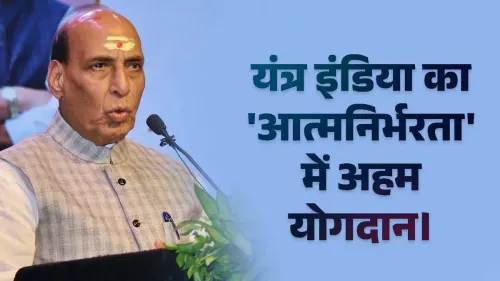
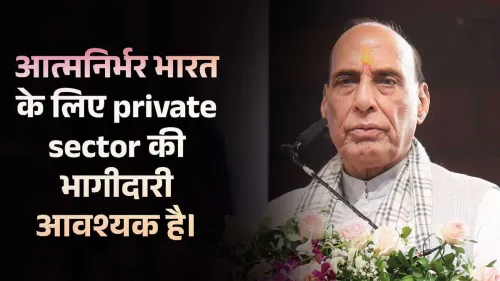
Union Defence Minister Rajnath Singh on 23 May 2026 reaffirmed the government's push to promote Make in India in critical technologies and advanced defence systems, saying India's private industries are working with a deep understanding of future warfare and their growing capability will make the nation stronger.
Key Takeaways
Union Defence Minister Rajnath Singh posted on 23 May 2026 backing Make in India for critical defence technologies and advanced systems.
Singh said India's private industries are working with a 'deep understanding of future warfare.' The Make in India programme, launched in 2014 , lists defence as a priority sector.
The Atmanirbhar Bharat campaign of 2020 raised the FDI cap in defence to 74 per cent under the automatic route.
The Ministry of Defence has issued multiple Positive Indigenisation Lists banning import of items producible domestically.
Private firms are increasingly involved in designing and producing platforms previously reserved for public-sector units.
Union Defence Minister Rajnath Singh on Saturday, 23 May 2026, underscored the government's commitment to promoting Make in India in critical technologies and advanced defence systems, saying India's private industries are working with a deep understanding of future warfare.
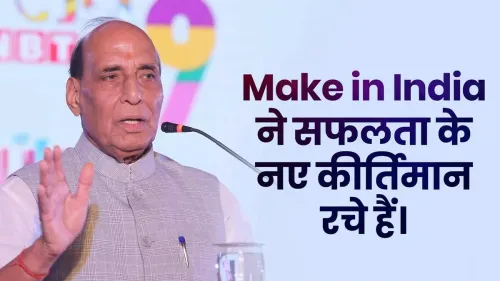
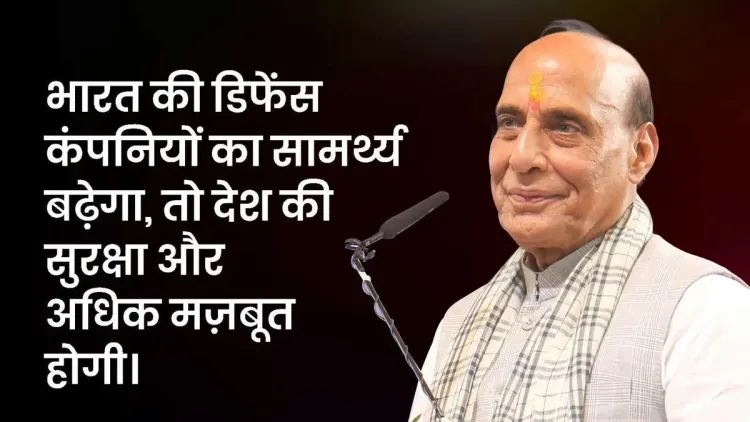
In a post on X, Singh said: 'Aaj Bharat ki private industries future warfare ki gehri samajh ke saath lagatar karya kar rahi hain' — 'Today, India's private industries are continuously working with a deep understanding of future warfare. That is why our government is constantly promoting Make in India in critical technologies and advanced systems. As India's defence companies grow in capability, the nation will become even stronger.'
Context
The statement reflects a sustained policy push that has been building since 2014, when the Make in India programme was launched with defence identified as a priority sector. The initiative was deepened in 2020 under the Atmanirbhar Bharat campaign, which designated defence production as a core pillar of national self-reliance.
The Ministry of Defence has since issued multiple Positive Indigenisation Lists, progressively banning imports of weapons and systems that can be manufactured domestically. These lists have expanded the role of private firms in platforms previously dominated by public-sector undertakings.
Policy Backdrop
A landmark reform in 2020 raised the foreign direct investment cap in defence to 74 per cent under the automatic route, removing a significant barrier for technology tie-ups between Indian private firms and global original equipment manufacturers. Defence licensing was also liberalised in successive steps to lower entry barriers for new domestic players.
Singh, who has held the Defence portfolio since 2019, has been the political face of these indigenisation drives. His tenure has seen a marked increase in private-sector participation in design, development, and serial production of defence equipment.
Stakeholders and Impact
India's private defence manufacturers stand to benefit most directly from continued government backing in critical technologies — a term that encompasses areas such as artificial intelligence-enabled systems, advanced propulsion, electronic warfare, and precision munitions. The Indian armed forces, as the primary end-users, gain from a more resilient domestic supply chain that is less vulnerable to import disruptions or geopolitical sanctions.
The emphasis on 'future warfare' signals that the government is looking beyond conventional platforms toward next-generation capabilities, aligning procurement policy with evolving threat assessments.
What's Next
Observers will watch the next Union Budget for allocations toward defence research and development and capital procurement, as funding levels are the clearest indicator of how far the rhetorical commitment to indigenisation translates into industrial orders. Updates to the Positive Indigenisation List and the participation of Indian private firms in upcoming editions of DefExpo and Aero India will also serve as benchmarks for progress.
If private defence companies continue to scale capacity in advanced systems, India's strategic calculus — both in terms of deterrence and export potential — could shift considerably in the years ahead.
Point of View
Where rhetoric must translate into rupees.
NationPress
8 Oct 2026
Frequently Asked Questions
What did Rajnath Singh say about Make in India in defence?
Rajnath Singh said India's private industries are working with a deep understanding of future warfare and the government will continuously promote Make in India in critical technologies and advanced systems to make the nation stronger.
What is the Make in India defence programme?
Make in India is a flagship manufacturing initiative launched in September 2014 that includes defence as a priority sector; it aims to attract domestic and foreign investment and reduce India's dependence on imported weapons and equipment.
What is Atmanirbhar Bharat's role in defence?
Atmanirbhar Bharat, announced in 2020 , designated defence production as a core pillar of self-reliance, raising the FDI cap in defence to 74 per cent under the automatic route and introducing Positive Indigenisation Lists that ban import of items India can make domestically.
What is India's Positive Indigenisation List?
The Positive Indigenisation List is a series of lists issued by the Ministry of Defence from 2021 onward that progressively ban the import of specified weapons, platforms, and systems, compelling the armed forces to source them from Indian manufacturers.
Why is private sector participation important in India's defence?
Private firms bring speed, innovation, and capital efficiency to defence manufacturing; their growing involvement in design and production reduces import dependence, strengthens the domestic supply chain, and enhances India's strategic autonomy.