Sonowal Hails JNPT's Rise to Global Top-25 Port Ranking

Synopsis
Union Minister Sarbananda Sonowal has lauded Jawaharlal Nehru Port's climb to 23rd place in the World Bank's 2024 Container Port Performance Index, citing its journey from a 2000 container-handling debut to a globally recognised efficiency benchmark as proof of India's maritime transformation.
Key Takeaways
JNPT ranked 23rd globally in the World Bank's 2024 Container Port Performance Index (CPPI) , according to Union Minister Sarbananda Sonowal .
The port only began container handling operations in 2000 , making the top-25 ranking a notable 25-year achievement.
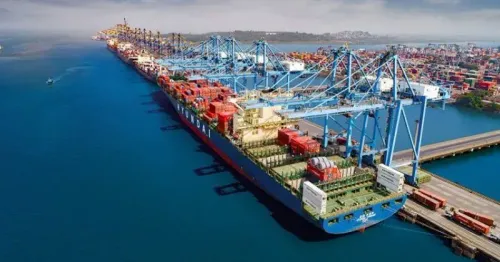
JNPT is India's largest container port, handling over 50% of the country's container traffic, located near Mumbai .
The milestone is underpinned by reforms including the Sagarmala Project (2015) , the Major Port Authorities Act, 2021 , and the National Logistics Policy, 2022 .
The ranking has direct implications for exporters, shipping lines , and logistics operators routing cargo through India's western gateway.
The government's Maritime India Vision 2030 and PM Gati Shakti framework continue to drive port productivity benchmarked against Asian hubs like Singapore and Shanghai .
Union Minister of Ports, Shipping and Waterways Sarbananda Sonowal on Saturday, 30 May 2026, highlighted the remarkable growth of Jawaharlal Nehru Port (JNPT), calling it a 'true global benchmark in port efficiency' after the facility secured the 23rd rank globally in the World Bank's 2024 Container Port Performance Index (CPPI).
Context
JNPT, located near Mumbai on India's western coastline, is the country's largest container-handling port, processing over half of India's total container traffic. The minister noted that the port only commenced container handling operations in 2000, making its climb into the global top 25 within roughly two and a half decades a significant operational achievement. Sonowal's post on X underscored the scale of that transformation, stating: 'For a port that began container handling operations only in 2000, JNPT's remarkable rise is undeniable.'
Policy Backdrop
JNPT's ascent is closely linked to a series of structural reforms in India's maritime sector since 2014. The Sagarmala Project, launched in 2015, set the framework for port modernisation, improved hinterland connectivity, and coastal economic development. This was followed by the Major Port Authorities Act, 2021, which replaced a 1963-era law and granted greater operational and financial autonomy to major ports, enabling faster decision-making on capacity and technology investments.
The National Logistics Policy of 2022 added another layer, targeting a reduction of India's logistics costs to single-digit percentages of GDP — a goal that directly depends on port throughput and turnaround efficiency. JNPT's performance has also been a key data point under the Maritime India Vision 2030 and the PM Gati Shakti national master plan, both of which benchmark Indian ports against leading Asian hubs such as Singapore and Shanghai.
Stakeholders and Impact
The ranking carries direct implications for exporters, shipping lines, and logistics operators who route cargo through India's western gateway. A higher CPPI rank signals faster vessel turnaround, lower idle-time costs, and greater reliability — factors that influence whether global shipping lines increase port calls or divert traffic to competing regional hubs. For Indian exporters, particularly those in manufacturing sectors targeted under production-linked incentive schemes, competitive port performance translates into lower total landed costs and improved delivery timelines in international markets.
The World Bank's CPPI is widely regarded as an authoritative external benchmark, measuring efficiency based on time vessels spend in port relative to the volume of cargo handled. India's focus on this index signals an intent to be evaluated by the same standards as the world's top maritime economies.
What's Next
Attention will now turn to the next edition of the World Bank CPPI to see whether JNPT can consolidate or improve its position in the global rankings. Analysts and industry stakeholders will also watch for announcements on new terminal capacity additions or public-private partnership (PPP) investments at JNPT and other competing major ports. With Maritime India Vision 2030 setting ambitious throughput targets, the government is expected to maintain pressure on port authorities to continue technology adoption and operational upgrades that sustain India's upward trajectory in global port performance indices.
Point of View
Credible benchmark (the World Bank CPPI) to validate the BJP government's decade-long port reform narrative ahead of any potential electoral or policy cycle. By anchoring the achievement to JNPT's 2000 origin, he frames the ranking not as a baseline but as a trajectory, implicitly attributing the acceleration to post-2014 policy. The emphasis on a global index rather than domestic metrics signals that the government is now confident enough to invite international comparison. This fits a broader pattern of using logistics and infrastructure milestones to build an economic-governance record distinct from welfare messaging.
NationPress
23 Sept 2026
Frequently Asked Questions
What is JNPT's rank in the World Bank 2024 port index?
According to Union Minister Sarbananda Sonowal, JNPT is ranked 23rd globally in the World Bank's 2024 Container Port Performance Index (CPPI) .
What is the World Bank Container Port Performance Index?
The World Bank Container Port Performance Index (CPPI) is an annual ranking that measures port efficiency by assessing the time vessels spend in port relative to the volume of cargo handled, benchmarking ports across the world.
When did JNPT start container operations?
JNPT (Jawaharlal Nehru Port) began container handling operations in 2000 , according to Union Minister Sonowal's post.
What government schemes helped improve India's port rankings?
Key schemes include the Sagarmala Project (2015) for port modernisation, the Major Port Authorities Act, 2021 for operational autonomy, the National Logistics Policy, 2022 , and the Maritime India Vision 2030 framework.
Why does JNPT's global ranking matter for Indian exporters?
A higher CPPI rank signals faster vessel turnaround and lower logistics costs, which helps Indian exporters compete internationally by reducing total landed costs and improving delivery reliability.