CM Sawant Holds Public Grievance Meet in Ponda
Synopsis
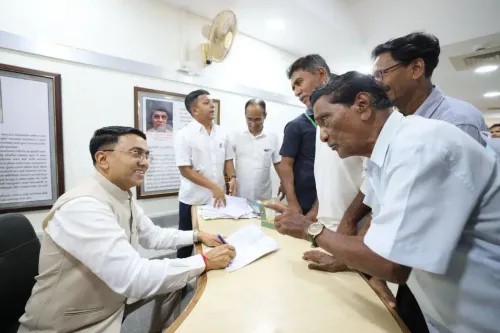
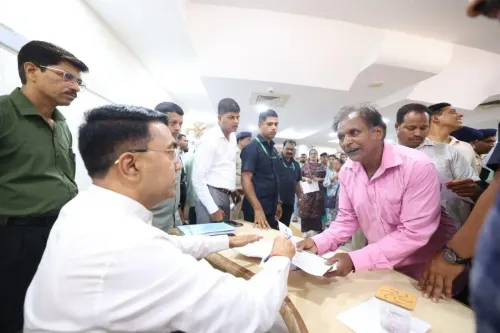
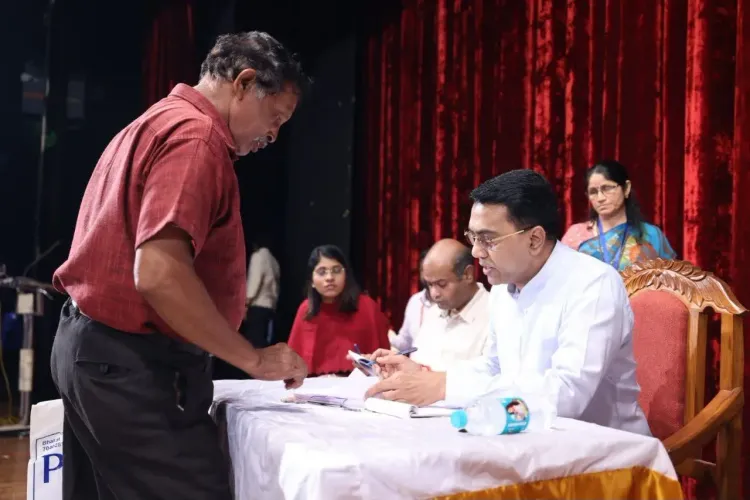
Goa Chief Minister Pramod Sawant held a constituency-level public interaction in Ponda on 8 July 2026, bringing citizens, councillors, and panchayat members face-to-face with Directors and Heads of Departments to address local grievances and accelerate resolution of pending issues.
Key Takeaways
Goa Chief Minister Pramod Sawant chaired a public grievance interaction in Ponda on 8 July 2026 .
The meeting included citizens, councillors, and panchayat members of the Ponda constituency.
Directors, Heads of Departments, and senior government officials were present to provide on-the-spot responses.
The format is aimed at ensuring timely resolution of local issues without bureaucratic delays.
Ponda is a municipal town and assembly constituency in South Goa district , with diverse civic demands across urban and semi-rural areas.
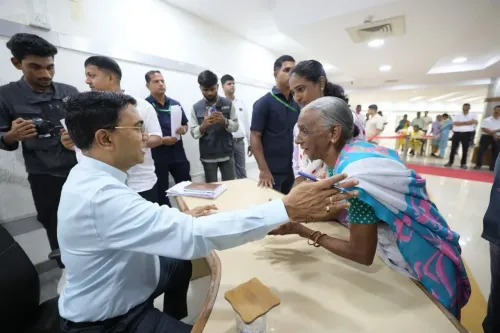
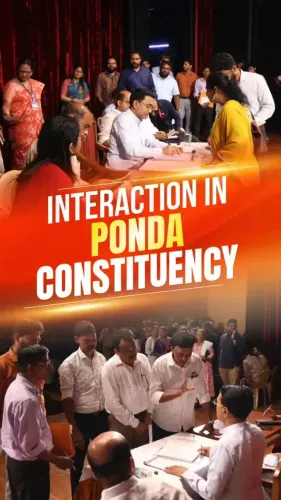
Goa Chief Minister Pramod Sawant on Wednesday, 8 July 2026, held a direct public interaction in Ponda, meeting citizens, councillors, and panchayat members of the constituency alongside Directors, Heads of Departments, and senior government officials to address pending public concerns and ensure timely resolution of local issues.
Context
The meeting in Ponda — a municipal town and assembly constituency in South Goa district — brought together elected local representatives and residents directly with the state's top administrative machinery. By seating departmental heads alongside the Chief Minister, the format is designed to cut through bureaucratic delays that typically slow grievance redressal at the constituency level.
Ponda is known for its dense network of panchayats and its mix of urban and semi-rural populations, making it a constituency where demands on civic infrastructure, water supply, road connectivity, and social services tend to be diverse and persistent.
Policy Backdrop
Constituency-level public interactions presided over by a chief minister — with departmental heads present in the same room — represent a well-established administrative practice across Indian states. The model compresses the grievance pipeline: instead of complaints travelling upward through multiple tiers of bureaucracy, officials are expected to respond and commit to timelines on the spot.
Chief Minister Sawant, who has held office since March 2019 following the passing of Manohar Parrikar, has periodically used such formats to signal administrative accessibility. The approach aligns with broader decentralised governance frameworks that emphasise direct state-citizen contact as a tool for improving last-mile service delivery.
Stakeholders and Impact
The primary beneficiaries of such interactions are Ponda's residents, who gain a direct channel to escalate issues that may have stalled at the department or taluka level. Councillors and panchayat members present at the meeting serve as intermediaries, voicing collective neighbourhood concerns rather than individual complaints alone.
For government officials, the format creates accountability in a public setting — commitments made before the Chief Minister and citizens carry greater institutional weight than internal file notings. The presence of multiple Heads of Departments also allows cross-departmental issues, such as a road project stalled between the Public Works Department and a local utility, to be resolved in a single sitting.
What's Next
Follow-up announcements on specific issues raised during the Ponda interaction will be a key indicator of the meeting's practical impact. Similar constituency-level outreach sessions in other parts of Goa would signal a broader administrative push ahead of the next electoral cycle. How quickly the committed resolutions translate into on-ground action will determine whether this format delivers lasting change or remains a periodic exercise in visibility.
Point of View
Particularly between election cycles. By placing departmental heads in the same room as citizens, the exercise compresses accountability chains and creates a visible record of commitments. For Sawant, who has governed Goa since 2019 and must maintain grassroots credibility in a politically competitive state, such outreach serves both administrative and electoral signalling purposes. The real test, as with all such formats, lies in the follow-through on specific resolutions promised during the meeting.
NationPress
7 Oct 2026
Frequently Asked Questions
Why did Goa CM Pramod Sawant visit Ponda on 8 July 2026?
Chief Minister Pramod Sawant visited Ponda to hold a direct public interaction with citizens, councillors, and panchayat members, accompanied by Heads of Departments, to address local grievances and ensure timely resolution of pending issues.
What is the Ponda constituency in Goa?
Ponda is an assembly constituency and municipal town located in South Goa district. It is known for its historic temples, educational institutions, and a mix of urban and semi-rural populations with diverse civic needs.
Who attended the Ponda grievance meeting with CM Sawant?
The meeting was attended by citizens of Ponda, elected councillors, panchayat members, and senior state government officials including Directors and Heads of Departments.
How does this type of public interaction work in Indian state governance?
These constituency-level meetings place departmental heads directly before citizens and the chief minister, allowing grievances to be acknowledged and timelines committed on the spot, bypassing the usual multi-tier bureaucratic process.
When did Pramod Sawant become Chief Minister of Goa?
Pramod Sawant assumed office as Chief Minister of Goa in March 2019, following the death of former Chief Minister Manohar Parrikar.