Gadkari inspects Mukundara tunnel on Delhi-Mumbai Expressway
Synopsis
Union Minister Nitin Gadkari inspected the 8-lane Mukundara twin tunnel beneath Mukundara Hills Tiger Reserve in Kota — a key Package-15 stretch of the Delhi-Vadodara Expressway under the 1,350-km Delhi-Mumbai Expressway corridor — calling it a model of environmental conservation.
Key Takeaways
Union Minister Nitin Gadkari visited Kota, Rajasthan on 8 July 2026 to inspect the Delhi-Vadodara Expressway .
He inspected the 8-lane Mukundara twin tunnel (Package-15), built beneath the Mukundara Hills Tiger Reserve .
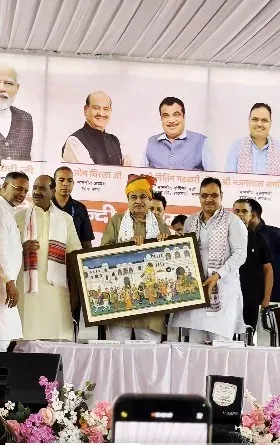
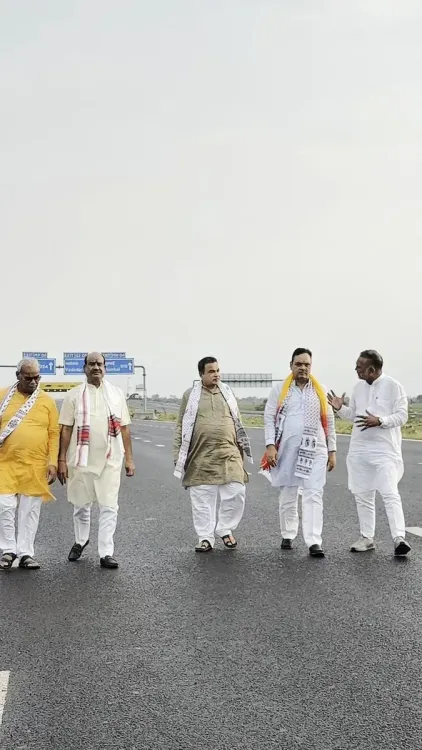
Gadkari called the tunnel a 'fine example of environmental conservation.' He was accompanied by Rajasthan CM Bhajanlal Sharma and Lok Sabha Speaker Om Birla , MP from Kota.
The Delhi-Vadodara Expressway is an approximately 800-km northern segment of the 1,350-km Delhi-Mumbai Expressway under Bharatmala Pariyojana Phase-I .
Tunnel-based solutions under protected zones have become standard practice to secure environmental clearances for greenfield highway projects.
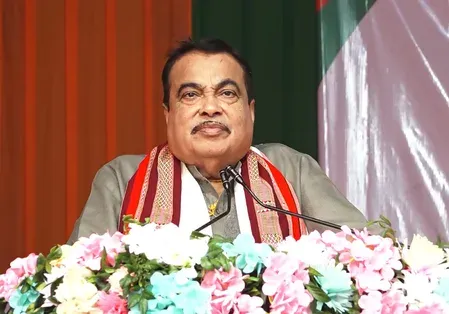
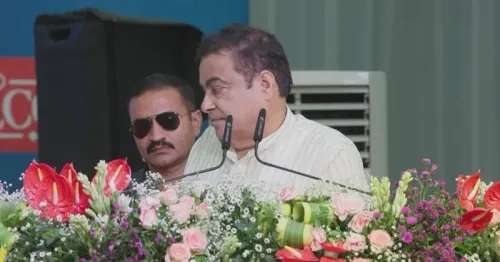
Union Road Transport and Highways Minister Nitin Gadkari on Wednesday, 8 July 2026, inspected the Delhi-Vadodara Expressway — a section of the larger Delhi-Mumbai Expressway — in Kota, Rajasthan, and addressed a public rally alongside senior political leaders.
Posting on X, Gadkari said he inspected Package-15 of the Delhi-Vadodara Expressway in Kota district, which includes the country's 'important and unique' (mahatvapurn aur anuthi) 8-lane Mukundara road tunnel (twin tunnel) built beneath the Mukundara Hills Tiger Reserve. He described the tunnel as 'a fine example of environmental conservation' (paryavaran sanrakshan ki ek behtareen misal).
Context
The inspection was part of a visit to Kota during which Gadkari participated in a public rally (janasabha) and addressed the gathering. He was accompanied by Rajasthan Chief Minister Bhajanlal Sharma and Lok Sabha Speaker Om Birla, who is also the BJP Member of Parliament from Kota.
The twin tunnel passes beneath the Mukundara Hills Tiger Reserve, a protected wildlife area in Kota district, making it one of the more ecologically sensitive stretches of the expressway corridor.
Policy Backdrop
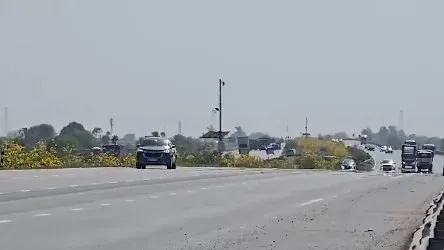
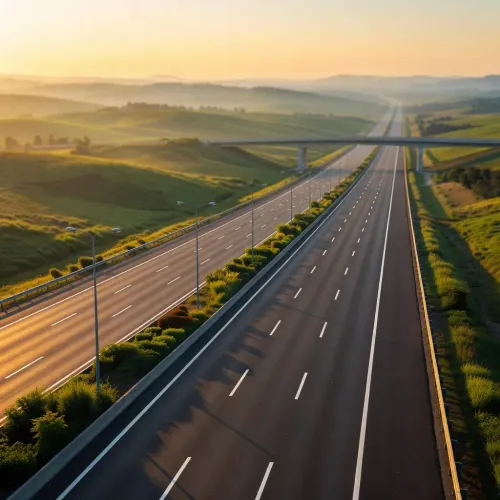
The Delhi-Mumbai Expressway is a 1,350-km access-controlled greenfield corridor connecting the national capital to the country's financial hub. The Delhi-Vadodara Expressway, spanning approximately 800 km, forms the northern segment of this corridor.
Both projects trace their lineage to Bharatmala Pariyojana Phase-I, approved in 2017, which identified the Delhi-Mumbai corridor as a flagship expressway investment. The National Infrastructure Pipeline (2020) subsequently allocated dedicated funding for greenfield expressway segments including this corridor.
Tunnel solutions beneath tiger reserves and ecologically sensitive zones have become standard engineering practice under the ministry to secure environmental clearances while advancing large linear infrastructure projects.
Stakeholders and Impact
The Mukundara twin tunnel is designed to minimise surface disruption to the tiger reserve's wildlife habitat, a concern consistently raised by conservationists during the environmental clearance process for highway projects passing through protected areas.
Once operational, the Delhi-Vadodara and Delhi-Mumbai Expressway corridor is expected to significantly reduce travel time and logistics costs for highway users, freight operators, and Rajasthan's economy, which sits along the corridor's path.
What's Next
The ministry is working toward phased opening of Delhi-Vadodara sections as construction on individual packages reaches completion. The full Delhi-Mumbai Expressway remains one of the central government's most-watched infrastructure deliverables.
Parliamentary scrutiny of wildlife mitigation measures along the expressway — including the Mukundara tunnel — is expected to continue, with questions likely during the ongoing monsoon session. Gadkari's on-site inspection signals that the ministry is monitoring progress at ecologically sensitive stretches closely.
Point of View
Underlining BJP's effort to project infrastructure delivery in a state it won decisively in late 2023. The tunnel itself represents a broader ministry strategy of using engineering solutions to navigate ecological constraints, allowing highway timelines to advance without frontally challenging wildlife protection laws. With the Delhi-Mumbai Expressway among the government's most visible infrastructure commitments, ministerial visits to sensitive stretches help manage public and parliamentary expectations around completion. How quickly Package-15 and adjacent sections open to traffic will determine whether the project meets its corridor-level targets.
NationPress
9 Jul 2026
Frequently Asked Questions
What is the Mukundara tunnel on the Delhi-Mumbai Expressway?
The Mukundara tunnel is an 8-lane twin tunnel built beneath the Mukundara Hills Tiger Reserve in Kota district, Rajasthan, as part of Package-15 of the Delhi-Vadodara Expressway — a section of the 1,350-km Delhi-Mumbai Expressway. It is designed to protect tiger reserve habitat from surface disruption.
What is the Delhi-Vadodara Expressway?
The Delhi-Vadodara Expressway is an approximately 800-km greenfield corridor forming the northern segment of the larger Delhi-Mumbai Expressway. It is part of Bharatmala Pariyojana Phase-I, approved in 2017.
Who accompanied Nitin Gadkari during his Kota visit?
Gadkari was accompanied by Rajasthan Chief Minister Bhajanlal Sharma and Lok Sabha Speaker Om Birla, who is also the BJP Member of Parliament from Kota.
Why is a tunnel used under the Mukundara Hills Tiger Reserve?
A tunnel solution minimises surface disruption to the protected wildlife habitat of the Mukundara Hills Tiger Reserve, allowing the expressway to pass through an ecologically sensitive zone while meeting environmental clearance requirements.
What is Bharatmala Pariyojana and how does it relate to this project?
Bharatmala Pariyojana Phase-I, approved in 2017, is the central government's flagship highway development programme. It identified the Delhi-Mumbai corridor as a priority greenfield expressway, under which both the Delhi-Vadodara and the full Delhi-Mumbai Expressway are being built.