Gadkari inspects Delhi–Mumbai Expressway in Rajasthan, orders stricter patrolling and parking curbs
Synopsis
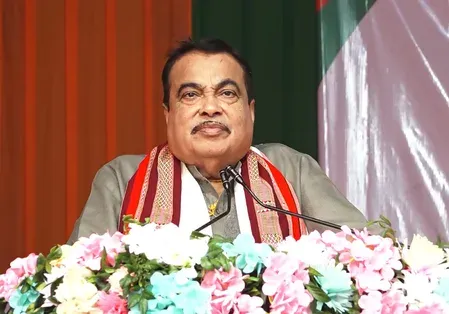
Nitin Gadkari's on-ground inspection of the Delhi–Mumbai Expressway in Rajasthan on 8 July went beyond a routine review — he issued direct orders to NHAI and police to clamp down on truck parking and ramp up patrolling. With Lok Sabha Speaker Om Birla and CM Bhajan Lal Sharma in tow, this visit signals that safety accountability on India's flagship expressway is now a political priority, not just an administrative one.
Key Takeaways
Union Minister Nitin Gadkari inspected the Delhi–Mumbai Expressway in Rajasthan on 8 July .
He directed NHAI and police to increase patrolling and enforce a strict ban on indiscriminate truck parking along the corridor.
The inspection covers the stretch from Labana Interchange, Bundi to the Dara Tunnel, Kota .
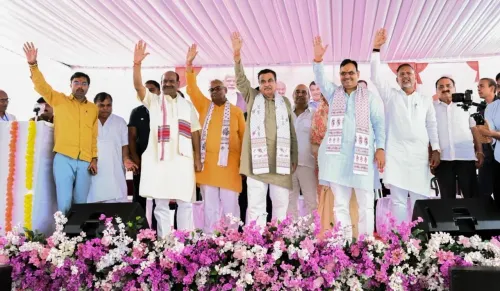
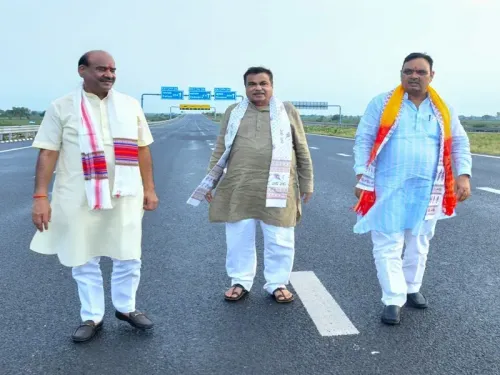
Lok Sabha Speaker Om Birla and Rajasthan CM Bhajan Lal Sharma are accompanying Gadkari on the visit.
Deputy CM Diya Kumari said existing safety infrastructure includes CCTV , speed monitors, and enhanced emergency response systems.
NHAI officials and contractors reportedly carried out repair work along the inspection route ahead of the minister's visit.
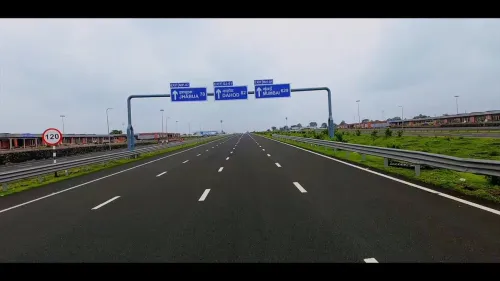
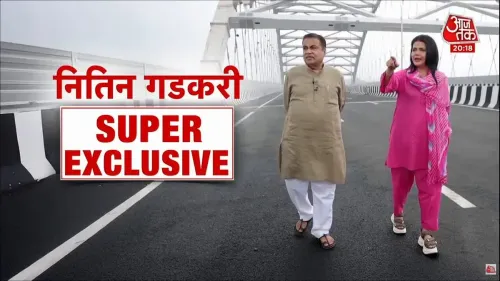
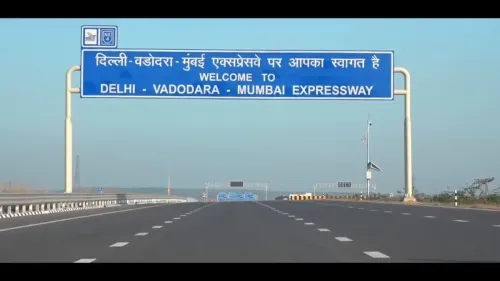
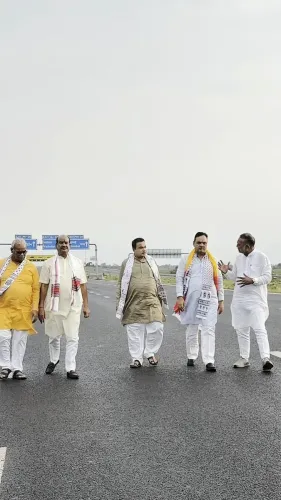
Union Minister for Road Transport and Highways Nitin Gadkari on Wednesday, 8 July arrived in Rajasthan to conduct a ground-level inspection of the Delhi–Mumbai Expressway and assess safety arrangements along the corridor. At the Pinan rest area in Alwar district, Gadkari chaired a review meeting with National Highways Authority of India (NHAI) officials and issued directives to tighten patrolling and overhaul traffic management on the stretch.
Key Directives from the Review Meeting
Gadkari instructed NHAI and police authorities to significantly increase patrolling frequency to bolster road safety and ensure faster emergency response times. He also ordered a crackdown on indiscriminate truck parking along the expressway, emphasising that unregulated halts are a leading contributor to accidents on high-speed corridors. Officials were told that strict enforcement on parking violations must begin without delay.
Inspection Route and Senior Delegation
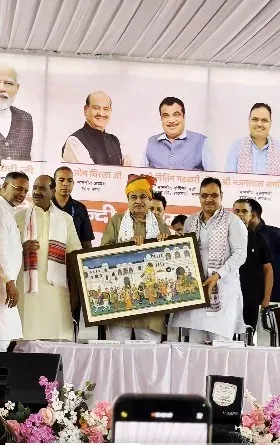
The Union Minister's inspection covers the expressway stretch from Labana Interchange in Bundi district to the Dara Tunnel in Kota, primarily along the Delhi-to-Kota carriageway. Gadkari is accompanied by Lok Sabha Speaker Om Birla and Rajasthan Chief Minister Bhajan Lal Sharma. The delegation was expected to reach the Dara Tunnel by approximately 5:30 pm, followed by a public meeting at Gopalpura near the expressway at 6:30 pm. A senior team from NHAI and the Ministry of Road Transport and Highways briefed the minister through a detailed presentation on the expressway's progress, maintenance status, and safety measures.
What Rajasthan's Deputy CM Said
Rajasthan Deputy Chief Minister Diya Kumari, speaking at the Pinan rest house, said the Delhi–Mumbai Expressway has substantially cut travel time between the two cities, yielding measurable gains for trade, tourism, and regional connectivity. She noted that the Union government has already deployed enhanced emergency response systems, CCTV surveillance, and speed-monitoring devices along the corridor. Kumari added that the inspection was intended to ensure no compromise in construction quality or road safety standards, and that the government remains attentive to incidents such as vehicle fires on the expressway.
Pre-Inspection Preparations
Ahead of Gadkari's visit, NHAI officials and contractors reportedly undertook extensive repair and maintenance work along the sections scheduled for inspection, according to local reports. The focus was concentrated on the Delhi-to-Kota carriageway, the route earmarked for the minister's review. Such pre-inspection activity has drawn attention in the past, raising questions about whether maintenance standards are sustained year-round or mobilised primarily ahead of official visits.
Why This Inspection Matters
The Delhi–Mumbai Expressway is one of India's most ambitious infrastructure projects, designed to cut road travel time between the two cities to roughly 12 hours. However, safety concerns — including high-speed accidents, inadequate lighting, and unregulated truck parking — have persisted since sections opened to traffic. This inspection signals renewed federal attention to operational safety, not just construction milestones. With Lok Sabha Speaker Om Birla's participation, the visit also carries political weight for the ruling coalition in Rajasthan ahead of ongoing infrastructure accountability debates.
Point of View
But the more telling detail is the pre-inspection repair blitz reportedly mobilised by NHAI contractors ahead of his arrival — a pattern that recurs on Indian highway corridors and raises legitimate questions about whether maintenance is routine or performative. The directives on patrolling and truck parking are sound, but enforcement on a corridor of this scale requires permanent systems, not ministerial visits. With the expressway still incomplete in stretches and safety incidents accumulating, the accountability gap between headline infrastructure and operational reality remains the story that deserves sustained scrutiny.
NationPress
7 Oct 2026
Frequently Asked Questions
Why did Nitin Gadkari visit Rajasthan on 8 July?
Gadkari visited Rajasthan on 8 July to conduct a ground inspection of the Delhi–Mumbai Expressway and review road safety measures. He chaired a meeting with NHAI officials at the Pinan rest area in Alwar district and issued directives on patrolling and truck parking enforcement.
What orders did Gadkari issue during the Delhi–Mumbai Expressway inspection?
Gadkari directed NHAI and police to increase patrolling for better road safety and faster emergency response. He also ordered a strict ban on indiscriminate truck parking along the expressway, citing it as a key accident risk.
Which stretch of the Delhi–Mumbai Expressway was inspected?
The inspection covers the segment from Labana Interchange in Bundi district to the Dara Tunnel in Kota, along the Delhi-to-Kota carriageway.
Who accompanied Gadkari on the Rajasthan expressway inspection?
Lok Sabha Speaker Om Birla and Rajasthan Chief Minister Bhajan Lal Sharma accompanied Gadkari, along with a senior delegation from NHAI and the Ministry of Road Transport and Highways.
What safety infrastructure is already in place on the Delhi–Mumbai Expressway?
According to Rajasthan Deputy Chief Minister Diya Kumari, the expressway is equipped with CCTV surveillance, speed-monitoring devices, and enhanced emergency response systems, all deployed by the Union government.