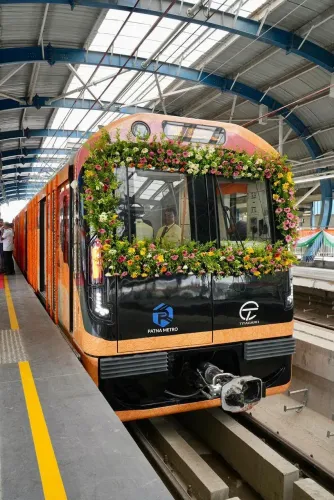
Bihar CM Samrat Choudhary approves RRTS corridors from Patna

Synopsis
Bihar's cabinet has approved AAR and DPR preparation for RRTS corridors linking Patna to Muzaffarpur, Begusarai, Ara, and Gaya, with NCRTC designated as the nodal agency — a major push for modern inter-city transit in the state.
Key Takeaways
Bihar cabinet has approved AAR and DPR preparation for RRTS on four corridors from Patna .
The four proposed corridors connect Patna to Muzaffarpur , Begusarai , Ara , and Gaya .
NCRTC , the central PSU that built the Delhi–Meerut RRTS, has been designated as the nodal agency.
The decision was announced by CM Samrat Choudhary on 8 July 2026 .
The move aims to strengthen regional connectivity and boost economic and urban development in Bihar.
Central funding approvals and land acquisition will be the key next steps after the DPR is finalised.
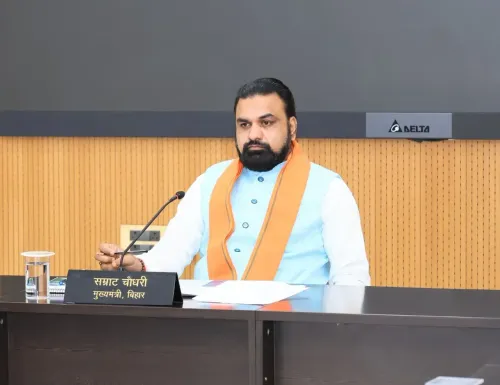
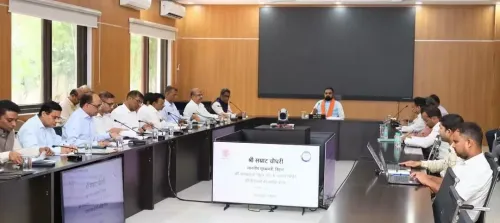
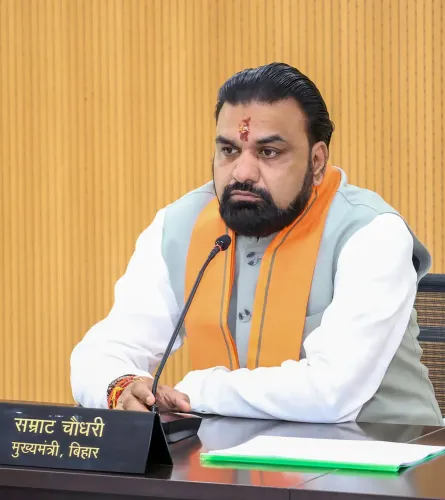
Bihar Chief Minister Samrat Choudhary announced on Wednesday, 8 July 2026 that the state cabinet has approved the preparation of an Alternative Analysis Report (AAR) and Detailed Project Report (DPR) for a Regional Rapid Transit System (RRTS) across four major corridors originating from Patna. The National Capital Region Transport Corporation (NCRTC) has been designated as the nodal agency to carry out this work.
Context
Posting in Hindi on X, CM Choudhary said the Bihar cabinet meeting took a significant step toward developing a 'modern and rapid public transport system.' The four proposed corridors will connect Patna to Muzaffarpur, Begusarai, Ara, and Gaya — four of the state's most economically and demographically significant cities. He described the decision as aimed at building a 'fast, safe and modern public transport network' while strengthening regional connectivity and giving 'new momentum to economic and urban development.'
Policy Backdrop
NCRTC was incorporated in 2013 as a central public sector undertaking to plan and execute RRTS infrastructure, beginning with the Delhi–Meerut corridor in the National Capital Region. The semi-high-speed rail transit model is designed for inter-city distances that are too far for metro systems but too short for conventional rail. Bihar's cabinet decision to bring NCRTC on board signals intent to replicate this proven model at the state level, with Patna serving as the hub for all four spokes. The AAR stage will evaluate route alignments and modal alternatives before a full DPR is commissioned.
Stakeholders and Impact
Urban commuters travelling daily between Patna and satellite cities such as Muzaffarpur — roughly 75 km away — currently rely on overcrowded highways and slow passenger trains. An RRTS network would substantially cut travel times and ease pressure on road infrastructure. Regional businesses along these corridors stand to benefit from faster freight movement and improved labour mobility. The four cities chosen are also key nodes in Bihar's agricultural, industrial, and educational economy, making connectivity improvements a multiplier for broader growth.
What's Next
The immediate task for NCRTC is to prepare the AAR, which will assess feasibility and alignment options for each of the four corridors. Once the AAR is accepted, detailed project reports covering engineering, cost estimates, and land requirements will follow. Central funding approvals and land acquisition processes will be the critical milestones after that. Observers will watch whether the project secures central co-financing under urban mobility schemes, which would accelerate implementation timelines significantly.
Point of View
Not merely an announcement — it formally links Bihar's transit ambitions to the institutional machinery that built the Delhi–Meerut corridor. By anchoring all four spokes in Patna, the state is positioning its capital as a regional mobility hub, which has direct implications for land values and industrial location decisions along these routes. The choice of Muzaffarpur, Begusarai, Ara, and Gaya reflects a deliberate effort to connect Bihar's agricultural hinterland and industrial clusters to the capital. If central co-financing follows, this could become one of the most consequential infrastructure investments in Bihar in a generation.
NationPress
7 Oct 2026
Frequently Asked Questions
What is the RRTS project approved by Bihar cabinet?
The Bihar cabinet has approved preparation of an Alternative Analysis Report and Detailed Project Report for a Regional Rapid Transit System on four corridors from Patna to Muzaffarpur, Begusarai, Ara, and Gaya. NCRTC has been designated to carry out this study.
Which cities will be connected by Bihar RRTS?
The four proposed RRTS corridors will connect Patna to Muzaffarpur, Begusarai, Ara, and Gaya.
What is NCRTC and why is it involved in Bihar?
NCRTC — the National Capital Region Transport Corporation — is a central public sector undertaking set up in 2013 to plan and build RRTS infrastructure. Bihar has designated it as the nodal agency for the AAR and DPR work on the four Patna-origin corridors.
What is the difference between RRTS and metro rail?
RRTS is a semi-high-speed rail transit system designed for inter-city distances of 50–100 km, operating at higher speeds than urban metro systems. It is suited to connecting a state capital with nearby cities, as Bihar is now planning.
What happens after the DPR is prepared for Bihar RRTS?
After the AAR and DPR are completed by NCRTC, the project will require central government funding approvals and land acquisition before construction can begin. These approvals are the next critical milestones.