Government Unveils Amendment Bill to Boost Women's Quota in Lok Sabha to 850 Seats
Synopsis
The Union government has introduced a significant amendment Bill aiming to increase Lok Sabha seats to 850, enhancing women's representation. This move marks a crucial step towards implementing a 33% quota for women in Indian politics, with potential changes set before the 2029 elections. Will this reshape the future of women in governance?
Key Takeaways
Proposed increase in Lok Sabha seats to 850.
Introduction of a 33% women's reservation in politics.
Changes to the definition of 'population' for determining seats.
The amendment aims for implementation before the 2029 elections.
Support from all political parties is crucial for success.
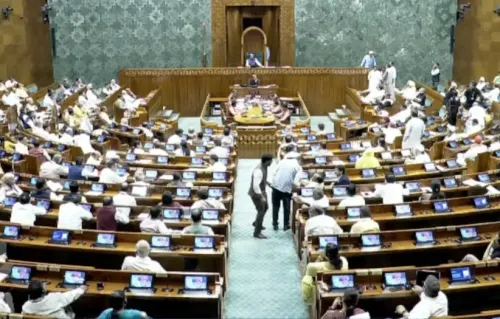
In New Delhi, on April 14 (NationPress), the Union government has presented the text of the Constitution (131 Amendment) Bill, 2026, which is intended to amend the Women Reservation Bill to increase the number of Lok Sabha seats to 850, inclusive of representatives from both States and Union Territories.
This Bill sets a limit of 815 members to be elected directly from State constituencies.
Regarding Union Territories, it stipulates, “Not more than 35 members to represent the Union Territories, chosen in such manner as Parliament may by law provide.”
Currently, the Lok Sabha comprises 530 members from States and 20 from UTs, although a delimitation commission has established a total of 543.
A significant amendment in the Bill involves redefining the term 'population', empowering Parliament to determine the data source for increasing the number of seats.
The Bill proposes to revise clause (3) of Article 81 of the Constitution to read: “(3) In this article, the expression ‘population’ signifies the population as determined by such census, as Parliament may by law establish, for which the relevant figures have been published.”
The Union Cabinet has recently approved this Bill, which seeks to amend the Constitution to facilitate the implementation of a 33 percent quota for women in the Lok Sabha and State Assemblies, as well as to enhance the number of seats in the lower house of Parliament.
Additionally, the amendment Bill suggests alterations in Article 82, replacing “Upon the completion of each census, the allocation of seats” with “The allocation of seats.”
This proposed amendment aims to disassociate the quota's implementation from the 2027 Census, instead utilizing data from the 2011 Census to allow for its introduction before the 2029 general elections.
Moreover, Article 82 of the amendment Bill introduces a function for the Delimitation Commission.
It states that in Article 82 (c) of the Constitution, “for the words ‘by such authority and in such manner’, the words ‘in such manner and on the basis of such census, by the Delimitation Commission’ shall be substituted.”
The Bill also discusses the reservation of seats on a rotational basis in the Lok Sabha and Assemblies while including provisions regarding the duration of women’s reservation, which may be extended by Parliament.
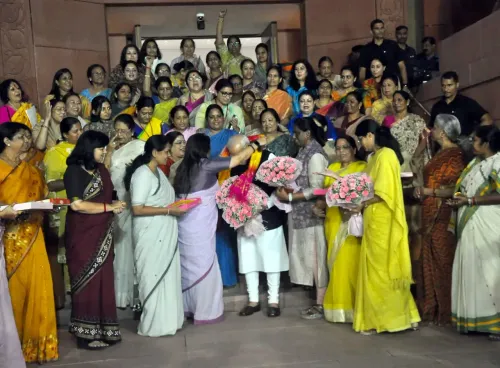
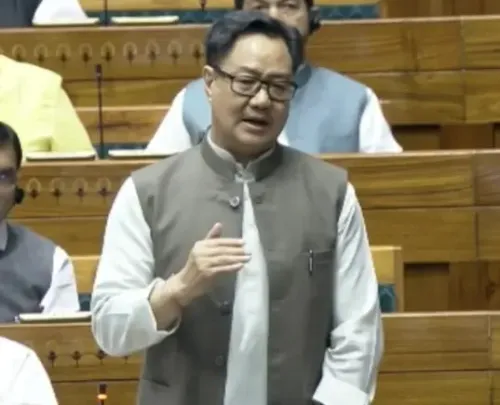
Earlier, Union Parliamentary Affairs Minister Kiren Rijiju emphasized that there is “nothing controversial” in the proposed amendment to the Women’s Reservation Bill and urged all political parties to support it without politicizing the matter.
Speaking to IANS, Rijiju remarked, “The issue of women's reservation should not be politicized in any form. Doing so would be an injustice to women.”
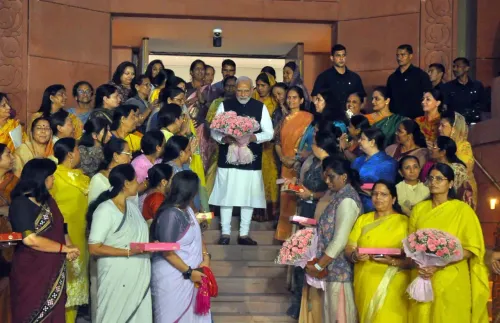
“The Prime Minister has made a straightforward and clear appeal to transcend party politics. The Nari Shakti Adhiniyam (Women's Reservation Act) is legislation that has received unanimous support from all parties. We have now called for a special session to enact a constitutional amendment to implement it,” Rijiju stated.
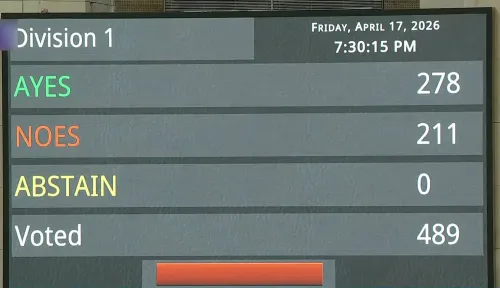
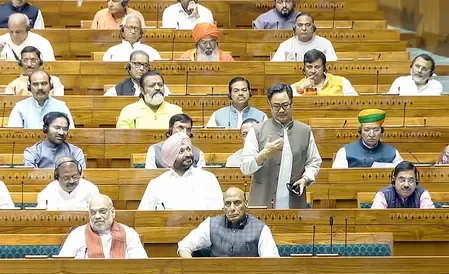
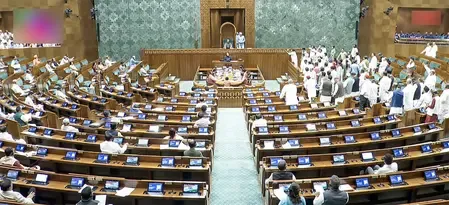
A special three-day Parliament session has been scheduled by the government from April 16 to deliberate and pass the “Nari Shakti Vandan Adhiniyam.”
The Bharatiya Janata Party (BJP) has issued a directive to all its Members of Parliament in both the Lok Sabha and Rajya Sabha, instructing them to be present in the House from April 16 to 18 during this upcoming session.
Point of View
The introduction of the Constitution (131 Amendment) Bill, 2026, is a pivotal moment for women's representation in India. It reflects the government's commitment to gender equality in politics and aims to empower women by providing them with a more substantial voice in the legislative process. This initiative deserves bipartisan support to ensure its successful implementation and to advance the cause of women's rights in the country.
NationPress
24 Sept 2026
Frequently Asked Questions
What does the Constitution (131 Amendment) Bill, 2026 entail?
The Bill proposes to increase Lok Sabha seats to 850, including a 33% reservation for women, while redefining 'population' for determining seat allocations.
How many seats are currently in the Lok Sabha?
Currently, there are 530 Lok Sabha members from States and 20 from Union Territories, totaling 550.
What is the significance of the 33% quota for women?
The 33% quota aims to enhance women's representation in Indian politics, ensuring a more balanced legislative decision-making process.
When is the special Parliament session scheduled?
The special three-day Parliament session is scheduled from April 16 to 18 to discuss and pass the Nari Shakti Vandan Adhiniyam.
Why is the amendment significant for future elections?
The amendment seeks to implement the women's quota before the 2029 general elections, allowing for timely changes in representation.