Constitution Amendment Bill Gains Lok Sabha Approval with 251 Votes
Synopsis
In a significant legislative move, the Lok Sabha has approved the introduction of the Constitution (One Hundred and Thirty-First Amendment) Bill, 2026, aimed at advancing women's reservation and delimitation. This decision follows a formal division of votes, showcasing the political engagement surrounding the proposal.
Key Takeaways
Approval of the Constitution (One Hundred and Thirty-First Amendment) Bill, 2026.
Supports women's reservation and delimitation.
Vote count: 251 in favor, 185 against.
Division requested by the Opposition.
Automatic Vote Recorder ensures accurate vote recording.
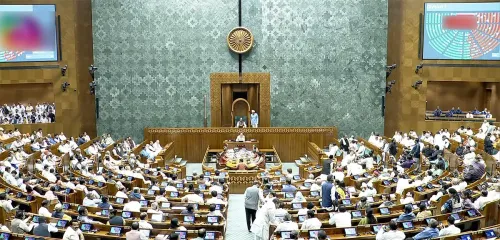
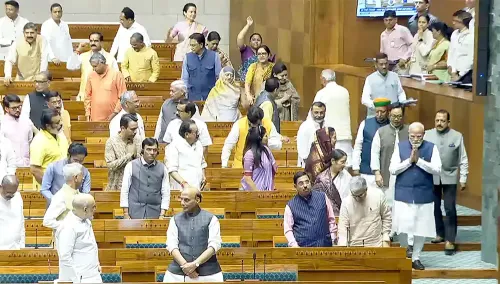
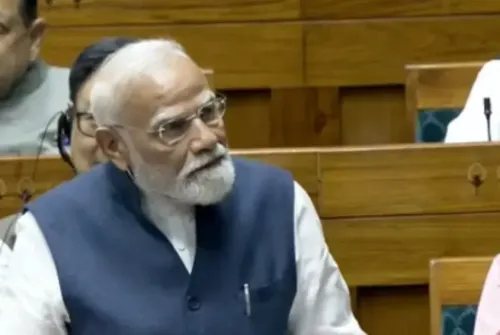
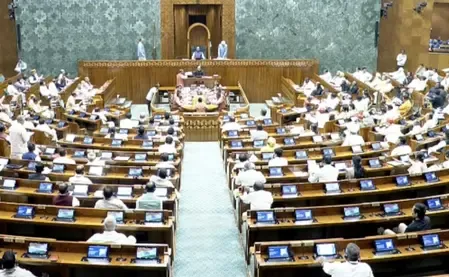
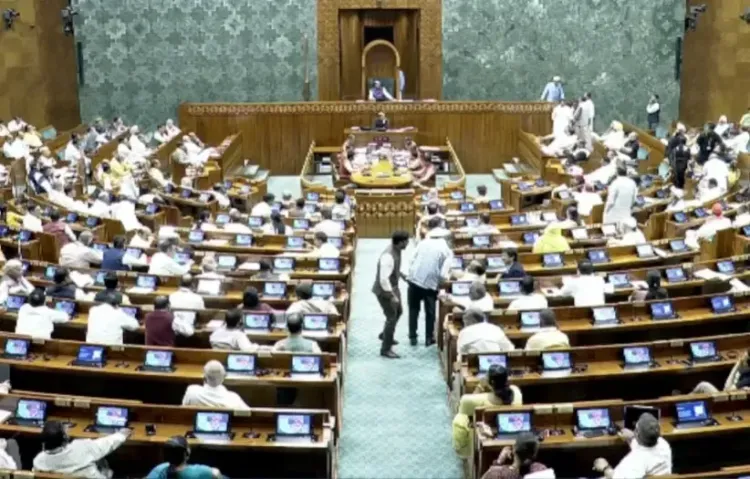
New Delhi, April 16 (NationPress) The Lok Sabha has successfully approved the introduction of the Constitution (One Hundred and Thirty-First Amendment) Bill, 2026, designed to promote women’s reservation and streamline the delimitation process. This approval came on Thursday after a detailed voting session in the House, prompted by the Opposition's insistence on a recorded vote, which led to a formal division.
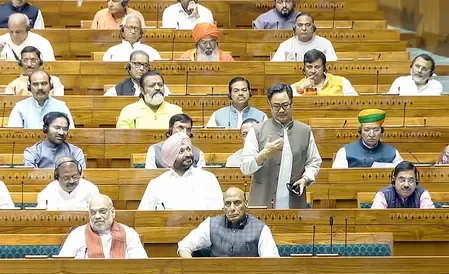
Union Law Minister Arjun Meghwal took the floor to present the Bill, marking a pivotal moment in the legislative journey. This introduction is a follow-up to a prior voting round where Members of Parliament expressed their support for advancing the Bill for further discussion.
Alongside the Constitution (One Hundred and Thirty-First Amendment) Bill, the Delimitation Bill 2026 and the Union Territories Laws (Amendment) Bill, 2026 were also introduced.
In a previous session, the Lok Sabha voted overwhelmingly in favor of introducing the Constitution (One Hundred and Thirty-First Amendment) Bill, 2026, following the Opposition's demand for a division.
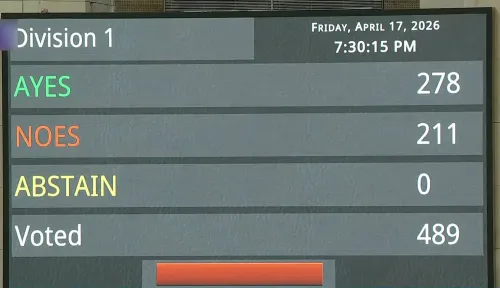
Speaker Om Birla announced the results, revealing a tally of 251 votes in favor and 185 against, clarifying that this outcome may be subject to change.
Typically, the Lok Sabha relies on voice voting for motions, but when the results are disputed, a “division” is initiated. In these instances, the Automatic Vote Recorder system is employed to categorize votes into “Ayes”, “Noes”, and “Abstain”.
During the division of votes, slips were utilized, with a total of 333 members participating in the voting process, and no abstentions recorded.
“If any member wishes to modify their vote, they can request a vote via slips,” the Lok Sabha Secretary General informed the members earlier.
The Opposition's insistence on a division arose during the voting on the introduction of the Women’s Reservation Bill, which required a simple majority to pass, with the voting process executed amidst a surge in political activity.
Secretary General Utpal Singh provided members with insights on the functioning of the automatic vote recording system, emphasizing that while voice votes are standard, a division is called when requested by members.
“Votes will not be counted if they are pressed before the first gong or if they aren’t pressed together until the second gong. Members can verify their votes on the individual results board,” Singh stated.
“If any member wishes to change their vote, they may call for voting through slips,” he reiterated.
--IASN
sd/
Point of View
The approval of the Constitution (One Hundred and Thirty-First Amendment) Bill signals a crucial moment in India's legislative framework, particularly regarding women's representation. The meticulous voting process underscores the importance of transparency and the need for ongoing dialogue in a democratic society.
NationPress
19 Sept 2026
Frequently Asked Questions
What is the purpose of the Constitution (One Hundred and Thirty-First Amendment) Bill, 2026?
The Bill aims to establish women's reservation and facilitate delimitation in legislative bodies.
What was the outcome of the vote in the Lok Sabha?
The outcome was 251 votes in favor and 185 against the introduction of the Bill.
Why was a division of votes requested?
The Opposition demanded a recorded vote, leading to a formal division process in the House.
Who presented the Bill in the Lok Sabha?
Union Law Minister Arjun Meghwal presented the Constitution (One Hundred and Thirty-First Amendment) Bill.
What is the significance of the Automatic Vote Recorder system?
This system is used to accurately record votes during a division, ensuring transparency in the voting process.