Lok Sabha Set to Vote on Women’s Reservation and Delimitation Bills
Synopsis
In a pivotal session, the Lok Sabha will vote on crucial bills aimed at amending the women's reservation law and establishing a delimitation commission. With extensive discussions anticipated, this legislative move could reshape political representation for women in India.
Key Takeaways
Voting on women's reservation bills set for Friday.
Discussion duration projected to be 15-18 hours.
Speaker assures ample time for member discussions .
Division voting was initiated after Opposition's demand.
Legislative changes could impact women's political representation .
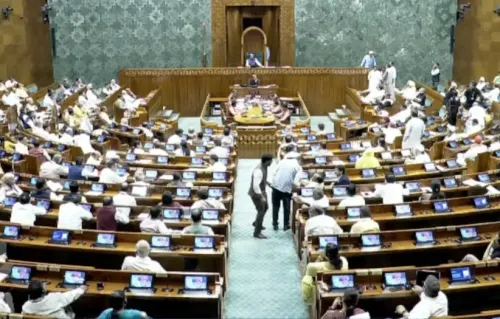
New Delhi, April 17 (NationPress) The Lok Sabha is set to hold a significant vote on three bills aimed at revising the women’s reservation legislation and creating a delimitation commission this coming Friday.
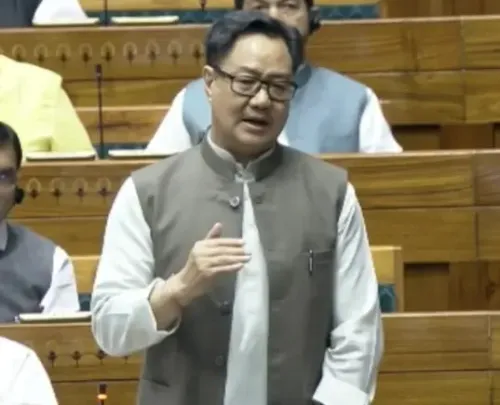
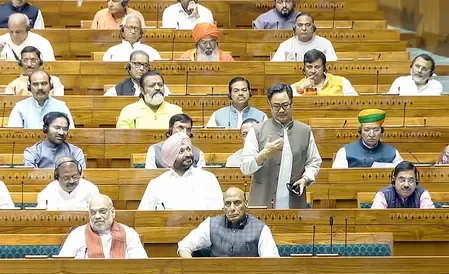
During a session on Thursday, Union Parliamentary Affairs Minister Kiren Rijiju remarked, "The discussion is projected to last for 12 hours. The Speaker has the discretion to prolong the discussion if necessary. Voting on these bills will occur tomorrow."
Lok Sabha Speaker Om Birla later confirmed that the debate could extend further, allowing members ample opportunity for detailed discussion.
He stated, "The conversation around these three bills is expected to span 15-18 hours. Voting will take place at 4 p.m. tomorrow." He assured that all members would have "adequate time" to express their views during the debate.
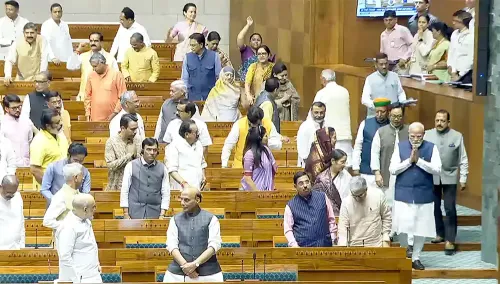
The Constitution (One Hundred and Thirty-First Amendment) Bill, 2026, which focuses on facilitating women’s reservation and enabling delimitation, received approval in the Lok Sabha on Thursday after a division vote. This decision followed the Opposition's demand for a recorded vote, thus initiating a formal division process.
Union Law Minister Arjun Meghwal presented the Bill in the House, marking a pivotal advancement in the legislative procedure. This introduction came after an initial voting round where Members of Parliament expressed support for discussing the Bill.
The Constitution (One Hundred and Thirty-First Amendment) Bill, 2026, along with the Delimitation Bill 2026 and the Union Territories Laws (Amendment) Bill, 2026, were all introduced.
Previously, the Lok Sabha approved the introduction of the Constitution (One Hundred and Thirty-First Amendment) Bill, 2026, after the Opposition insisted on a division vote.
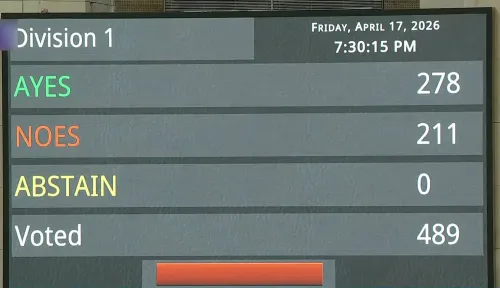
The outcome of the voting was reported as 251 in favor and 185 against, as announced by Speaker Om Birla, noting that these numbers could change.
Typically, the Lok Sabha employs voice voting to pass motions; however, in cases of disputed outcomes, a “division” is enacted. During these divisions, the Automatic Vote Recorder system is utilized to categorize votes into “Ayes,” “Noes,” and “Abstain.”
Vote slips were also employed during the proceedings post-division, with a total of 333 members participating and no abstentions recorded in that session.
According to the Lok Sabha Secretary General, “If any member wishes to alter their vote, they may request voting through slips.”
As the House moved forward with the voting on the Women’s Reservation Bill, the Opposition pushed for a division, and the motion required a simple majority to pass, leading to an engaged political discussion.
Point of View
The upcoming vote in the Lok Sabha represents a significant moment for gender representation in Indian politics. The outcome of these bills could have lasting impacts on women's roles in governance and societal equality.
NationPress
19 Sept 2026
Frequently Asked Questions
What are the main objectives of the bills being voted on?
The main objectives of the bills are to amend the women's reservation law and establish a delimitation commission to ensure fair political representation.
What is the significance of the Constitution (One Hundred and Thirty-First Amendment) Bill?
The Constitution (One Hundred and Thirty-First Amendment) Bill aims to facilitate women's reservation in political positions, marking a step towards gender equality in governance.
When will the voting take place?
The voting on these bills is scheduled for 4 p.m. tomorrow.
How is the voting process conducted in the Lok Sabha?
Voting in the Lok Sabha is usually done by voice, but a division vote is conducted when outcomes are contested, utilizing an Automatic Vote Recorder for accuracy.
What was the outcome of the previous voting on the bills?
The previous voting resulted in 251 members in favor and 185 against the introduction of the Constitution (One Hundred and Thirty-First Amendment) Bill.