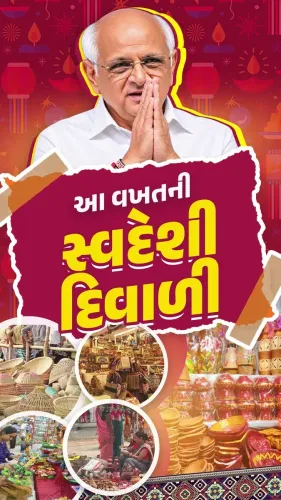
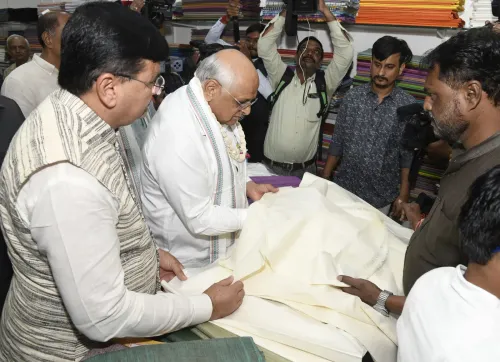
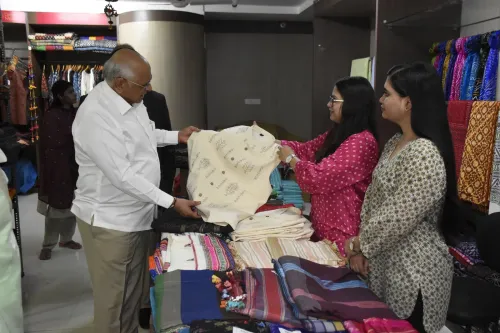
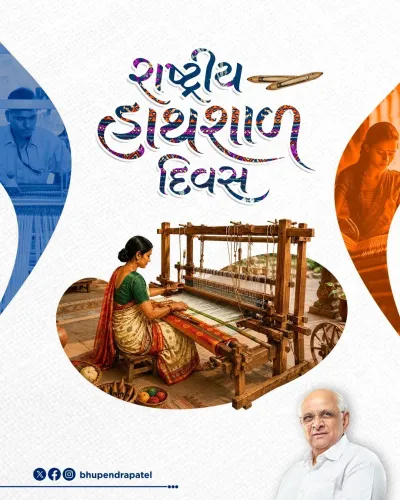
CM Bhupendra Patel Champions Vocal For Local, Backs Artisans

Synopsis
Gujarat Chief Minister Bhupendra Patel on 8 November 2026 renewed his call for citizens to champion India's artisans and local crafts under the national Vocal for Local movement, tying consumer choice to cultural pride and economic self-reliance.
Key Takeaways
Gujarat Chief Minister Bhupendra Patel posted a bilingual Gujarati-English appeal on 8 November 2026 backing the #VocalForLocal movement.
His Gujarati rallying cry — 'દેશ આપણો.. કસબ આપણો.. પસંદ આપણી!' — translates as 'Our country, our craft, our choice!' The Vocal for Local campaign is a pillar of PM Modi's Atmanirbhar Bharat Abhiyan , launched in May 2020 .
It complements the Make in India initiative launched in September 2014 , extending the self-reliance message to artisans and MSMEs.
Gujarat hosts major craft traditions including Kutchi embroidery, Patola silk and Rogan art , making the state a key battleground for artisan livelihoods.
The post signals continued political backing for artisan empowerment, though on-the-ground impact depends on scheme implementation at the state and district level.
From the bustling lanes of Ahmedabad's old city markets to the looms of Kutch, Gujarat's artisan economy has always been a quiet engine of cultural pride — and Gujarat Chief Minister Bhupendra Patel wants every Indian to remember that on Sunday, 8 November 2026. In a post on X, the Chief Minister invoked Gujarati pride alongside a sharp consumer-choice call, rallying citizens behind homegrown talent.
Writing in Gujarati and English, CM Patel declared: 'દેશ આપણો.. કસબ આપણો.. પસંદ આપણી!' — 'Our country, our craft, our choice!' — before urging citizens to let every local purchase 'fuel the dreams and dignity of our skilled artisans.' The bilingual framing was deliberate: it speaks to Gujarat's grassroots craft communities while amplifying the national #VocalForLocal movement.
The campaign behind the hashtag
The Vocal for Local movement traces its roots to Prime Minister Narendra Modi's Atmanirbhar Bharat Abhiyan, announced in May 2020 as India's post-pandemic self-reliance blueprint. It made domestic consumption a patriotic act — asking households to consciously choose Indian-made goods over imports. The pitch was not nostalgia; it was economics. Redirect consumer spending toward local artisans, MSMEs and handicraft producers, and you simultaneously strengthen domestic supply chains, preserve traditional skills and generate employment in the unorganised sector — the part of the economy that employs the most people and shows up least in formal GDP tables.
That campaign itself built on Make in India, launched in September 2014, which targeted manufacturing investment and industrial scale. Vocal for Local took the same logic down to the street level: the village potter, the block-print textile worker, the tribal jeweller. Together, the two initiatives form a decade-long arc of economic nationalism that state leaders like Patel have consistently amplified at the grassroots.
Gujarat's artisan economy in the frame
Gujarat is not a bystander in this story. The state is home to some of India's most iconic craft traditions — Kutchi embroidery, Patola silk weaving, Rogan art and an extraordinary density of local bazaars that connect rural producers to urban and export markets. When a sitting Chief Minister ties his social media voice to artisan empowerment, the signal reaches state administrators, district collectors and scheme implementers who control ground-level support for craft clusters.
The post's call — 'champion our heritage and empower our homegrown talent' — lands as both a consumer nudge and a soft policy signal: the state's political leadership remains invested in artisan livelihoods, not just large-scale industrial corridors.
India's skilled artisans are watching which promises translate into platform access, working capital and market linkage. The hashtag alone does not pay a weaver's rent. But sustained political visibility at the top can move the needle on the schemes that do.
Point of View
Not just administratively mandated from Delhi. The 'craft-as-culture' framing is politically durable because it simultaneously addresses employment, heritage preservation and consumer behaviour without requiring legislative action. The real test, however, is whether this sustained social-media visibility translates into measurable improvements in market access, working capital and digital marketing support for Gujarat's artisan clusters.
NationPress
8 Nov 2026
Frequently Asked Questions
What is the Vocal for Local campaign in India?
Vocal for Local is a national campaign launched as part of PM Modi's Atmanirbhar Bharat Abhiyan in May 2020, urging Indian consumers to buy domestically made goods to support artisans, small businesses and reduce import dependence.
Why is Gujarat CM Bhupendra Patel promoting Vocal for Local?
As Chief Minister of a state with a rich craft heritage, Patel is amplifying the central government's economic self-reliance messaging at the state level, signalling political support for Gujarat's artisan and MSME communities.
What crafts is Gujarat known for under the Vocal for Local push?
Gujarat is home to iconic craft traditions including Kutchi embroidery, Patola silk weaving and Rogan art, all of which benefit from consumer preference campaigns that direct spending toward local artisans.
How does Vocal for Local relate to Make in India?
Make in India, launched in September 2014, targeted large-scale domestic manufacturing and foreign investment. Vocal for Local extends the same self-reliance logic down to the grassroots — artisans, weavers and small traders in local bazaars.
What does Bhupendra Patel's Gujarati slogan mean?
The phrase 'દેશ આપણો.. કસબ આપણો.. પસંદ આપણી' translates as 'Our country, our craft, our choice' — a culturally rooted rallying cry linking national pride with conscious consumer decisions.