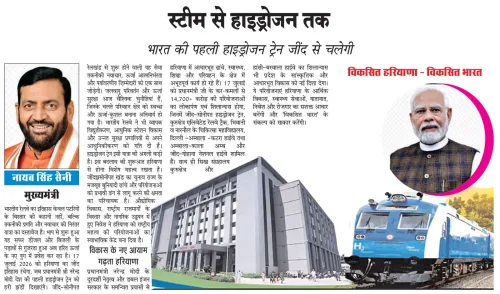
CM Saini Reviews Jind Station Ahead of India's First Hydrogen Train Launch
Synopsis
Haryana CM Nayab Singh Saini visited Jind Railway Station on 16 July 2026 to inspect preparations for PM Modi's upcoming visit, which will feature the inauguration of India's first hydrogen train — a milestone in the country's railway decarbonisation drive under the National Green Hydrogen Mission.
Key Takeaways
CM Nayab Singh Saini personally visited Jind Railway Station on 16 July 2026 to review event preparations.
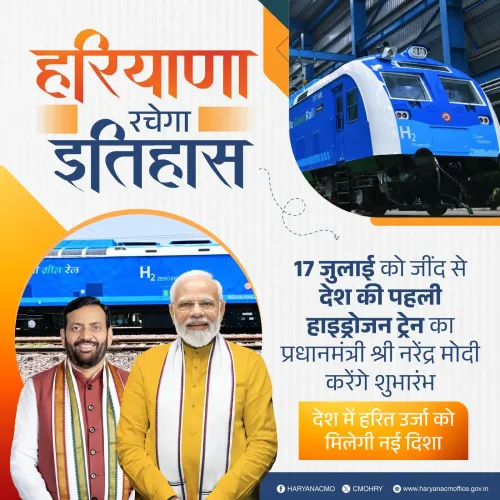
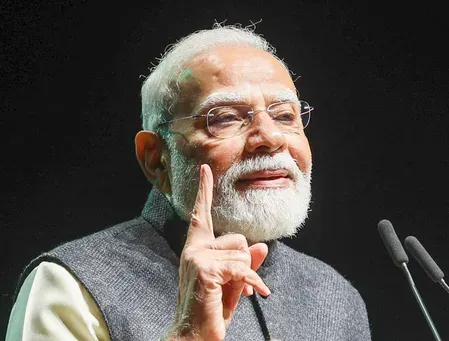
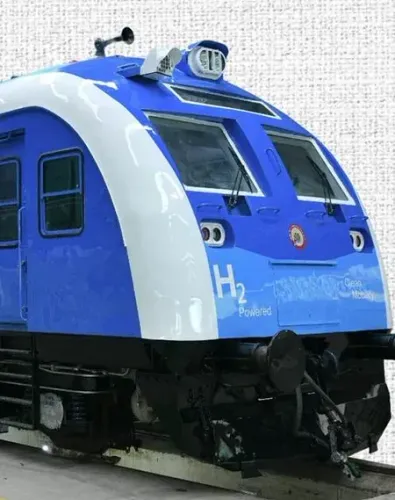
The visit precedes PM Narendra Modi 's arrival in Haryana for the inauguration of India's first hydrogen train .
Officials were directed to ensure all arrangements are completed in a time-bound and well-organised manner.
The hydrogen train initiative is backed by the National Green Hydrogen Mission (launched January 2023) and the Union Budget 2023-24 decarbonisation roadmap.
Indian Railways has a target of achieving net-zero carbon emissions by 2030 , with hydrogen traction a key component.
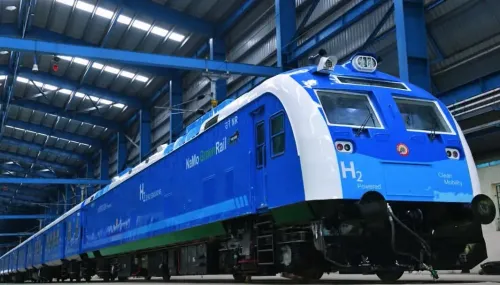
Jind, Haryana is set to become the historic site of India's first hydrogen-powered passenger train run.
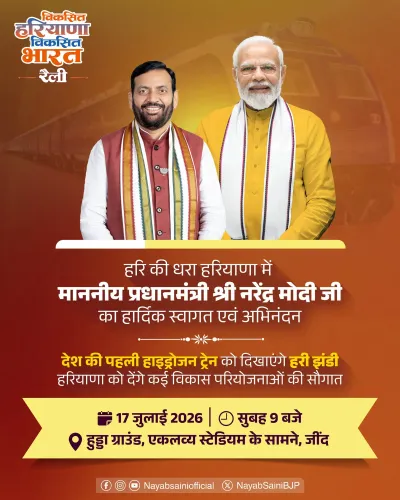
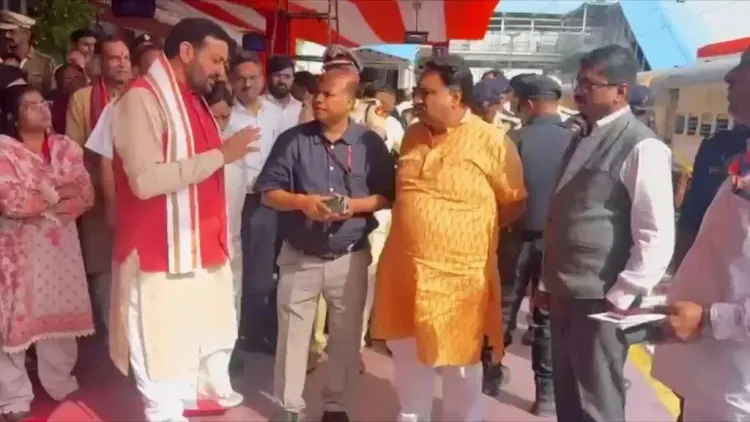
Haryana Chief Minister Nayab Singh Saini visited Jind Railway Station on Thursday, 16 July 2026, to personally inspect preparations for Prime Minister Narendra Modi's upcoming visit to the state, which will include the inauguration of India's first hydrogen train — a landmark moment for the country's green mobility ambitions.
Context
Posting on X, CM Saini said he arrived at Jind Railway Station ahead of PM Modi's arrival in Haryana to conduct a detailed review of preparations. In his words: 'देश की पहली हाइड्रोजन ट्रेन के ऐतिहासिक शुभारंभ' — 'the historic launch of the country's first hydrogen train' — is among the key events being organised. He directed officials to ensure all arrangements are completed in a 'time-bound and well-organised manner,' adding that 'Haryana is fully ready to witness this proud moment.'
The visit by the Chief Minister signals the significance the state government is placing on the event, with senior officials being briefed and logistics reviewed at the station level ahead of the Prime Minister's programme.
Policy Backdrop
The hydrogen train launch is rooted in a series of national-level policy commitments. Indian Railways has set a target of achieving net-zero carbon emissions by 2030, and hydrogen fuel-cell traction on passenger services forms a core pillar of that roadmap. The Union Budget 2023-24 earmarked dedicated funds for hydrogen-powered trains as part of the railways' decarbonisation drive.
Complementing this, the National Green Hydrogen Mission, launched in January 2023, aims to develop domestic hydrogen production capacity and end-use infrastructure across transport and industry. The selection of Jind in Haryana for this inaugural run reflects the coordinated centre-state approach to rolling out green technology pilots across the country.
India's broader commitment to reaching net-zero emissions by 2070 has accelerated the shift away from diesel traction on the railway network. Hydrogen fuel-cell trains produce zero direct emissions, emitting only water vapour, making them a compelling alternative for routes not yet electrified.
Stakeholders and Impact
The inauguration carries direct significance for Haryana's residents and railway passengers on the pilot route. A successful launch would demonstrate the operational viability of hydrogen traction under Indian conditions — a proof of concept that could inform subsequent rollouts in other states.
For Indian Railways, this marks a transition from pilot planning to on-ground execution, with the eyes of the infrastructure and clean-energy sectors firmly on the outcome. State governments in other identified pilot regions will also be watching the Jind launch as a template for their own coordination with the centre.
What's Next
The formal inauguration ceremony, the confirmed operational route of the first hydrogen train, and any announcements on a phased state-wise rollout are the key developments to watch once PM Modi arrives in Haryana. CM Saini's on-ground review suggests the state administration is treating the event as a high-priority programme requiring meticulous logistical coordination.
If the pilot delivers on expectations, it could accelerate Indian Railways' hydrogen procurement pipeline and push the National Green Hydrogen Mission from policy ambition to visible public infrastructure — with Jind entering the record as the site of a historic first in Indian transport.
Point of View
With PM Modi's personal presence amplifying the symbolic weight. For Indian Railways, this is the moment a long-gestating decarbonisation roadmap moves from policy document to public reality. The success or failure of the Jind pilot will set the tone for hydrogen traction's credibility across the wider network.
NationPress
16 Jul 2026
Frequently Asked Questions
What is India's first hydrogen train and where will it be launched?
India's first hydrogen fuel-cell train is set to be inaugurated at Jind Railway Station in Haryana, with PM Narendra Modi expected to perform the launch. The train uses hydrogen fuel-cell technology that emits only water vapour, making it a zero-direct-emission alternative to diesel traction.
Why did CM Nayab Singh Saini visit Jind Railway Station on 16 July 2026?
CM Nayab Singh Saini visited Jind Railway Station to conduct a detailed review of preparations for PM Modi 's upcoming visit to Haryana, which includes the historic inauguration of India's first hydrogen train. He directed officials to complete all arrangements in a time-bound and well-organised manner.
What is the National Green Hydrogen Mission?
The National Green Hydrogen Mission was launched by the central government in January 2023 to develop domestic hydrogen production capacity and expand its use across transport and industry. It provides the policy framework under which hydrogen-powered trains are being developed by Indian Railways .
What is Indian Railways' net-zero emissions target?
Indian Railways has set a target of achieving net-zero carbon emissions by 2030 . Hydrogen fuel-cell trains are a key part of this decarbonisation roadmap, particularly for routes that are not yet electrified.
Which state is hosting India's first hydrogen train inauguration?
Haryana is hosting the inauguration of India's first hydrogen train, with Jind selected as the launch site. CM Nayab Singh Saini confirmed the state is 'fully ready to witness this proud moment.'