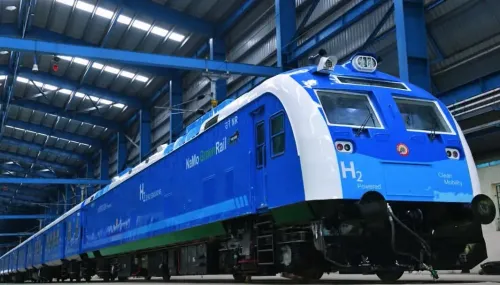
CM Saini Launches India's First Hydrogen Train from Jind

Synopsis
Haryana Chief Minister Nayab Singh Saini on July 16, 2026, celebrated the launch of India's first indigenous hydrogen fuel cell train — NaMoGreenRail — from Jind, calling it a historic milestone in India's green rail revolution and Atmanirbhar Bharat journey.
Key Takeaways
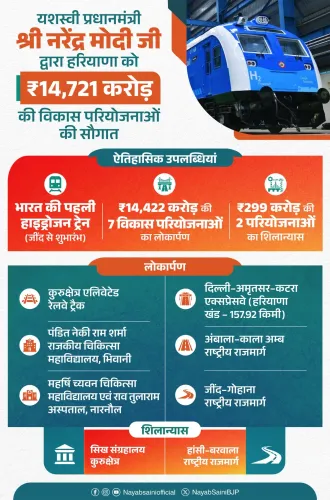
Haryana CM Nayab Singh Saini announced the launch of India's first indigenous hydrogen fuel cell train, NaMoGreenRail , from Jind, Haryana on July 16, 2026 .
The launch is framed as the beginning of India's ' green rail revolution ' and a step toward an Atmanirbhar, emission-free transport future.
NaMoGreenRail is an indigenous project under Indian Railways aligned with the net-zero decarbonisation roadmap.
The National Green Hydrogen Mission , approved in 2023 , provides the central policy foundation for hydrogen fuel cell deployment across sectors.
Key stakeholders include rail passengers , domestic clean energy firms , and component manufacturers poised to benefit from indigenisation.
Further rollout to heritage routes and potential Railway Budget allocations are the next milestones to watch.
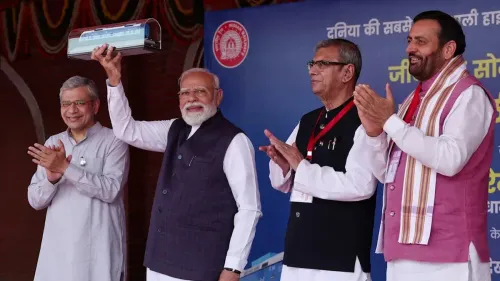
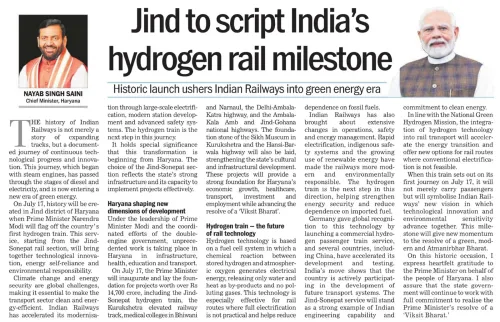
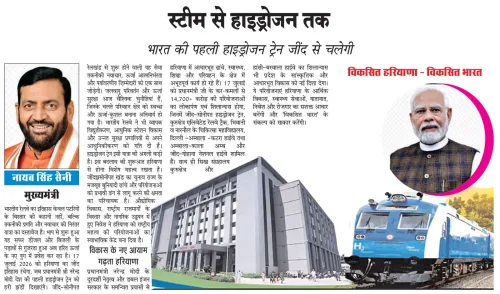
Haryana Chief Minister Nayab Singh Saini on Thursday, July 16, 2026, hailed the launch of India's first indigenous hydrogen fuel cell train — the NaMoGreenRail — describing it as a historic step toward a self-reliant, clean, and green future, with Jind in Haryana serving as the launch site for what he called the beginning of India's green rail revolution.
Context
Posting in Hindi on X, CM Saini wrote: 'जींद से भारत की हरित रेल क्रांति का शुभारंभ' ('India's green rail revolution begins from Jind'), adding that the NaMoGreenRail marks 'a historic step toward an Atmanirbhar, clean, and green future.' The post was accompanied by a video, underscoring the ceremonial significance of the event. Jind, a district in Haryana, thus becomes the symbolic starting point of a nationally significant clean-energy rail initiative.
Policy Backdrop
The NaMoGreenRail is an indigenous hydrogen fuel cell train project developed under Indian Railways as part of its broader net-zero decarbonisation roadmap. The project draws directly from the National Green Hydrogen Mission, approved by the central government in 2023, which aims to scale domestic production and deployment of green hydrogen across key sectors including transport, steel, and fertilisers.
Indian Railways — one of the world's largest rail networks — had outlined plans to introduce hydrogen fuel cell trains on select routes as a cleaner alternative to diesel traction. The emphasis on indigenous development aligns with the Atmanirbhar Bharat manufacturing push, positioning India as a producer rather than importer of green transport technology.
Stakeholders and Impact
The immediate beneficiaries include rail passengers on routes where hydrogen trains are deployed, who stand to gain from quieter, emission-free journeys. Clean energy firms and domestic component manufacturers are also key stakeholders, as the indigenisation of fuel cell technology opens procurement and supply-chain opportunities within India.
For Haryana, hosting the launch at Jind carries political and economic significance — placing the state at the centre of a nationally watched green infrastructure milestone. The event reinforces the state government's alignment with central climate and technology goals at a time when India is under international scrutiny over its clean-energy transition commitments.
What's Next
Attention will now turn to the pace of rollout: whether NaMoGreenRail services expand to heritage routes and other rail corridors, and whether the next Railway Budget carries dedicated allocations for hydrogen train procurement and infrastructure. The success of this pilot at Jind will be closely watched by clean energy advocates and policymakers as a proof-of-concept for India's hydrogen-powered rail ambitions.
If the indigenous model scales effectively, it could position Indian Railways as a global benchmark for green rail technology in emerging economies — and cement Haryana's early role in that transformation.
Point of View
With a BJP-governed state deliberately chosen as the showcase. For CM Saini, the optics serve a dual purpose: reinforcing Haryana's relevance in national infrastructure narratives while tying the state's identity to a futuristic, clean-energy brand. The indigenisation angle is equally deliberate, allowing the central government to frame NaMoGreenRail as an Atmanirbhar success story ahead of what could be a politically charged Railway Budget cycle. Whether the pilot translates into a scalable fleet will determine if this moment is remembered as a turning point or a well-staged preview.
NationPress
15 Oct 2026
Frequently Asked Questions
What is NaMoGreenRail?
NaMoGreenRail is India's first indigenous hydrogen fuel cell train project developed under Indian Railways as part of its net-zero decarbonisation roadmap, aimed at replacing diesel traction with clean hydrogen-powered propulsion.
Where was India's first hydrogen train launched?
India's first indigenous hydrogen fuel cell train, NaMoGreenRail, was launched from Jind, a district in Haryana, on July 16, 2026.
What is the National Green Hydrogen Mission?
The National Green Hydrogen Mission is a central government programme approved in 2023 to scale domestic production and use of green hydrogen across sectors including transport, steel, and fertilisers.
What did Haryana CM Nayab Singh Saini say about NaMoGreenRail?
CM Nayab Singh Saini described the launch as 'a historic step toward an Atmanirbhar, clean, and green future,' calling it the beginning of India's green rail revolution.
What comes next after the NaMoGreenRail launch at Jind?
Observers are watching for expansion of NaMoGreenRail services to heritage and other rail routes, as well as potential dedicated allocations in the next Railway Budget to scale hydrogen train procurement and infrastructure.