Puri Hails India's First Hydrogen Train on Jind-Sonipat Route

Synopsis
Union Petroleum Minister Hardeep Singh Puri has hailed India's first indigenous hydrogen fuel cell train — a 10-coach rake powered by a 1,200 kW system — set to run on the Jind-Sonipat section in Haryana, placing India alongside Germany, Japan, China and the US in hydrogen rail technology.
Key Takeaways
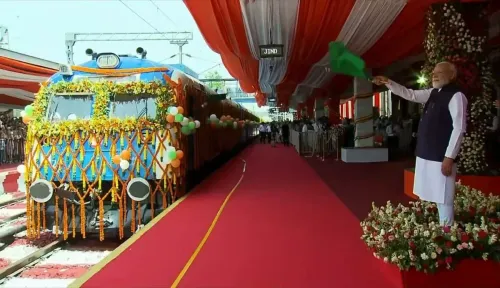
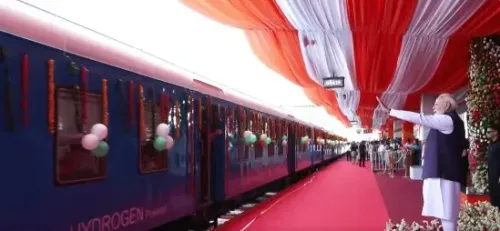
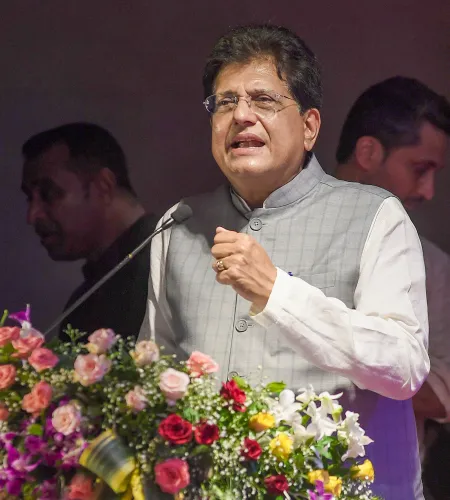
Union Petroleum Minister Hardeep Singh Puri on 16 July 2026 hailed India's first indigenous hydrogen fuel cell train as a landmark in the country's green transition.
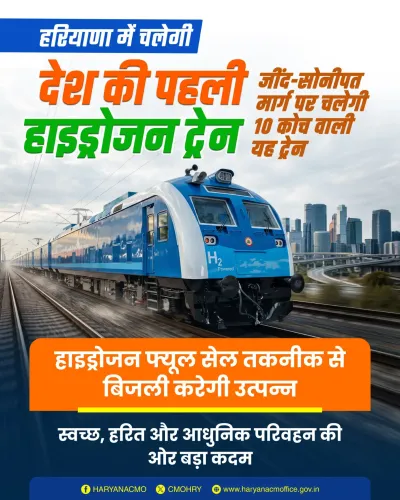
The 10-coach train is powered by a 1,200 kW hydrogen fuel cell propulsion system and will operate on the Jind-Sonipat section in Haryana .
The train emits only water vapour , making it a zero-emission alternative to diesel-powered rolling stock.
The project is indigenously designed and developed, with hydrogen storage and refuelling infrastructure built at Jind under the Atmanirbhar Bharat initiative.
India joins Germany, Japan, China and the United States in deploying hydrogen fuel cell technology for rail operations.
The initiative aligns with the National Green Hydrogen Mission (Rs 19,744 crore outlay) and Indian Railways' net-zero target by 2030 .
Union Petroleum Minister Hardeep Singh Puri on Thursday, 16 July 2026, hailed the launch of India's first indigenous hydrogen-powered train as a landmark moment in the country's green energy transition, describing green hydrogen as 'the most exciting chapter in India's green transition journey.' The 10-coach Hydrogen Fuel Cell train, powered by a 1,200 kW hydrogen fuel cell propulsion system, is set to operate on the Jind-Sonipat section in Haryana, emitting only water vapour.
Context
Puri's post underscores the cross-ministerial significance of the hydrogen train project, with the Petroleum Ministry's stake rooted in India's National Green Hydrogen Mission — a Cabinet-approved programme with a Rs 19,744 crore outlay, launched in January 2023, aimed at positioning India as a global green hydrogen hub. The train project is designed and developed entirely in India, and is backed by indigenous hydrogen storage and refuelling infrastructure at Jind, reinforcing the Atmanirbhar Bharat vision of domestic technology self-reliance.
The minister noted that the train 'emits only water vapour, making it a clean, green and sustainable alternative' to conventional diesel-powered rolling stock. With this development, India joins an elite group of nations — including Germany, Japan, China, and the United States — exploring hydrogen fuel cell technology for sustainable rail operations.
Policy Backdrop
Indian Railways, the world's fourth-largest rail network, has committed to achieving net-zero carbon emissions by 2030 as part of its decarbonisation roadmap. Hydrogen fuel cell trains are seen as a viable solution for non-electrified or hard-to-electrify routes, where overhead wire infrastructure is either absent or economically unfeasible.
Germany was among the first movers globally, with its Coradia iLint hydrogen train entering commercial service in 2018. India's entry into this space with an indigenously designed system — rather than an imported one — marks a qualitative shift in the country's green mobility ambitions. The Jind-Sonipat corridor in Haryana has been identified as the initial trial route for this technology.
Stakeholders and Impact
The hydrogen train directly benefits rail passengers on the Jind-Sonipat corridor and signals a broader opportunity for India's nascent green hydrogen industry, which stands to gain from demand generated by transport applications. Indigenous development of the propulsion system and refuelling infrastructure also creates potential for technology exports and domestic manufacturing jobs.
The project aligns with India's commitment made at COP26 to achieve net-zero emissions by 2070, and with the interim target of integrating green hydrogen into hard-to-abate transport segments. Puri tagged Railway Minister Ashwini Vaishnaw and Haryana Chief Minister Nayab Singh Saini in his post, reflecting the multi-stakeholder coordination behind the initiative.
What's Next
Attention will now turn to the commercial rollout timeline for the Jind-Sonipat service and whether the Railway Board or the Ministry of Railways will announce additional routes for hydrogen train operations. Progress on standardising hydrogen storage and refuelling protocols under the National Green Hydrogen Mission will be a key enabler for scaling the technology beyond the pilot corridor.
If the Jind-Sonipat trial demonstrates operational reliability and cost viability, it could catalyse a wider network of hydrogen rail corridors across India — particularly on routes where full electrification remains a challenge — marking a decisive shift in how the country powers its vast rail network.
Point of View
Despite it falling squarely within the Railways Ministry's domain, signals that the Petroleum Ministry views green hydrogen transport as a strategic extension of its own energy-transition mandate under the National Green Hydrogen Mission. The cross-ministerial tagging — Railways, PMO, Haryana CM — is deliberate optics, projecting a whole-of-government narrative ahead of what could be a high-visibility commercial launch. Positioning this alongside Germany, Japan and China is a calibrated move to frame India not as a late follower but as a peer in frontier clean-energy technology. The emphasis on indigenous design and refuelling infrastructure also serves as a rebuttal to critics who argue India's green ambitions rely too heavily on imported technology.
NationPress
15 Oct 2026
Frequently Asked Questions
What is India's first hydrogen fuel cell train and where will it run?
India's first hydrogen fuel cell train is a 10-coach rake powered by a 1,200 kW hydrogen fuel cell propulsion system. It is set to operate on the Jind-Sonipat section in Haryana, emitting only water vapour.
What is the National Green Hydrogen Mission?
The National Green Hydrogen Mission is a Cabinet-approved scheme launched in January 2023 with an outlay of Rs 19,744 crore. It aims to scale up green hydrogen production and use in India, positioning the country as a global green hydrogen hub.
Which countries already use hydrogen fuel cell trains?
Germany, Japan, China and the United States have been exploring or operating hydrogen fuel cell trains. Germany's Coradia iLint entered commercial service as early as 2018, making it one of the world's first such deployments.
What is Indian Railways' net-zero target?
Indian Railways has committed to achieving net-zero carbon emissions by 2030, as outlined in its decarbonisation roadmap. Hydrogen fuel cell trains are seen as a key tool for decarbonising non-electrified routes.
Why is Hardeep Singh Puri commenting on a railways project?
As Union Petroleum Minister, Puri oversees the National Green Hydrogen Mission, which provides the policy and funding framework for green hydrogen production and use in India — including transport applications like the hydrogen train.