CM Saini Thanks PM Modi for India's First Hydrogen DEMU Train to Haryana
Synopsis
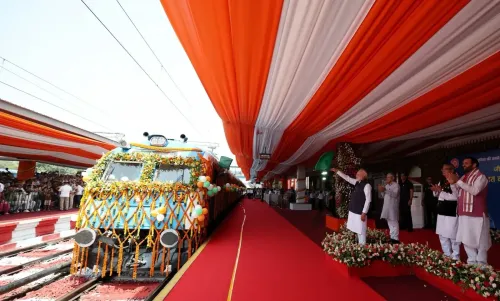
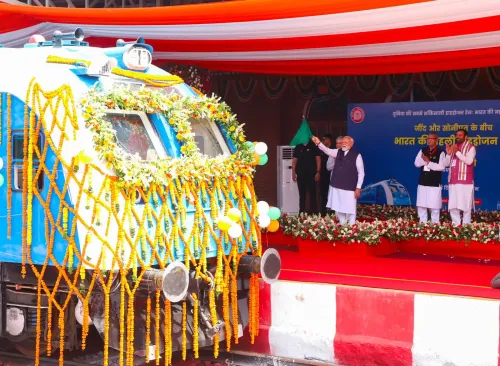
Haryana Chief Minister Nayab Singh Saini has welcomed Indian Railways' approval of India's first hydrogen DEMU train — a 10-coach service on the Jind–Sonipat corridor — thanking PM Narendra Modi and the central government for the landmark green infrastructure push.
Key Takeaways
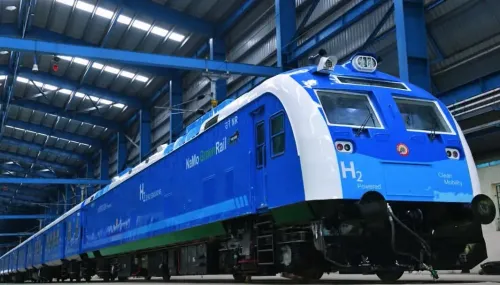
Indian Railways has approved India's first hydrogen-powered DEMU train for Haryana.
The approved train is a 10-coach hydrogen DEMU to run between Jind and Sonipat .
CM Nayab Singh Saini publicly thanked PM Narendra Modi and the central government for the allocation.
The project aligns with the National Green Hydrogen Mission (2023) and India's net-zero 2070 commitment.
Indian Railways has been planning hydrogen fuel-cell train pilots since 2021 to cut diesel dependence.
Haryana becomes the first state to receive a hydrogen DEMU on a regular passenger corridor.
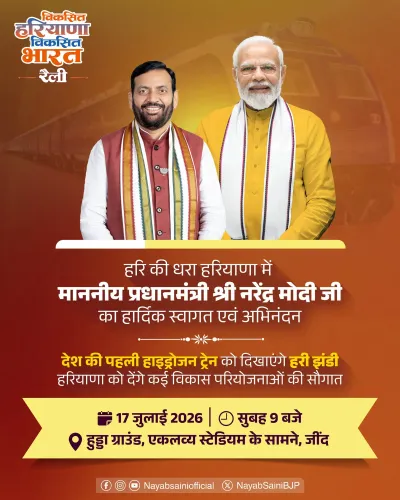
Haryana Chief Minister Nayab Singh Saini on Wednesday, 27 May 2026, welcomed the approval of India's first hydrogen-powered DEMU train for the state, thanking Prime Minister Narendra Modi and the central government for what he called a historic gift to Haryana. Indian Railways has approved a 10-coach hydrogen DEMU train to operate between Jind and Sonipat, two key districts in Haryana.
Context
Posting in Hindi, CM Saini wrote: 'हरियाणा को मिली एक और ऐतिहासिक सौगात!' ('Haryana receives yet another historic gift!'). He expressed gratitude to the Prime Minister and the central government for allocating India's first hydrogen DEMU train to the state. The approved corridor spans the Jind–Sonipat route, connecting a central Haryana district to a major industrial and transit hub near the National Capital Region.
The announcement marks a significant moment in India's railway modernisation drive, as hydrogen fuel-cell technology is being deployed on a regular passenger corridor for the first time in the country. Haryana becomes the first state to receive such a train under the broader national push to decarbonise rail operations.
Policy Backdrop
Indian Railways has been outlining hydrogen fuel-cell train pilots in successive Union Budgets since 2021, with the stated goal of reducing diesel dependence on non-electrified sections of the network. The National Green Hydrogen Mission, launched by the central government in 2023, provides the overarching policy framework for scaling green hydrogen use across transport and industry in India.
India has committed to achieving net-zero emissions by 2070, and decarbonising railways is a key pillar of that strategy. Northern states such as Haryana are emerging as early recipients of hydrogen corridor approvals, partly to align with domestic manufacturing ambitions for fuel-cell technology. The Jind–Sonipat corridor is among the first regular-route approvals to move beyond heritage or pilot-only tracks.
Stakeholders and Impact
Daily commuters between Jind and Sonipat stand to benefit most directly, gaining access to a cleaner, modern train service on a route that currently relies on diesel traction. The corridor also carries symbolic weight as a demonstration project that could influence similar approvals across other non-electrified sections in Haryana and neighbouring states.
For Indian Railways and domestic fuel-cell manufacturers, the approval is an opportunity to validate hydrogen DEMU operations at scale, covering safety certifications, maintenance protocols, and operational economics under real-world conditions. Broader stakeholders include Haryana's industrial sector, which may see ancillary infrastructure investments tied to hydrogen supply chains along the corridor.
What's Next
The immediate focus will be on the actual rollout timeline and the completion of safety certifications required before the 10-coach hydrogen DEMU enters passenger service on the Jind–Sonipat route. Indian Railways and state authorities are expected to announce operational milestones as the project progresses through procurement and testing phases.
If the Haryana corridor demonstrates reliable performance, it is likely to accelerate similar hydrogen train approvals on other non-electrified sections across northern India. The project will be closely watched as a benchmark for India's ability to indigenously develop, certify, and operate hydrogen-powered rolling stock at a commercial scale.
Point of View
Where central scheme approvals are amplified through state leadership. More substantively, placing India's first hydrogen DEMU on a Haryana route rather than a heritage tourist line marks a shift toward treating the technology as operationally serious rather than merely symbolic. The corridor will serve as a live stress-test for India's hydrogen rail ambitions, and its success or failure will shape the pace of similar approvals nationwide.
NationPress
13 Oct 2026
Frequently Asked Questions
What is India's first hydrogen DEMU train and where will it run?
India's first hydrogen DEMU (Diesel Electric Multiple Unit) train is a 10-coach hydrogen fuel-cell powered train approved by Indian Railways to operate between Jind and Sonipat in Haryana.
What did Haryana CM Nayab Singh Saini say about the hydrogen train?
CM Nayab Singh Saini called it a 'historic gift' to Haryana and thanked Prime Minister Narendra Modi and the central government for allocating India's first hydrogen DEMU train to the state.
What is the National Green Hydrogen Mission?
The National Green Hydrogen Mission is a central government scheme launched in 2023 to scale up green hydrogen production and use across sectors including transport, with Indian Railways being a key target sector.
When will the Jind–Sonipat hydrogen train start running?
An exact launch date has not been announced. The train must complete safety certifications and procurement before entering passenger service; official timelines are awaited from Indian Railways.
Why is Indian Railways switching to hydrogen trains?
Indian Railways is piloting hydrogen fuel-cell trains to reduce diesel consumption on non-electrified sections and support India's commitment to achieving net-zero emissions by 2070.