CM Vishnu Deo Sai joins Jagannath Rath Yatra in Raipur, Jashpur
Synopsis
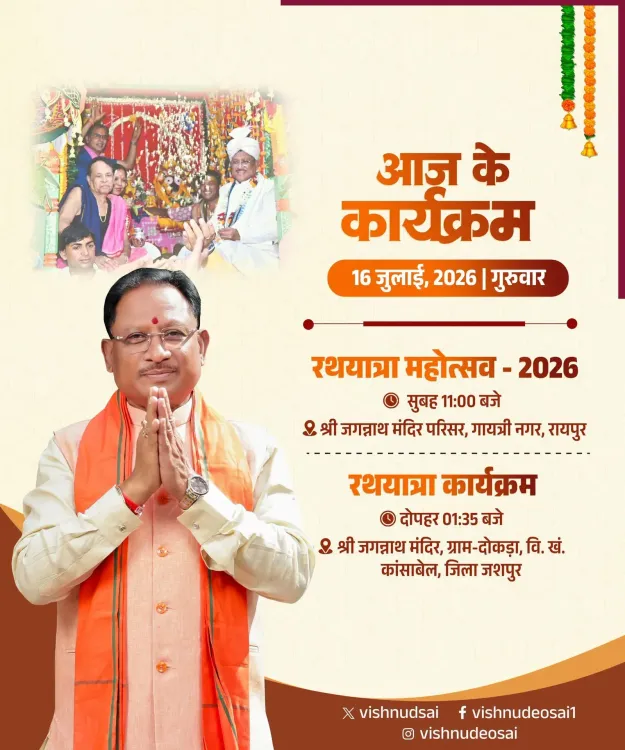
Chhattisgarh Chief Minister Vishnu Deo Sai announced his participation in the Jagannath Rath Yatra at Raipur and Jashpur's Dokada on 16 July 2026, invoking themes of Sanatan tradition, social harmony, and public faith, while praying for the welfare of all Chhattisgarh residents.
Key Takeaways
CM Vishnu Deo Sai announced participation in the Jagannath Rath Yatra at two sites on 16 July 2026 .
The two locations are the Shri Jagannath Temple in Raipur and Dokada in Jashpur district .
CM Sai described Rath Yatra as 'the living consciousness of our Sanatan tradition' and an 'unparalleled festival of public faith, service, harmony, and people's participation.' He offered prayers to Lord Jagannath Mahaprabhu for the happiness, peace, prosperity, and good health of all Chhattisgarh residents.
The dual-location participation reflects outreach to both urban ( Raipur ) and rural-tribal ( Jashpur ) communities in the state.
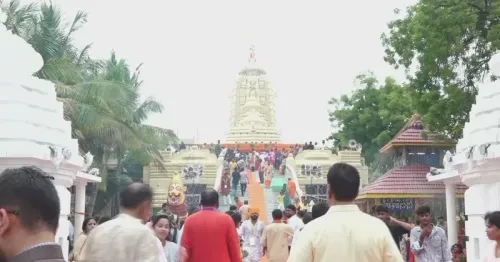
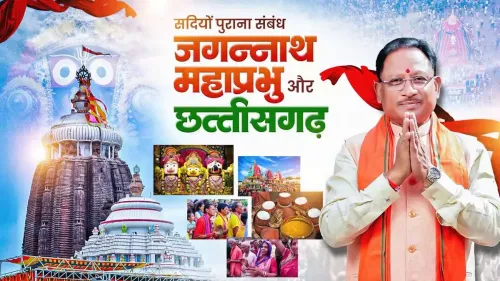
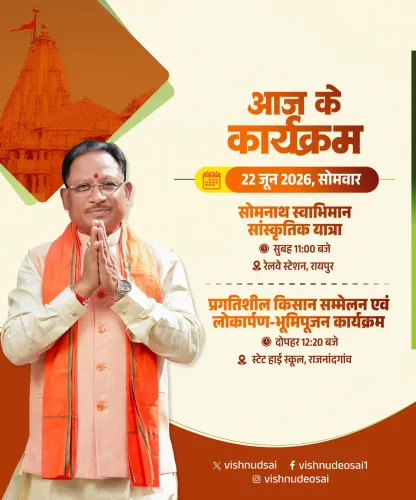
Chhattisgarh Chief Minister Vishnu Deo Sai announced on Thursday, 16 July 2026 that he would participate in the sacred Jagannath Rath Yatra festival at two locations — the Shri Jagannath Temple in Raipur and the Dokada site in Jashpur district — to seek the blessings of Lord Jagannath Mahaprabhu.
Context
In his post on X, CM Sai wrote in Hindi: 'रथयात्रा हमारी सनातन परंपरा की जीवंत चेतना, लोकआस्था, सेवा, समरसता और जनभागीदारी का अनुपम पर्व है' — meaning, 'Rath Yatra is the living consciousness of our Sanatan tradition, an unparalleled festival of public faith, service, harmony, and people's participation.' He also conveyed his prayers to Lord Jagannath for the happiness, peace, prosperity, and good health of all residents of Chhattisgarh.
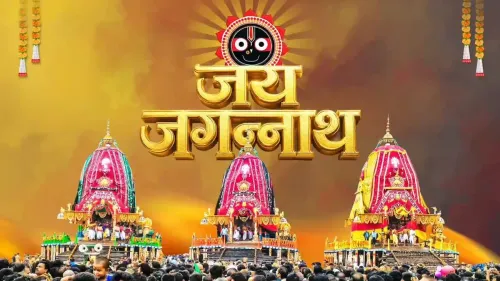
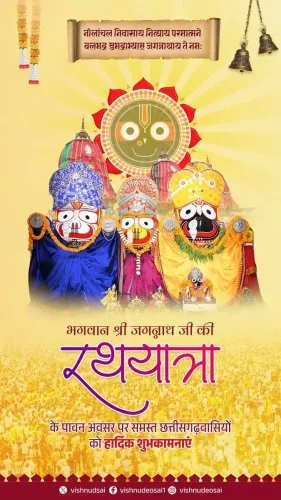
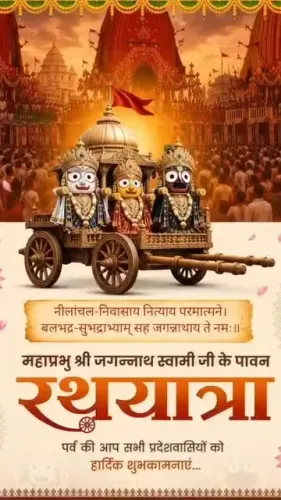
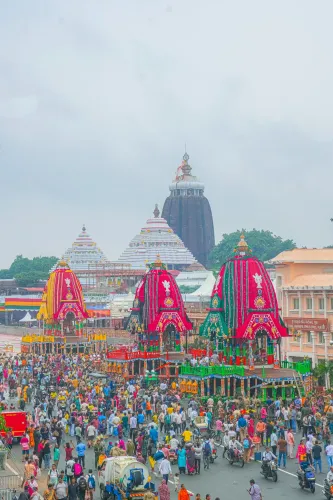
The Jagannath Rath Yatra is one of India's most widely observed Hindu festivals, centred on the chariot procession of Lord Jagannath, his brother Balabhadra, and sister Subhadra. While its most celebrated form takes place in Puri, Odisha, the festival is observed across the country, including in Chhattisgarh, where communities maintain strong devotional ties to the Jagannath tradition.
Policy Backdrop
Elected officials across BJP-governed states have made participation in major Hindu festivals a visible part of their public engagement, framing such attendance as affirmation of cultural and Sanatan heritage. In Chhattisgarh, CM Sai — who took charge in December 2023 — has consistently highlighted the state's religious and tribal cultural identity as integral to governance.
The dual participation at Raipur, the state capital, and the more remote Jashpur district signals an intent to connect with devotees across both urban and rural belts of the state. Jashpur, a district with significant tribal and Christian communities alongside Hindu populations, underscores the inclusive framing of samrasta (social harmony) that CM Sai invoked in his message.
Stakeholders and Impact
The primary beneficiaries of the Chief Minister's participation are the Jagannath devotees and local organising committees at both Raipur and Dokada in Jashpur, for whom a sitting Chief Minister's presence lends institutional prominence to the procession. Broader Chhattisgarh residents are addressed directly in CM Sai's message, which frames the festival as a moment of collective well-being and social unity.
Observers note that high-profile participation in such events also reinforces the state government's cultural positioning ahead of future electoral cycles, reflecting a pattern seen across several states where governance visibility is woven into religious and community occasions.
What's Next
Following the 2026 Rath Yatra observances, attention will turn to whether the Chhattisgarh government announces any formal policy or budgetary support for cultural tourism linked to the Jagannath temples in the state. The annual recurrence of the festival also provides a recurring platform for the Chief Minister's community outreach across districts. State government statements on Sanatan cultural infrastructure in Chhattisgarh are expected to follow in the coming weeks.
Point of View
Blending public outreach with cultural signalling. The explicit mention of 'people's participation' and 'service' also frames the festival in civic rather than purely devotional terms, broadening its political resonance. Whether the state follows up with concrete cultural-tourism or infrastructure announcements tied to Jagannath sites will determine if this remains symbolic or translates into policy.
NationPress
16 Jul 2026
Frequently Asked Questions
Where is CM Vishnu Deo Sai attending Rath Yatra in 2026?
CM Vishnu Deo Sai announced he will attend the Jagannath Rath Yatra at the Shri Jagannath Temple in Raipur and at Dokada in Jashpur district on 16 July 2026.
What is the Jagannath Rath Yatra festival?
The Jagannath Rath Yatra is an annual Hindu chariot festival honouring Lord Jagannath, rooted in Sanatan tradition and marked by large public processions. It is celebrated across India, with the most famous observance held in Puri, Odisha.
What did CM Vishnu Deo Sai say about Rath Yatra?
CM Sai described Rath Yatra as 'the living consciousness of our Sanatan tradition' and called it an 'unparalleled festival of public faith, service, harmony, and people's participation.' He also prayed for the happiness, peace, prosperity, and good health of all Chhattisgarh residents.
Is Rath Yatra celebrated in Chhattisgarh?
Yes, the Jagannath Rath Yatra is celebrated in Chhattisgarh, including at the Shri Jagannath Temple in the state capital Raipur and at Dokada in Jashpur district, among other locations.
Who is Vishnu Deo Sai?
Vishnu Deo Sai is the Chief Minister of Chhattisgarh and a senior BJP leader who assumed office in December 2023. He regularly participates in state religious and cultural events.