Giriraj Singh launches India's first int'l fashion forecast book at Bharat Tex 2026
Synopsis
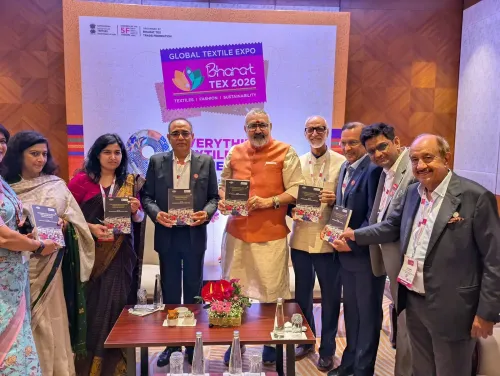
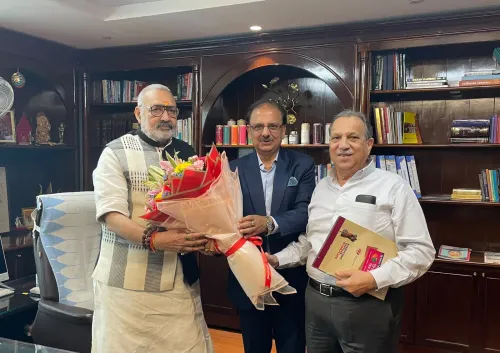
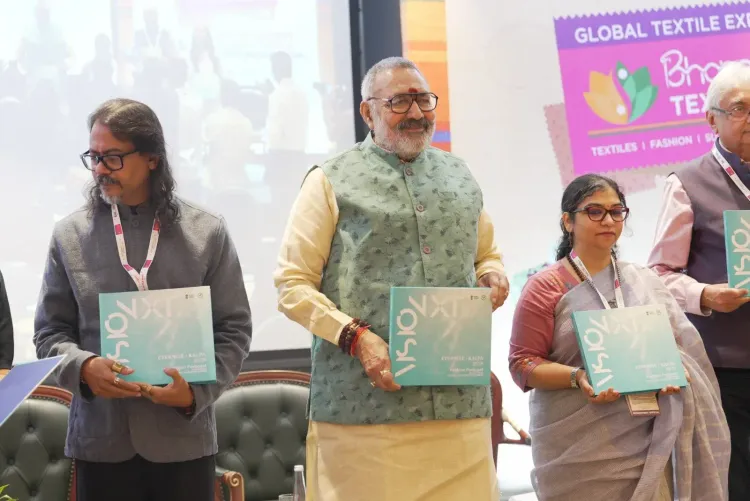
Union Textiles Minister Giriraj Singh joined the release of 'Éternité: Kalpa 27/28' at Bharat Tex 2026 — India's first international fashion forecast book, produced by NIFT's VisionNxt research cell, projecting trends and consumer preferences for the 2027–28 season.
Key Takeaways
India's first international fashion forecast book , titled 'Éternité: Kalpa 27/28' , was launched at Bharat Tex 2026 on 16 July 2026 .
The book was prepared by VisionNxt , the research cell of NIFT , covering fashion trends and consumer preferences for the 2027–28 season.
Union Textiles Minister Giriraj Singh participated in the launch and held an exchange of ideas with fashion and textiles sector experts.
NIFT was established in 1986 under the Ministry of Textiles; VisionNxt is its dedicated trend analysis and forecasting unit.
The launch aligns with India's policy push to position its textiles sector as a value-added, trend-setting exporter, complementing the PLI scheme for textiles launched in 2021 .
Industry uptake of the Kalpa 27/28 forecasts during the 2026–27 buying season will be a key measure of the publication's commercial impact.
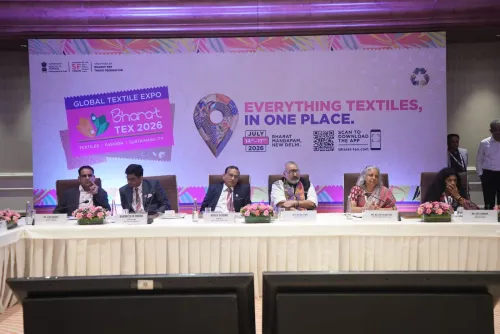
Union Textiles Minister Giriraj Singh participated in the launch of India's first international fashion forecast publication on 16 July 2026, during a knowledge session held under Bharat Tex 2026. The book, titled 'Éternité: Kalpa 27/28', was prepared by VisionNxt, the research cell of the National Institute of Fashion Technology (NIFT), and was unveiled at the 'Indian Trends to Global Taste: Forecasting for Billion Consumers (VisionNxt)' session.
In his post on X, the Minister described the occasion as a participation in the release of the forecast book, noting that it 'फैशन रुझानों, लोगों की बदलती पसंद और आने वाले समय की नई सोच को समझने में मदद करती है' — that is, 'helps in understanding fashion trends, changing consumer preferences, and new thinking for the times ahead.' He also noted that an exchange of ideas took place with experts from the fashion and textiles sector.
Context
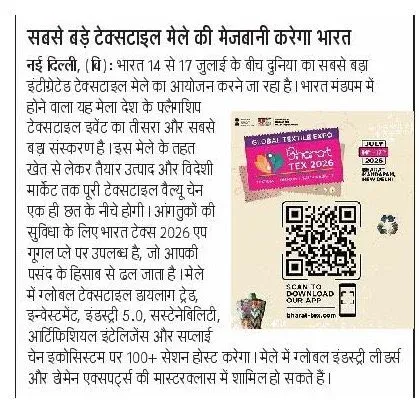
Bharat Tex 2026 is the Ministry of Textiles' flagship event series, designed to showcase India's capabilities across the textile and apparel value chain, facilitate export connections, and host knowledge-sharing sessions aligned with global industry cycles. The VisionNxt knowledge session was one such platform, bringing together researchers, designers, and industry professionals to engage with forward-looking trend data.
'Éternité: Kalpa 27/28' covers design directions, emerging consumer preferences, and fashion trends projected for the 2027–28 season, making it the first publication of its kind from an Indian institution targeting an international audience.
Policy Backdrop
NIFT was established in 1986 under the Ministry of Textiles as an autonomous institution to build a professional cadre for India's fashion and apparel industry, with campuses spread across the country. Its research cell, VisionNxt, focuses on trend analysis, consumer behaviour studies, and the development of forecasting tools for both domestic and global markets.
The launch fits within a broader policy arc in which successive governments have used NIFT and sector events to shift India's textiles identity — from a raw-material and low-cost manufacturing base toward a value-added, trend-influencing exporter. This effort has been complemented by measures such as the Production Linked Incentive (PLI) scheme for textiles, launched in 2021, which targets man-made fibre and technical textiles segments to attract investment and boost exports.
Stakeholders and Impact
The primary beneficiaries of the Kalpa 27/28 forecast are textile exporters, fashion designers, and buying houses that align production calendars with international fashion cycles well in advance. For smaller manufacturers and NIFT-linked clusters, access to a domestically produced, internationally benchmarked forecast reduces dependence on foreign trend agencies.
For NIFT itself, the publication marks a significant institutional milestone — positioning it not merely as a design school but as a credible source of global fashion intelligence. Industry uptake during the 2026–27 buying season will be a key indicator of the book's commercial relevance.
What's Next
Attention will now turn to how industry stakeholders — particularly exporters and design houses — integrate the Kalpa 27/28 forecasts into their product development and sourcing decisions ahead of the next international buying cycle. Any follow-up announcements regarding further VisionNxt publications, or their integration with PLI-supported manufacturing clusters, will signal whether this becomes a recurring, institutionalised effort.
If the forecast gains traction with global buyers, it could strengthen India's claim to being a trend-originating market rather than solely a trend-following one — a shift with significant implications for export premiums and brand positioning in international fashion markets.
Point of View
The government signals that fashion forecasting is now considered a policy instrument, not merely an academic exercise. The move also reinforces NIFT's evolving role as an industry-facing institution rather than a purely educational one. Whether this translates into measurable export premiums or buyer behaviour change will depend on how aggressively the forecasts are marketed to international sourcing teams in the months ahead.
NationPress
16 Jul 2026
Frequently Asked Questions
What is 'Éternité: Kalpa 27/28' and why is it significant?
'Éternité: Kalpa 27/28' is India's first international fashion forecast book, prepared by NIFT's VisionNxt research cell. It is significant because it positions an Indian institution as a source of globally benchmarked trend intelligence for the 2027–28 fashion season, reducing industry reliance on foreign forecasting agencies.
What is VisionNxt and who created it?
VisionNxt is the dedicated research cell of the National Institute of Fashion Technology (NIFT), established under the Ministry of Textiles. It focuses on trend analysis, consumer behaviour studies, and the development of fashion forecasting tools for domestic and international markets.
What is Bharat Tex 2026?
Bharat Tex 2026 is the Ministry of Textiles' flagship event series, designed to showcase India's textiles and apparel capabilities, facilitate export connections, and host knowledge sessions on industry trends and innovation.
What did Giriraj Singh do at Bharat Tex 2026?
Union Textiles Minister Giriraj Singh participated in the launch of India's first international fashion forecast book, 'Éternité: Kalpa 27/28', at a VisionNxt knowledge session under Bharat Tex 2026, and engaged in an exchange of ideas with fashion and textiles sector experts.
How does the fashion forecast book relate to India's textiles export policy?
The book is part of India's broader effort to shift from being a raw-material supplier to a value-added, trend-influencing exporter. It complements measures like the PLI scheme for textiles (launched in 2021) by equipping designers and exporters with domestically produced, internationally benchmarked trend data.