Giriraj Singh flags $1.5 bn textile opportunity in India-UK FTA
Synopsis
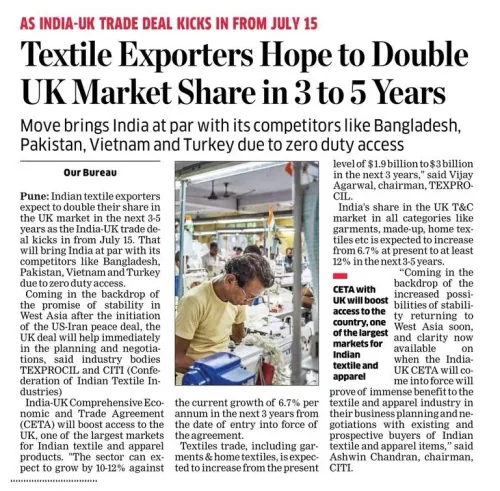
Union Textiles Minister Giriraj Singh on 16 July 2026 flagged a potential export opportunity of over 1.5 billion dollars for the Indian textile sector from the proposed India-UK Free Trade Agreement, signalling the government's intent to make textiles a centrepiece of the bilateral deal.
Key Takeaways
Union Textiles Minister Giriraj Singh shared on 16 July 2026 that the India-UK FTA could unlock over 1.5 billion dollars in textile export opportunity.
India and the UK formally launched FTA negotiations in January 2022 as part of the UK's post-Brexit trade strategy.
Indian textile and garment MSMEs — concentrated in Tamil Nadu , Gujarat , Maharashtra , and Uttar Pradesh — stand to be the primary beneficiaries.
India has concluded FTAs with the UAE ( February 2022 ) and Australia ( December 2022 ) as part of a broader export diversification strategy.
Final tariff schedules and rules-of-origin norms for textiles remain subject to ongoing negotiation rounds.
Union Textiles Minister Giriraj Singh on Thursday, 16 July 2026 highlighted a potential export opportunity worth over 1.5 billion dollars for the Indian textile sector arising from the proposed India-UK Free Trade Agreement, sharing the development via the NaMo App.
Context
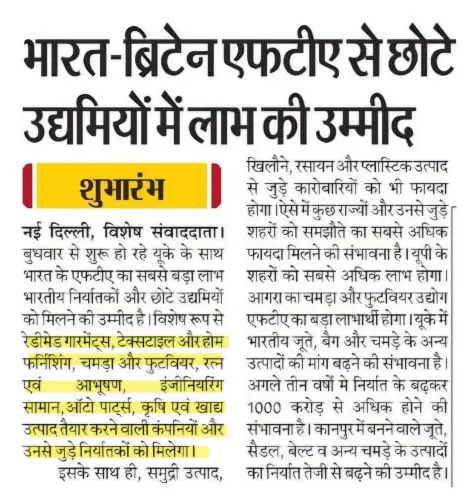
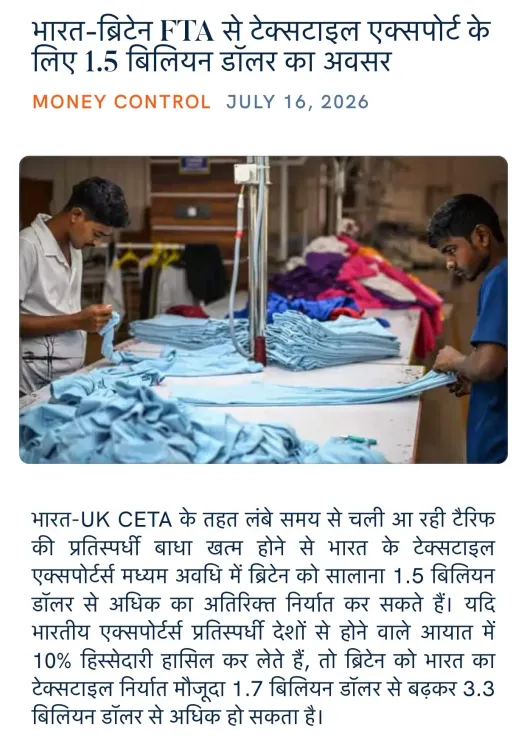
Singh's post, shared in Hindi, drew attention to what he described as a significant opening for Indian textile exporters: 'भारत-ब्रिटेन FTA से टेक्सटाइल एक्सपोर्ट के लिए 1.5 बिलियन डॉलर का अवसर' ('India-UK FTA creates a 1.5 billion dollar opportunity for textile exports'). The minister's amplification of this figure signals the government's intent to position the textile sector as a primary beneficiary of the bilateral trade deal currently under negotiation between New Delhi and London.
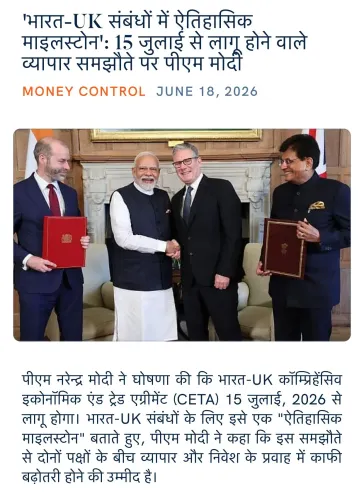
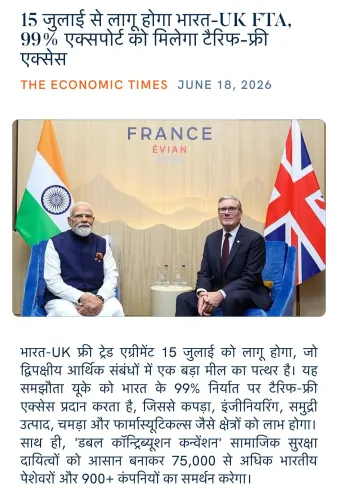
India and the United Kingdom formally launched FTA negotiations in January 2022, with both sides seeking to expand preferential market access across goods and services. For the UK, the agreement is part of a broader post-Brexit push to forge independent trade partnerships with high-growth economies.
Policy Backdrop
The India-UK FTA talks are part of a wider diplomatic and economic strategy India has pursued since 2022, which also yielded a Comprehensive Economic Partnership Agreement with the UAE in February 2022 and an FTA with Australia concluded in December 2022. These agreements have collectively sought to reduce tariffs on Indian goods, including textiles and garments, and diversify export destinations beyond traditional markets.
The Indian textile sector is one of the country's largest employment-generating industries and a consistent contributor to merchandise export earnings. Preferential tariff access to the UK market — which currently imposes duties on Indian garments and fabrics — could meaningfully improve the competitive position of Indian exporters against rivals such as Bangladesh and Vietnam, who have enjoyed preferential access to the UK under legacy arrangements.
Stakeholders and Impact
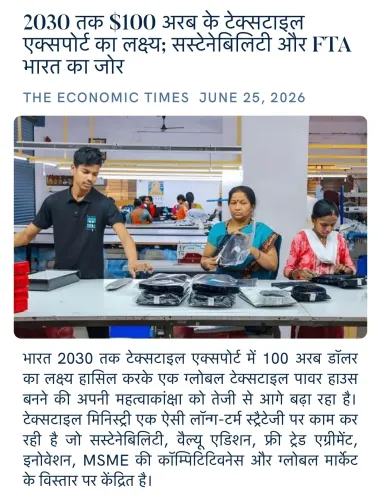
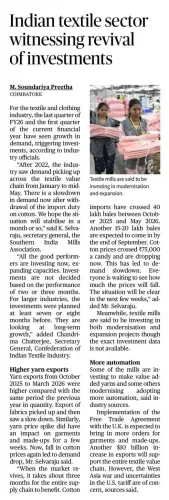
The primary beneficiaries of a favourable textile chapter in the India-UK FTA would be textile exporters and garment micro, small and medium enterprises (MSMEs), which form the backbone of clusters in states such as Tamil Nadu, Gujarat, Maharashtra, and Uttar Pradesh. A 1.5 billion dollar expansion in export opportunity, if realised, could translate into significant job creation across spinning, weaving, and garment manufacturing units.
For the UK, the FTA offers access to a large and growing Indian consumer market as well as competitively priced textile inputs. However, the final tariff schedules and rules-of-origin norms for the textile sector remain subject to ongoing negotiation rounds, and the ultimate benefit to Indian exporters will depend on the specific concessions secured.
What's Next
The conclusion of remaining negotiation rounds and the finalisation of sector-specific tariff schedules — particularly for textiles and garments — will determine how much of the projected 1.5 billion dollar opportunity is captured by Indian industry. Minister Singh's public endorsement of the figure suggests the Ministry of Textiles is actively tracking the FTA's progress and is likely to push for an ambitious textile chapter in the final agreement. As talks move toward closure, industry bodies and MSME exporters will be closely watching for the tariff reduction timelines and transitional provisions that will shape the commercial calculus.
Point of View
Using the projected gains as political and economic leverage during negotiations. This fits a consistent pattern since 2022 of India using sector-specific export data to build domestic constituencies for bilateral trade agreements. The move also serves to reassure textile MSMEs — a politically significant voter base in key BJP states — that the government is actively working to expand their global market access. The real test will come when final tariff schedules are published, as rules-of-origin conditions could significantly dilute the headline opportunity.
NationPress
16 Jul 2026
Frequently Asked Questions
What is the India-UK FTA textile export opportunity?
The India-UK Free Trade Agreement is projected to open an export opportunity of over 1.5 billion dollars for the Indian textile sector by providing preferential tariff access to the UK market, according to a post shared by Union Textiles Minister Giriraj Singh on 16 July 2026.
When did India and UK start FTA negotiations?
India and the United Kingdom formally launched Free Trade Agreement negotiations in January 2022, with both sides aiming to expand market access for goods and services across sectors including textiles.
How will the India-UK FTA benefit Indian textile MSMEs?
A favourable textile chapter in the India-UK FTA could reduce UK import duties on Indian garments and fabrics, improving the competitiveness of Indian textile MSMEs against rivals such as Bangladesh and Vietnam who already enjoy preferential UK market access.
What has India done to boost textile exports through trade deals?
India has pursued multiple bilateral FTAs since 2022, including agreements with the UAE in February 2022 and Australia in December 2022, to diversify textile export markets and counter global supply-chain shifts.
What will determine the actual benefit to Indian textile exporters from the India-UK FTA?
The final tariff schedules, rules-of-origin norms, and transitional provisions specific to the textile sector — all still under negotiation — will determine how much of the projected 1.5 billion dollar opportunity Indian exporters can realistically capture.