Giriraj Singh hails India-UK trade deal set for July 15
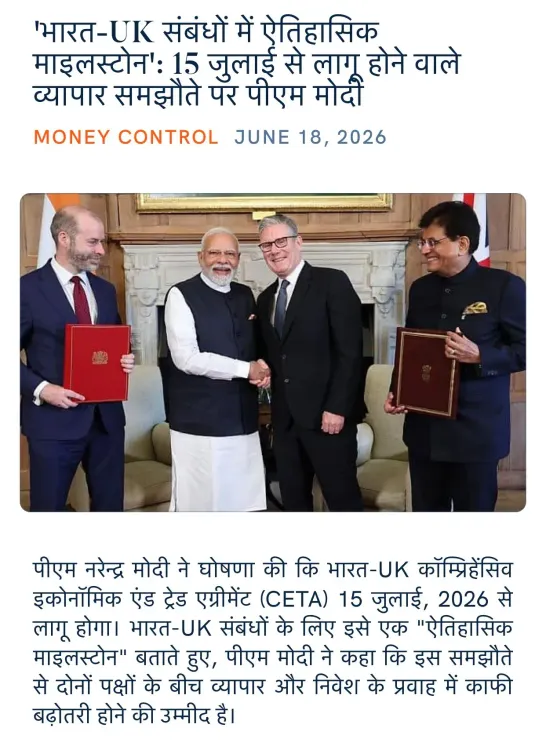
Synopsis
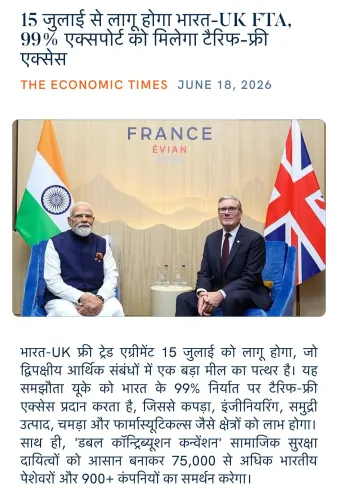
Union Textiles Minister Giriraj Singh amplified PM Modi's description of the India-UK Free Trade Agreement as a 'historic milestone', with the comprehensive deal covering goods, services, and investment set to come into force on 15 July 2026 — the culmination of over four years of post-Brexit negotiations.
Key Takeaways
Union Textiles Minister Giriraj Singh shared PM Modi's remarks on the India-UK Free Trade Agreement on 18 June 2026 .
PM Modi called the deal a 'historic milestone' for India-UK bilateral relations.
The agreement is set to come into force on 15 July 2026 , covering goods, services, and investment.
Negotiations were formally launched in January 2022 following a Modi-Boris Johnson virtual summit.
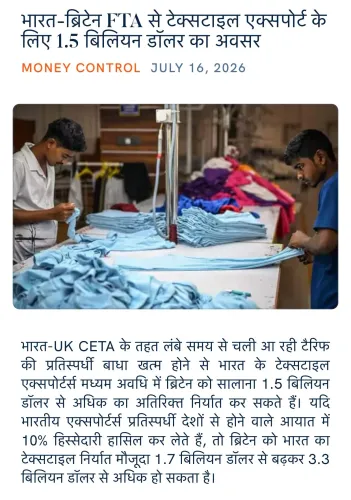
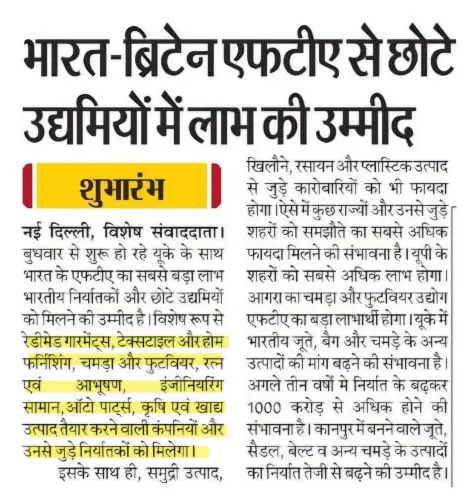
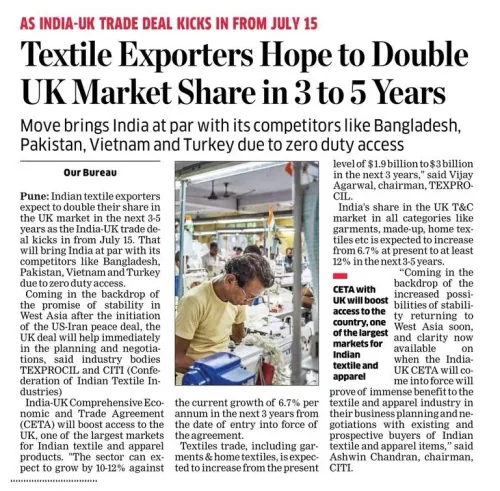
Textile and pharmaceutical exporters are among the key Indian beneficiaries expected to gain preferential UK market access.
The deal is part of India's broader post-2022 push to conclude FTAs with major Western economies .
Union Textiles Minister Giriraj Singh on Thursday, 18 June 2026, shared a post on X highlighting Prime Minister Narendra Modi's remarks calling the India-UK Free Trade Agreement a 'historic milestone' for bilateral relations, with the deal set to come into force on 15 July 2026.
Context
PM Modi described the trade agreement as a 'bharat-UK sambandho mein aitihasik milestone' ('historic milestone for India-UK relations'), signalling the political weight New Delhi attaches to the deal. Giriraj Singh's decision to amplify the statement through the NaMo App underscores the ruling party's effort to highlight the agreement as a diplomatic and economic achievement ahead of its operationalisation.
The India-UK FTA covers goods, services, and investment, and its entry into force on 15 July would mark the conclusion of a negotiation process that spanned more than four years.
Policy Backdrop
Formal negotiations between India and the United Kingdom were launched in January 2022 following a virtual summit between PM Modi and then-UK Prime Minister Boris Johnson. The talks were part of India's broader push to accelerate bilateral free trade agreements with major Western economies after concluding deals with the UAE and Australia in 2022.
For the UK, the agreement represents a cornerstone of its post-Brexit trade diversification strategy. For India, it offers expanded market access for labour-intensive sectors — most notably textiles and pharmaceuticals — where existing supply-chain complementarities with the UK are well established. The textiles sector, which Giriraj Singh oversees as Union Minister, stands among the primary beneficiaries of reduced UK tariffs.
Stakeholders and Impact
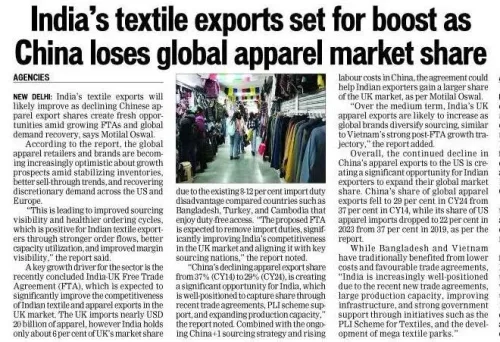
Indian textile exporters are expected to gain significantly from preferential access to the UK market, which currently imposes tariffs that make Indian apparel and fabric less competitive against rivals. Industry bodies representing manufacturers in states such as Gujarat, Tamil Nadu, and Maharashtra have long lobbied for precisely such an agreement.
On the UK side, British services firms — particularly in financial services, legal, and education sectors — are anticipated to gain a more structured entry into the Indian market. Indian pharmaceutical companies could also benefit from streamlined regulatory recognition arrangements embedded in the deal. The full sector-wise tariff schedules are expected to become public as implementation begins.
What's Next
With the agreement slated to take effect on 15 July 2026, attention will now turn to the sector-specific tariff schedules and any parliamentary processes required in either country for full ratification. Indian exporters and trade associations are likely to seek clarity on rules of origin, transition timelines, and dispute-resolution mechanisms.
For Giriraj Singh's ministry, the immediate task will be to communicate the deal's benefits to the domestic textiles industry and ensure that exporters are positioned to take advantage of the new market access from day one. The agreement could serve as a template as India continues parallel FTA talks with other major partners.
Point of View
The agreement addresses a long-standing export bottleneck, and Singh's visible endorsement positions him as a stakeholder in the deal's success. The FTA also fits into a larger pattern of India pivoting toward bilateral trade architecture after years of stalled multilateral negotiations. How swiftly Indian exporters — particularly in textiles — can operationalise the new market access will be the real measure of the deal's impact.
NationPress
19 Sept 2026
Frequently Asked Questions
What is the India-UK Free Trade Agreement?
The India-UK Free Trade Agreement is a comprehensive bilateral trade deal covering goods, services, and investment between India and the United Kingdom, aimed at reducing tariffs and expanding market access for both countries.
When does the India-UK FTA come into force?
According to PM Modi's statement shared by Giriraj Singh, the India-UK FTA is set to come into force on 15 July 2026 .
How does the India-UK trade deal benefit Indian textiles?
Indian textile exporters are expected to gain preferential access to the UK market, reducing the tariff disadvantage they currently face against competing nations and potentially boosting exports from manufacturing hubs in Gujarat, Tamil Nadu, and Maharashtra.
When did India-UK FTA negotiations begin?
Formal India-UK FTA negotiations were launched in January 2022 following a virtual summit between PM Modi and then-UK Prime Minister Boris Johnson.
Why did Giriraj Singh post about the India-UK trade deal?
As Union Textiles Minister, Giriraj Singh oversees a sector that stands to benefit significantly from the deal; his post amplifies PM Modi's remarks and signals the government's commitment to communicating the agreement's importance to industry and the public.