Congress accuses BJP govt of engineering 'tainted' 2/3 majority in Parliament
Synopsis
Congress has drawn a battle line ahead of Parliament’s Monsoon Session, accusing the BJP-led government of manufacturing a two-thirds majority through party splits and defections. With the Delimitation Bill poised for a comeback and Congress reaching beyond the INDIA bloc to DMK and AAP, the session could become one of the most contentious in recent memory.
Key Takeaways
Congress accused the BJP -led Union government of attempting to “engineer a tainted two-thirds majority” in Parliament, calling any such majority “an insult to the Constitution.” Jairam Ramesh said the Delimitation Bill is expected to be reintroduced by Home Minister Amit Shah after it failed on 17 April in the Lok Sabha.
Congress is reaching out to DMK and AAP — outside the INDIA bloc — to rebuild the opposition coalition that defeated the bill earlier.
The party alleged the government engineered splits in TMC and Shiv Sena (UBT) to bolster NDA’s numbers, citing the NCPI as a vehicle for defecting MPs.
Congress will raise the E-20 scam , Ram Temple donation irregularities , and the education system in the upcoming Monsoon Session .
The party has declared opposition to all major bills listed for the session, including One Nation One Election and the Constitution (130th Amendment) Bill .
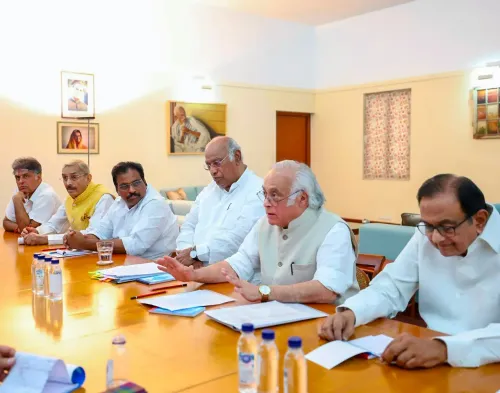
The Indian National Congress on Thursday, 16 July accused the Bharatiya Janata Party (BJP)-led Union government of attempting to “engineer a tainted two-thirds majority in Parliament,” asserting that the ruling coalition remains well short of the required numbers — particularly in the Lok Sabha. The charge came after the party’s Parliamentary Strategy Group meeting in New Delhi, presided over by Congress Parliamentary Party Chairperson Sonia Gandhi.
Key Allegations from the Strategy Meeting
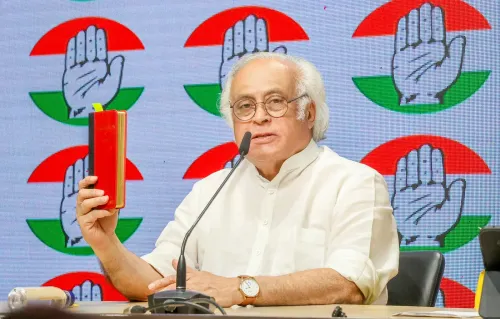
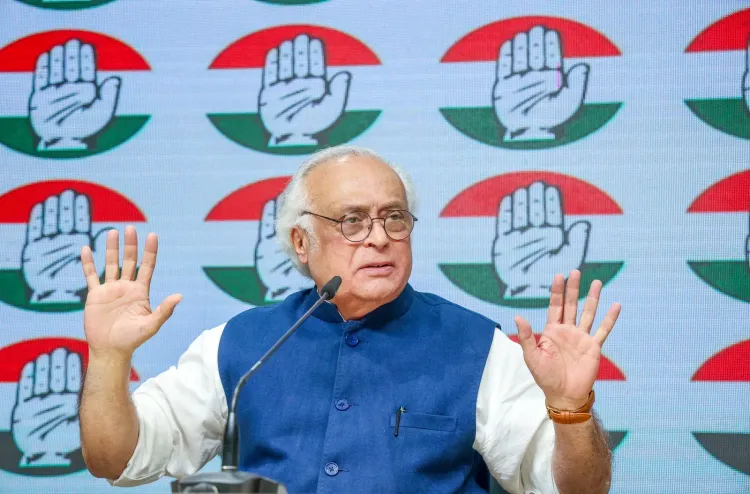
Speaking to reporters after the meeting, Congress General Secretary (Communications) In-Charge Jairam Ramesh and Member of Parliament Naseer Hussain said that even if the government managed to cobble together a two-thirds majority, it would be “a disgraced one and an insult to the Constitution of India.” The meeting was also attended by Congress President Mallikarjun Kharge and Leader of Opposition in the Lok Sabha Rahul Gandhi.
Ramesh said the Congress was anticipating Union Home Minister Amit Shah to reintroduce the Delimitation Bill, which failed to secure the required two-thirds majority in the Lok Sabha on 17 April. He reaffirmed the party’s opposition to the bill and said senior leaders — including Kharge and Gandhi — were in active contact with opposition parties such as the Dravida Munnetra Kazhagam (DMK) and the Aam Aadmi Party (AAP), which are no longer part of the INDIA bloc, to maintain the united front that voted against the bill previously.
On the Delimitation Bill and NDA’s Numbers
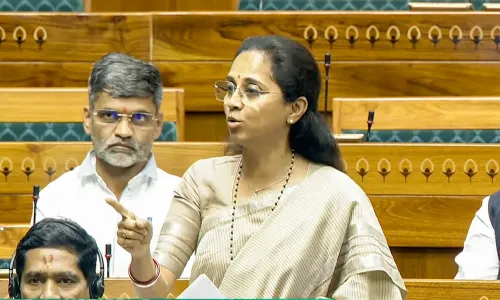
Ramesh alleged that the Union government engineered splits in the All India Trinamool Congress (TMC) and Shiv Sena (Uddhav Balasaheb Thackeray) to bolster its parliamentary strength. He pointed to the Nationalist Citizens’ Party of India (NCPI) — into which rebel Trinamool MPs were merged — as a case in point, noting the party was founded only three years ago and lacked official recognition before “suddenly becoming the second-largest constituent” in the National Democratic Alliance (NDA). “The Home Minister has used the party as a parking space for the defecting MPs,” Ramesh said. He also refuted reports that Nationalist Congress Party-Sharadchandra Pawar (NCP-SP) would support the Delimitation Bill, citing a denial from the party’s leader Supriya Sule.
The failure of the Constitution (131st Amendment) Bill, 2026 had already marked a significant setback for the Centre, reopening debates on representation, federalism, and electoral restructuring. The Congress contends that the government’s renewed push reflects political desperation rather than constitutional necessity.
Women’s Reservation and Conditional Support
On the question of women’s reservation, Ramesh offered a conditional olive branch: “Let the government make a provision for one-third reservation for women within the current strength of the Lok Sabha and the Congress will support it.” This signals the party’s willingness to back reservation in principle, while opposing the Delimitation Bill’s precondition for its implementation.
Congress Agenda for the Monsoon Session
Ramesh said the Congress had not yet received any formal information about the legislation scheduled for the upcoming Monsoon Session of Parliament, despite an all-party meeting scheduled for Sunday. He dismissed the meeting as “a pointless formality” from which his party expected little of substance.
Among the issues Congress plans to raise in the session are alleged irregularities in donations at Ayodhya’s Ram Temple, the state of the country’s education and examination system, and what the party calls the “E-20 scam,” which it claims involves “several senior BJP leaders and their sons.” The party will also demand a debate on foreign policy, particularly concerning China, the United States, and the situation in West Asia, with Ramesh describing Pakistan’s role with US support as “a serious foreign policy setback.”
Rahul Gandhi has already launched the Chhatron ki Goonj campaign, and the party is demanding the resignation of Union Education Minister Dharmendra Pradhan. Congress has also declared its opposition to a range of proposed bills, including amendments to the Foreign Contribution Regulation Act, the Constitution (130th Amendment) Bill — which provides for removal of Chief Ministers and Ministers upon 30 days of detention — the Viksit Bharat Shiksha Adhishthan Bill, proposed amendments to the National Food Security Act, 2013, and the ‘One Nation, One Election’ bills. Ramesh stated flatly: “There is no proposed legislation on which the party could support the Union government.”
With the Monsoon Session approaching and the Delimitation Bill potentially back on the table, the Congress’s outreach to non-INDIA bloc opposition parties will be a critical test of whether the anti-bill coalition can hold.
Point of View
The Delimitation Bill faces a genuine floor fight rather than a symbolic one. The Monsoon Session agenda — Ram Temple donations, the E-20 scam, education — reads like a populist broadside designed as much for the street as for the House. The real question is whether the opposition can convert parliamentary disruption into a coherent accountability narrative, or whether it fragments, as it has before, on competing regional priorities.
NationPress
15 Oct 2026
Frequently Asked Questions
What did Congress allege about the BJP government and Parliament’s two-thirds majority?
Congress alleged that the BJP-led Union government is attempting to ‘engineer a tainted two-thirds majority’ in Parliament by facilitating defections from parties like TMC and Shiv Sena (UBT). The party said that even if such a majority is achieved, it would be ‘a disgraced one and an insult to the Constitution of India.’
What is the Delimitation Bill and why did it fail earlier?
The Delimitation Bill — formally the Constitution (131st Amendment) Bill, 2026 — seeks to redraw parliamentary constituencies and is linked to the operationalisation of women’s political reservation. It failed to secure the required two-thirds majority in the Lok Sabha on 17 April, marking a significant setback for the Union government.
Which parties is Congress reaching out to ahead of the Monsoon Session?
Congress leaders Mallikarjun Kharge and Rahul Gandhi are reportedly in contact with the DMK and AAP, both of which are no longer part of the INDIA bloc. The aim is to reconstitute the cross-party coalition that voted against the Delimitation Bill in April.
What issues will Congress raise in the Monsoon Session of Parliament?
Congress plans to raise alleged irregularities in donations at Ayodhya’s Ram Temple, the state of India’s education and examination system, the so-called E-20 scam implicating senior BJP figures, and foreign policy challenges involving China, the US, and West Asia. The party has also demanded the resignation of Education Minister Dharmendra Pradhan.
What is Congress’s position on women’s reservation?
Congress has offered conditional support: it says it will back one-third reservation for women if the government implements it within the current strength of the Lok Sabha, without waiting for delimitation. This separates women’s reservation from the contested Delimitation Bill.