Congress urges DMK to hold firm against Delimitation Bill ahead of Monsoon Session
Synopsis
With Parliament's Monsoon Session days away and the BJP reportedly eyeing a second attempt at the Delimitation Bill, Congress has put the DMK on notice: hold the line or face the charge of betraying your own principles. The stakes are high — southern states see the Bill as a direct threat to their Lok Sabha representation, and the DMK's vote could be decisive.
Key Takeaways
Chidambaram and Karti Chidambaram urged the DMK on 16 July to maintain its opposition to the proposed Delimitation Bill.
The BJP is reportedly preparing to reintroduce the Bill in the Monsoon Session beginning 20 July .
The Bill had previously failed to pass during the April 2026 session of Parliament.
Chidambaram warned that supporting the Bill would mean 'compromising one's conscience.' The BJP is reportedly seeking support from the DMK and Sharad Pawar's NCP to secure the required numbers.
Southern states fear delimitation could reduce their Lok Sabha representation relative to more populous northern states.
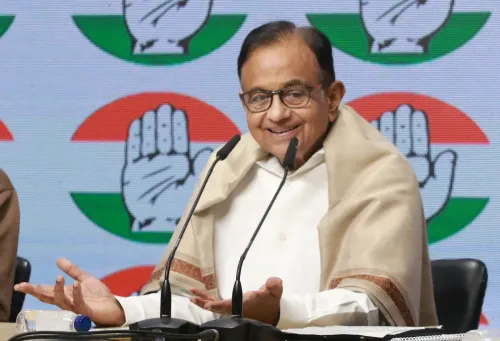
Senior Congress leader P. Chidambaram and Congress MP Karti Chidambaram on Thursday, 16 July called on the Dravida Munnetra Kazhagam (DMK) to sustain its opposition to the proposed Delimitation Bill, warning that any reversal of its earlier stance would amount to a betrayal of the party's own principles. Their appeal comes days before the Monsoon Session of Parliament, scheduled to commence on 20 July, during which the Bharatiya Janata Party (BJP) is reportedly preparing to reintroduce the constitutional amendment on parliamentary delimitation.
Background: A Bill That Failed Once Before
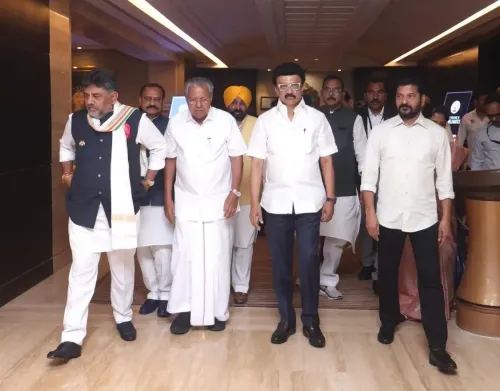
The proposed legislation had failed to secure the required support when it was first introduced during the April 2026 session of Parliament. According to reports, the BJP is now seeking backing from regional parties — including the DMK and Sharad Pawar's Nationalist Congress Party (NCP) — to muster the numbers necessary for the Bill's passage in the event of a reintroduction.
P. Chidambaram, speaking earlier this week, cautioned that endorsing the Bill would mean 'compromising one's conscience.' He expressed confidence that both the DMK and the NCP were fully aware of the legislation's implications and would remain firm in their opposition.
Karti Chidambaram's Remarks in Sivaganga
Addressing reporters in Sivaganga on Thursday, Karti Chidambaram said he expected the DMK to remain consistent with the position it had taken when the Bill was debated earlier this year. He expressed confidence that the party would continue to oppose the legislation if it were brought back before Parliament.
On the newly elected Tamil Nadu government, Karti said it would be appropriate to assess its performance only after the presentation of its first full Budget. He added that the government, holding a comfortable legislative majority, had no need to resort to political manoeuvring or attempts to destabilise rival parties, and was well placed to complete its five-year term.
On Custodial Deaths and Policing Reforms
Karti also addressed the issue of custodial deaths, noting that such incidents had occurred under successive governments and should not be attributed solely to any single administration. He argued that deeper structural reforms within the policing system were essential, stressing that a shift in institutional culture was necessary to reduce such incidents going forward.
On allegations of corruption against elected representatives, he maintained that such matters should be dealt with swiftly through due process. Regarding incidents of violence involving students, he said responsibility could not rest with the government alone and called for greater accountability among parents, teachers, and students.
What Is at Stake with the Delimitation Bill
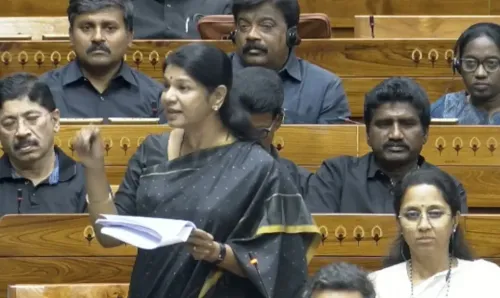
The proposed constitutional amendment on parliamentary delimitation has emerged as a flashpoint between the Centre and southern states, which fear that a fresh delimitation exercise — based on updated population data — could reduce their representation in the Lok Sabha relative to more populous northern states. Critics argue this would effectively penalise states that have performed better on population control and development indicators. Notably, this concern has united parties across the political spectrum in the south, making the DMK's position particularly significant to the Bill's prospects.
With the Monsoon Session set to begin on 20 July, all eyes will be on whether the BJP moves to reintroduce the Bill and whether regional allies hold their ground.
Point of View
' the Chidambarams are raising the reputational cost of any DMK pivot before the BJP can close a deal. What mainstream coverage underplays is the structural asymmetry at the heart of this debate: southern states that outperformed on population control and human development now face the prospect of losing parliamentary weight precisely because of that success. The DMK's position is not merely ideological — it reflects a genuine federal grievance shared across party lines in the south. If the BJP does reintroduce the Bill and regional allies fracture, it will mark a significant stress test for India's federal compact.
NationPress
15 Oct 2026
Frequently Asked Questions
What is the Delimitation Bill and why is it controversial?
The proposed Delimitation Bill is a constitutional amendment that would redraw parliamentary constituency boundaries, potentially based on updated population data. Southern states, including Tamil Nadu, oppose it because they fear it would reduce their Lok Sabha seats relative to more populous northern states — effectively penalising them for better performance on population control.
Why are Congress leaders urging the DMK to oppose the Bill?
Congress leaders P. Chidambaram and Karti Chidambaram have warned that any change in the DMK's opposition stance would amount to a betrayal of its own principles. They argue the DMK is fully aware of the Bill's implications and must remain consistent with the position it took during the April 2026 parliamentary debate.
When is the Monsoon Session of Parliament scheduled to begin?
The Monsoon Session of Parliament is scheduled to begin on 20 July. The BJP is reportedly planning to reintroduce the Delimitation Bill during this session after it failed to pass in the April 2026 session.
Which parties is the BJP reportedly approaching for support on the Bill?
According to reports, the BJP is seeking support from regional parties including the DMK and Sharad Pawar's Nationalist Congress Party (NCP) to secure the numbers required for the Bill's passage if it is reintroduced.
What else did Karti Chidambaram say at the Sivaganga press conference?
Besides urging DMK to oppose the Delimitation Bill, Karti Chidambaram called for deeper policing reforms to address custodial deaths, said corruption allegations against legislators should be resolved swiftly through due process, and argued that responsibility for student violence cannot rest with the government alone.