Political Opportunism: 7 AAP MPs Join BJP, Congress Slams Shift
Synopsis
Seven AAP Rajya Sabha MPs, led by Raghav Chadha, formally merged with BJP — invoking the two-thirds constitutional clause to avoid disqualification. Congress called it brazen opportunism, even alleging Kejriwal engineered the split. AAP's upper house strength crashes from 10 to just 3, marking the party's steepest political fall since its founding.
Key Takeaways
Seven AAP Rajya Sabha MPs , including Raghav Chadha, Swati Maliwal, and Harbhajan Singh , formally merged with the BJP on April 25, 2025 .
AAP's Rajya Sabha strength drops sharply from 10 members to just 3 following the defection.
The MPs invoked the two-thirds constitutional merger clause under the Tenth Schedule to avoid disqualification under the Anti-Defection Law.
Congress leader T.S.
Singh Deo condemned the move as "opportunism" , noting that the defecting MPs previously called BJP a "group of goons" on record.
Congress spokesperson Surendra Rajput alleged the split was linked to securing a majority on the impeachment motion against Election Commissioner Gyanesh Kumar .
The defection compounds AAP's political decline following its loss in the Delhi Assembly elections in 2025 , raising serious questions about the party's future national relevance.
New Delhi, April 27 (NationPress) — In a dramatic political realignment, seven Aam Aadmi Party (AAP) Rajya Sabha MPs, including prominent leader Raghav Chadha, formally merged with the ruling Bharatiya Janata Party (BJP) on Friday, April 25, triggering sharp condemnation from the Indian National Congress. The split slashes AAP's Rajya Sabha strength from 10 seats to just three, marking one of the most significant intra-party defections in the upper house in recent years.
Congress Calls It a Collapse of Political Ethics
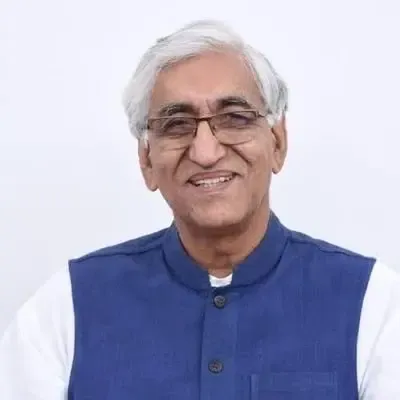
Senior Congress leader T.S. Singh Deo pulled no punches in his assessment, calling the defection a textbook case of political opportunism. Speaking to reporters, he said, "This is opportunism. The focus has become how to remain in power and how to gain benefits from it, and examples of this are emerging one after another. The political character of the country has declined rapidly and deeply, which is unfortunate."
Singh Deo pointedly noted the ideological contradiction embedded in the move. "They earlier used to call the Bharatiya Janata Party a group of goons — this is on record — and openly spoke against them on policy matters. Now they are saying that AAP has deviated from its principles, which is why they have joined another party," he added, highlighting the glaring reversal in public positions by the defecting lawmakers.
Congress Alleges Strategic Maneuvering by Kejriwal
Congress spokesperson Surendra Rajput offered a sharper, more conspiratorial reading of the events. He claimed, "Both Arvind Kejriwal's Aam Aadmi Party and the BJP are claimed to be offshoots of the RSS. Both are said to be part of the same larger system. It does not make much difference whether someone moves from one side to the other."
Rajput further alleged that AAP chief Arvind Kejriwal may have orchestrated the shift to ensure there is no obstacle in securing a two-thirds majority on the impeachment motion being brought against Election Commissioner Gyanesh Kumar. This allegation, if substantiated, would point to a calculated political transaction rather than a principled split — a charge that neither AAP nor BJP has addressed directly.
How the Split Unfolded
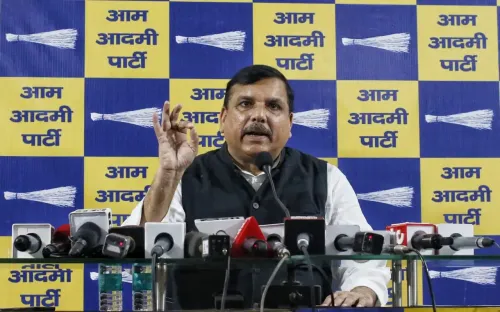
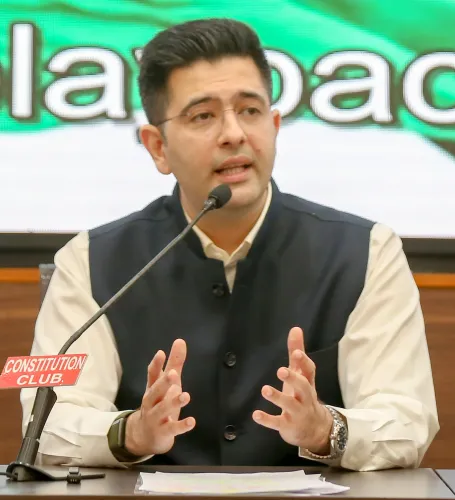
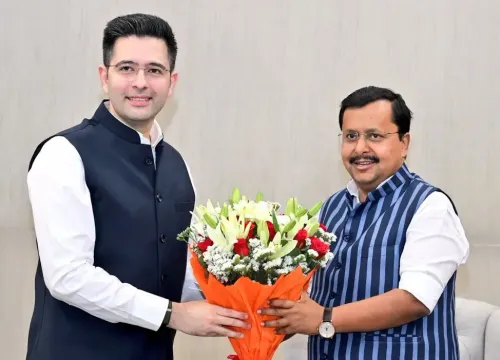
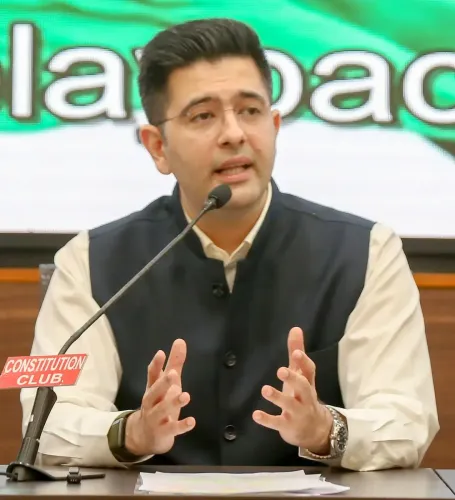
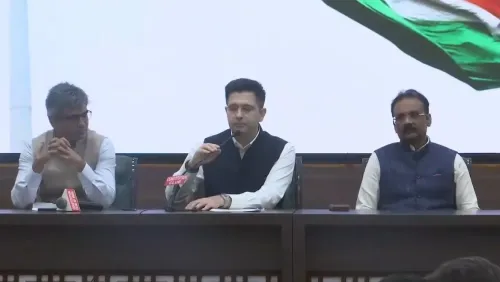
The defection became public when Raghav Chadha held a press conference alongside fellow lawmakers Sandeep Pathak and Ashok Mittal, announcing that more than two-thirds of AAP's Rajya Sabha legislature party had formally merged with the BJP. He later confirmed on social media platform X (formerly Twitter): "Today, exercising the provisions of the Constitution of India, more than two-thirds of the AAP MPs in the Rajya Sabha have merged with the BJP. Seven MPs have signed the document, which was submitted to the Hon'ble Chairman of the Rajya Sabha."
Chadha personally handed the signed merger documents to the Rajya Sabha Chairman. The six other lawmakers who joined him in the move are: Swati Maliwal, Harbhajan Singh, Sandeep Pathak, Ashok Mittal, Rajinder Gupta, and Vikram Sahni.
The Anti-Defection Law Angle
The constitutional provision invoked — a merger of more than two-thirds of a legislature party — is specifically designed to shield defecting lawmakers from disqualification under the Tenth Schedule of the Constitution, commonly known as the Anti-Defection Law. By meeting the two-thirds threshold, the seven MPs technically avoid disqualification, making the move legally structured rather than impulsive.
This is not the first time the two-thirds merger clause has been used as a political instrument. Critics argue that the provision, originally meant to protect genuine ideological realignments, has increasingly become a loophole for power-driven defections — a pattern seen across multiple state assemblies and Parliament over the past decade.
Political Fallout and What Comes Next
The immediate consequence is stark: AAP's presence in the Rajya Sabha collapses from 10 members to just three, severely limiting the party's legislative influence in the upper house. For a party that built its identity on anti-corruption politics and systemic reform, losing seven of its ten Rajya Sabha members to the very establishment it once campaigned against is a reputational blow of considerable magnitude.
Analysts note that AAP is already under pressure following electoral setbacks in Delhi Assembly elections earlier in 2025, where the party lost power to the BJP after a decade in government. The Rajya Sabha defection compounds that political erosion. With Arvind Kejriwal navigating legal challenges and a diminished electoral mandate, the party's national footprint faces its most serious test since its founding in 2012.
As the political dust settles, all eyes will be on whether the Rajya Sabha Chairman formally accepts the merger, how AAP legally responds, and whether this triggers further realignments in other states where the party holds a presence. The broader question — whether India's political culture can reverse its slide toward transactional loyalty over ideological conviction — remains unanswered.
Point of View
Where constitutional provisions designed to protect genuine ideological realignments are routinely weaponised for power consolidation. The deepest irony is that AAP was born precisely as a rejection of this culture — its founders built a movement on the promise that politics could be different. That seven of its own lawmakers now sit comfortably in the ruling establishment, citing 'deviation from principles,' exposes either a failure of institutional culture within AAP or a calculated political transaction — possibly both. Congress's allegation linking the split to the Gyanesh Kumar impeachment motion adds a layer of institutional manipulation that demands scrutiny beyond the headlines.
NationPress
14 Oct 2026
Frequently Asked Questions
Which AAP MPs joined the BJP in the Rajya Sabha merger?
Seven AAP Rajya Sabha MPs — Raghav Chadha, Swati Maliwal, Harbhajan Singh, Sandeep Pathak, Ashok Mittal, Rajinder Gupta, and Vikram Sahni — formally merged with the BJP on April 25, 2025. They submitted signed documents to the Rajya Sabha Chairman to formalise the merger.
How does the AAP Rajya Sabha split affect the party's strength in Parliament?
The defection reduces AAP's Rajya Sabha strength from 10 members to just three, significantly weakening the party's legislative presence in the upper house. This limits AAP's ability to block or delay legislation in the Rajya Sabha going forward.
Why are the AAP MPs not disqualified under the Anti-Defection Law?
The seven MPs invoked the constitutional merger provision under the Tenth Schedule, which exempts lawmakers from disqualification if more than two-thirds of a legislature party formally merges with another party. By meeting this threshold, they are legally shielded from anti-defection proceedings.
What did Congress say about the AAP MPs joining BJP?
Congress leader T.S. Singh Deo called the move 'opportunism' and lamented the decline of political values in India. Congress spokesperson Surendra Rajput alleged that the split was engineered by Arvind Kejriwal to secure a two-thirds majority on the impeachment motion against Election Commissioner Gyanesh Kumar.
What is the political significance of the AAP Rajya Sabha merger with BJP?
The merger marks a major blow to AAP, which already lost the Delhi Assembly elections in early 2025. It signals the party's shrinking national influence and raises questions about internal cohesion, coming just years after AAP positioned itself as a reformist alternative to established parties.