Breaking: Raghav Chadha, 6 AAP RS MPs Join BJP in Major Split
Synopsis
In a stunning political earthquake, Raghav Chadha announced that 7 of AAP's 10 Rajya Sabha MPs — including Swati Maliwal and Harbhajan Singh — are merging with BJP. The two-thirds threshold legally shields them from anti-defection action, leaving AAP with just 3 Upper House members and raising serious questions about the party's national survival.
Key Takeaways
Raghav Chadha announced on April 24, 2025 that he and six other AAP Rajya Sabha MPs are merging with the BJP .
The defecting MPs include Swati Maliwal , Harbhajan Singh , Sandeep Pathak , Ashok Mittal , Rajinder Gupta , and Vikram Sahni .
The seven MPs constitute two-thirds of AAP's 10-member Rajya Sabha bloc , legally protecting them from the anti-defection law .
Ashok Mittal , who was appointed to replace Chadha as AAP's Deputy Leader in the Rajya Sabha just days ago, has also joined the defection.
AAP will be left with only three Rajya Sabha MPs — Narain Dass Gupta , Sanjay Singh , and Sant Balbir Singh — after the merger is formalised.
The split compounds AAP's political crisis following its loss of the Delhi Assembly in 2025 and a weak performance in the 2024 Lok Sabha elections .
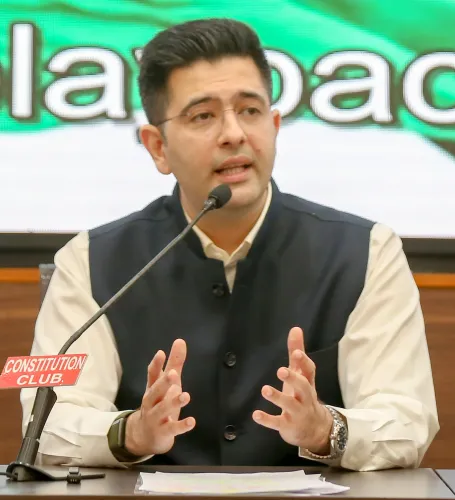
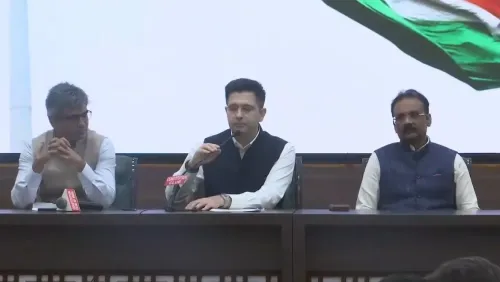
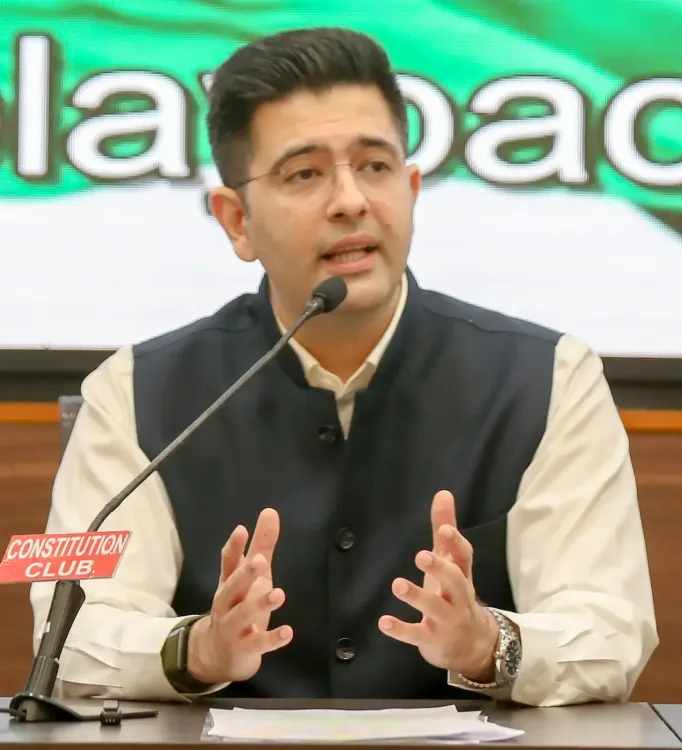
New Delhi, April 24: In a seismic political development, Raghav Chadha, senior Aam Aadmi Party (AAP) Rajya Sabha MP, formally announced his departure from the party on Friday, revealing that six other AAP lawmakers would join him in defecting to the Bharatiya Janata Party (BJP). The announcement, made at a press conference in New Delhi, marks one of the most damaging internal ruptures in AAP's decade-long political history.
Who Is Leaving AAP for BJP
Standing alongside fellow Rajya Sabha MP Sandeep Pathak, Chadha named the defecting lawmakers as Swati Maliwal, Harbhajan Singh, Sandeep Pathak, Ashok Mittal, Rajinder Gupta, and Vikram Sahni. Together, these seven MPs constitute the two-thirds majority of AAP's 10-member Rajya Sabha bloc — a critical threshold under Indian constitutional law.
By crossing the two-thirds mark, the breakaway faction is legally positioned to invoke the Tenth Schedule of the Constitution, which shields legislators from disqualification under the anti-defection law when a merger involves at least two-thirds of a party's legislative wing. This was clearly a strategically timed and legally calculated move.
The Anti-Defection Shield: A Calculated Legal Manoeuvre
Chadha explicitly confirmed that the two-thirds threshold was deliberately met to protect all defecting members from action by the parent party or the Rajya Sabha Chairman. Legal experts note that this mirrors similar mergers executed by other regional parties in the past, most notably during the political realignments in Maharashtra and Goa.
The merger is expected to be formally completed in the coming days, after which the breakaway group will officially be absorbed into the BJP's parliamentary unit in the Upper House.
Political Context: Chadha's Demotion and Internal Tensions
The split did not emerge in a vacuum. Just days before this announcement, Raghav Chadha was stripped of his position as Deputy Leader of AAP in the Rajya Sabha, with the party citing his alleged failure to aggressively raise critical issues against the ruling government. Ironically, Ashok Mittal — who was appointed as Chadha's replacement in that very role — has now chosen to defect alongside him, deepening the embarrassment for the party leadership.
The move is a significant blow to AAP convenor and former Delhi Chief Minister Arvind Kejriwal, who has been navigating a turbulent political phase following electoral setbacks and legal challenges.
AAP's Rajya Sabha Composition: What Remains
AAP currently holds 10 seats in the Rajya Sabha. The party's Upper House representation is heavily concentrated in Punjab — the only state where it remains in government — with seven of its 10 MPs hailing from the state. These include Raghav Chadha, Rajinder Gupta, Ashok Kumar Mittal, Sandeep Kumar Pathak, Vikramjit Singh Sahney, Harbhajan Singh, and Sant Balbir Singh.
The remaining three MPs represent Delhi: Swati Maliwal, Narain Dass Gupta, and Sanjay Singh. If the merger proceeds as announced, AAP will be left with only three Rajya Sabha MPs — Narain Dass Gupta, Sanjay Singh, and Sant Balbir Singh — drastically reducing its legislative footprint in Parliament's upper chamber.
Broader Implications for AAP and Indian Opposition Politics
This defection carries consequences far beyond parliamentary arithmetic. AAP, which once positioned itself as a transformative anti-establishment force, has seen a steady erosion of its national ambitions following its poor showing in the 2024 Lok Sabha elections and the loss of the Delhi Assembly earlier in 2025. The party's decline in Delhi — its founding stronghold — combined with this Rajya Sabha implosion signals a deepening existential crisis.
Notably, the defection of Swati Maliwal — who had previously been at the centre of a high-profile controversy involving Kejriwal's residence — and cricket legend Harbhajan Singh adds symbolic weight to the split, given both are high-visibility figures who joined AAP with considerable fanfare.
Political analysts suggest the BJP stands to gain not just numerically in the Rajya Sabha but also narratively — absorbing prominent AAP faces reinforces its consolidation strategy ahead of upcoming state elections. As the formal merger process unfolds in the coming days, all eyes will be on whether AAP's Punjab government and its remaining parliamentary members can hold firm against further attrition.
Point of View
Executed with legal precision. The fact that the two-thirds threshold was carefully met exposes this as a long-planned operation, not a spontaneous revolt. More damning is the irony: Ashok Mittal, handpicked by AAP leadership to replace Chadha just days ago, has now walked out with him — suggesting the party's internal intelligence is either broken or compromised. For Kejriwal, who built AAP on the promise of a corruption-free alternative politics, watching his own MPs migrate en masse to the BJP represents a profound ideological contradiction that no press conference can paper over.
NationPress
19 Sept 2026
Frequently Asked Questions
Which AAP MPs are joining BJP along with Raghav Chadha?
Raghav Chadha announced that Swati Maliwal, Harbhajan Singh, Sandeep Pathak, Ashok Mittal, Rajinder Gupta, and Vikram Sahni are joining him in merging with the BJP. Together, they form seven of AAP's ten Rajya Sabha members.
How does the anti-defection law apply to the AAP Rajya Sabha merger with BJP?
Under the Tenth Schedule of the Indian Constitution, a merger is exempt from anti-defection provisions if at least two-thirds of a party's legislative wing joins another party. The seven AAP MPs constitute exactly two-thirds of the party's 10-member Rajya Sabha bloc, legally shielding them from disqualification.
How many Rajya Sabha seats will AAP retain after this defection?
If the merger proceeds as announced, AAP will retain only three Rajya Sabha seats — held by Narain Dass Gupta, Sanjay Singh, and Sant Balbir Singh. This would drastically reduce the party's presence in Parliament's Upper House.
Why did Raghav Chadha leave AAP?
Raghav Chadha was recently demoted from his position as Deputy Leader of AAP in the Rajya Sabha, reportedly for not aggressively raising issues against the government. The demotion is widely seen as a trigger for the defection, though the split appears to have been planned over a longer period.
What does the AAP Rajya Sabha split mean for Arvind Kejriwal?
The split is a severe blow to Kejriwal and AAP, which already lost the Delhi Assembly in early 2025 and performed poorly in the 2024 Lok Sabha elections. Losing seven of ten Rajya Sabha MPs to the BJP signals a deepening political and organisational crisis for the party.