AAP Mass Defection: CM Mann to Meet President Over 7 MPs Joining BJP
Synopsis
In a stunning political earthquake, seven of AAP's ten Rajya Sabha MPs — including Raghav Chadha and Harbhajan Singh — joined the BJP on April 24, exploiting the anti-defection law's two-thirds merger clause. Punjab CM Bhagwant Mann has now sought a Presidential audience to demand their recall, escalating the crisis to the nation's highest constitutional office.
Key Takeaways
Seven AAP Rajya Sabha MPs — including Raghav Chadha , Sandeep Pathak , and Harbhajan Singh — announced their switch to the BJP on April 24, 2025 .
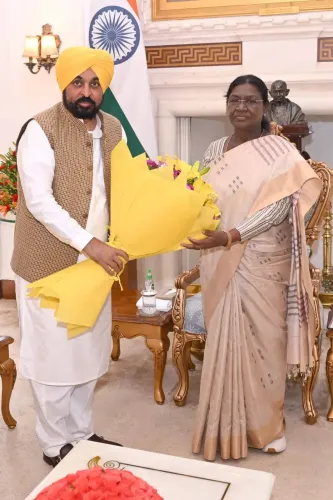
Punjab CM Bhagwant Mann has sought an urgent meeting with President Droupadi Murmu to demand the recall of the defecting MPs.
The defection involves exactly 7 of AAP's 10 Rajya Sabha MPs , meeting the two-thirds threshold under the Tenth Schedule , shielding them from disqualification under the anti-defection law.
Six of the seven defecting MPs represent Punjab in the Upper House; Swati Maliwal is the only exception.
AAP workers protested outside the residences of Rajinder Gupta in Ludhiana and Ashok Mittal and Harbhajan Singh in Jalandhar on April 25 .
CM Mann accused the BJP of a pattern of breaking regional parties, citing examples of Shiv Sena , NCP , and Trinamool Congress splits engineered under BJP's watch.
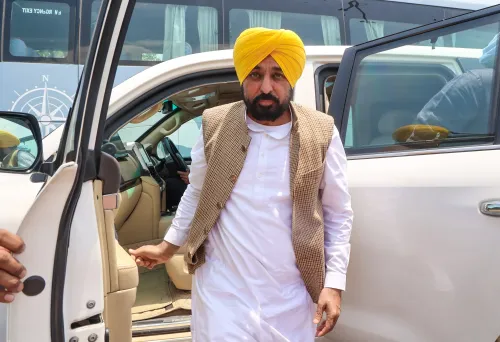
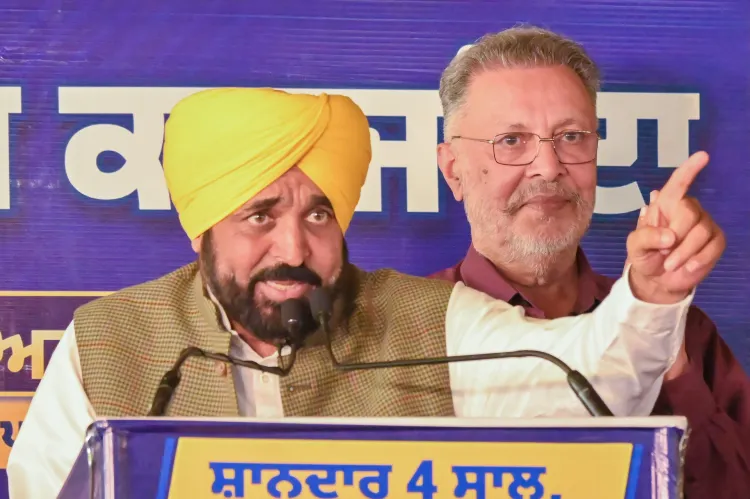
Punjab Chief Minister Bhagwant Singh Mann has formally sought an appointment with President Droupadi Murmu to present his government's position on the mass defection of seven Aam Aadmi Party (AAP) Rajya Sabha members who announced their switch to the Bharatiya Janata Party (BJP) on April 24, 2025. Mann is expected to attend the meeting alongside AAP MLAs and push for the recall of the defecting MPs, marking one of the most significant political crises to hit the party since its landslide victory in Punjab.
Who Are the Seven MPs Who Defected?
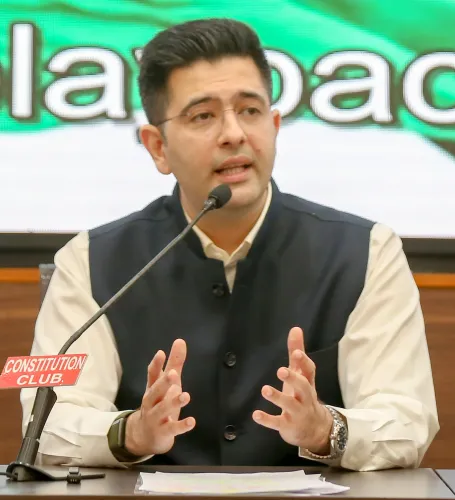
The seven AAP Rajya Sabha members who quit the party and joined the BJP are: Raghav Chadha, Sandeep Pathak, Ashok Mittal, former Indian cricket star Harbhajan Singh, Rajinder Gupta, Swati Maliwal, and Vikramjit Sahney. Of these, six MPs represent Punjab in the Upper House, with Swati Maliwal being the lone exception.
The defection is particularly significant because it involves seven out of AAP's ten Rajya Sabha MPs — exactly the two-thirds threshold required under the Tenth Schedule of the Constitution, commonly known as the anti-defection law. By crossing this threshold collectively, none of the seven MPs is expected to face disqualification from their Rajya Sabha seats.
Why the Anti-Defection Law Does Not Apply Here
Under the Tenth Schedule of the Indian Constitution, a legislator faces disqualification if they voluntarily give up party membership or vote against party direction without prior approval. However, there is a critical exception: if at least two-thirds of a legislative party's members merge with another party, the anti-defection law does not apply.
Had Raghav Chadha or any individual MP acted alone, they would have risked losing their Rajya Sabha seat immediately. The coordinated, simultaneous nature of this mass defection — involving exactly 7 of 10 MPs — appears carefully calibrated to exploit this constitutional provision. Political analysts note this is a legally sophisticated manoeuvre that has been used in state assemblies before but is relatively rare at the Rajya Sabha level.
CM Mann's Reaction and Political Pushback
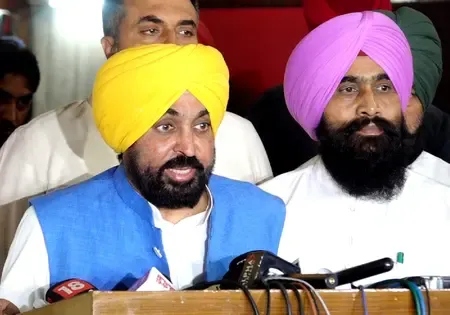
CM Bhagwant Mann did not mince words in his response, calling the defecting MPs "traitors" who have "backstabbed" the people of Punjab for personal gain. He stated: "The wise and brave people of Punjab will never forgive the traitors who have backstabbed them for their own vested interests. Punjabis have never forgotten acts of betrayal, and those who deceived them have vanished into political oblivion."
Mann also drew a broader pattern of BJP's alleged strategy of weakening regional parties across India. He cited the cases of Mamata Banerjee's Trinamool Congress, Uddhav Thackeray's Shiv Sena, Sharad Pawar's NCP, and leaders like Naveen Patnaik, Dushyant Chautala, and Nitish Kumar as examples of similar political engineering by the BJP.
The Chief Minister also linked the defections to the recent enactment of strict anti-sacrilege (beadbi) laws in Punjab, suggesting the BJP is uncomfortable with decisive action on issues central to Punjab's religious and cultural identity.
Ground-Level Protests and Fallout
AAP workers erupted in protests across Punjab on April 25, demonstrating outside the offices and residences of three of the defecting MPs. Protesters gathered at Rajinder Gupta's office in Ludhiana, and at the residences of Ashok Mittal and Harbhajan Singh in Jalandhar, reflecting deep anger at the grassroots level over what many in the party see as a betrayal of the electorate's mandate.
Broader Political Implications and What Comes Next
This mass defection is a serious blow to AAP's national ambitions and its credibility as an alternative political force. The party swept Punjab in 2022 with a historic 92-seat majority, promising clean governance and an end to dynastic politics — making the defection of senior leaders all the more symbolically damaging.
Notably, Raghav Chadha was one of AAP's most prominent national faces and Sandeep Pathak served as the party's national general secretary, making their departure especially consequential for AAP's organizational structure outside Punjab. The loss of six Punjab-based Rajya Sabha MPs also weakens the state government's ability to push legislation through the Upper House.
The President's meeting, once granted, will test whether constitutional mechanisms can offer any relief to AAP, given that the anti-defection route appears legally closed. Political observers will also watch whether the Rajya Sabha Chairman takes any cognizance of the merger. With Punjab assembly elections still years away, the BJP's calculation appears to be about weakening AAP's national narrative ahead of future electoral battles. All eyes are now on President Murmu's response and the AAP's next strategic move.
Point of View
Hitting the two-thirds constitutional threshold — reveals this was no spontaneous exodus but a carefully orchestrated political operation. The BJP has now refined the art of 'constitutional poaching,' using the very laws designed to protect democracy as tools to hollow out opposition parties. What makes this particularly ironic is that AAP built its entire identity on being the antidote to exactly this kind of transactional politics. CM Mann's rush to the Rashtrapati Bhavan is symbolically powerful but constitutionally limited — the real battle for AAP is not in Raisina Hill, but in rebuilding trust with a Punjab electorate that gave it an unprecedented mandate just three years ago.
NationPress
30 Sept 2026
Frequently Asked Questions
Which seven AAP MPs joined the BJP in April 2025?
The seven AAP Rajya Sabha MPs who joined the BJP are Raghav Chadha, Sandeep Pathak, Ashok Mittal, Harbhajan Singh, Rajinder Gupta, Swati Maliwal, and Vikramjit Sahney. Six of them represent Punjab in the Rajya Sabha, while Swati Maliwal is the exception.
Why can't the seven AAP MPs be disqualified under the anti-defection law?
The Tenth Schedule of the Indian Constitution exempts legislators from disqualification if at least two-thirds of a legislative party's members merge with another party. Since seven out of AAP's ten Rajya Sabha MPs defected together, they meet this threshold and are protected from disqualification.
Why is CM Bhagwant Mann meeting President Droupadi Murmu?
Punjab CM Bhagwant Mann is seeking a meeting with President Droupadi Murmu to present his government's stance on the mass defection and argue for the recall of the seven MPs who joined the BJP. He plans to attend the meeting alongside AAP MLAs.
What is AAP's reaction to the mass defection of its Rajya Sabha MPs?
AAP and CM Mann have strongly condemned the defection, calling the MPs 'traitors' who betrayed the people of Punjab. AAP workers also staged protests outside the residences and offices of three defecting MPs in Ludhiana and Jalandhar.
How does this defection impact AAP's political strength?
The defection significantly weakens AAP's presence in the Rajya Sabha, reducing its Upper House strength and hampering its ability to push legislation. It also deals a major blow to the party's national credibility, especially since high-profile leaders like Raghav Chadha and Sandeep Pathak are among those who left.