AAP Files Disqualification Petition Against 7 Defecting Rajya Sabha MPs
Synopsis
AAP's Sanjay Singh has filed a Tenth Schedule disqualification petition against 7 defecting Rajya Sabha MPs including Raghav Chadha and Swati Maliwal who are set to join BJP. Constitutional experts say their memberships could be cancelled. The case tests India's anti-defection law at its highest level.
Key Takeaways
AAP's Sanjay Singh filed a disqualification petition under the Tenth Schedule against 7 defecting Rajya Sabha MPs on Sunday, April 26, 2025 .
The seven MPs — Raghav Chadha, Swati Maliwal, Harbhajan Singh, Sandeep Pathak, Ashok Mittal, Rajinder Gupta, and Vikram Sahni — resigned from AAP on April 25 and are set to join the BJP .
Constitutional experts Kapil Sibal and P.
Achary have reportedly stated the MPs' memberships can be legally terminated under anti-defection provisions.
The defecting MPs claim they form a two-thirds faction of 7 out of 10 AAP Rajya Sabha members, potentially invoking the merger exception under the Tenth Schedule .
Rajya Sabha Chairman C.
Radhakrishnan has been urged to conduct an early hearing and deliver a fair ruling on the petition.
The defection could significantly impact AAP's political standing in Punjab , where five of the seven MPs have strong electoral connections.
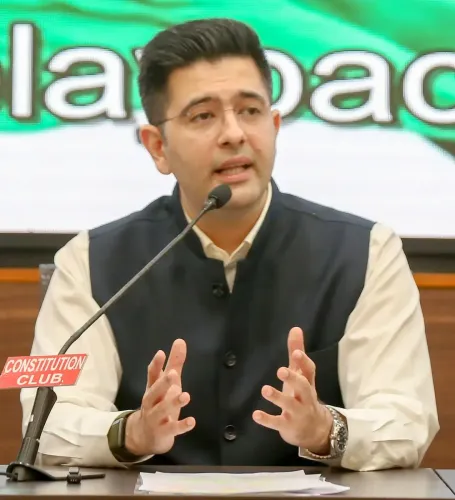
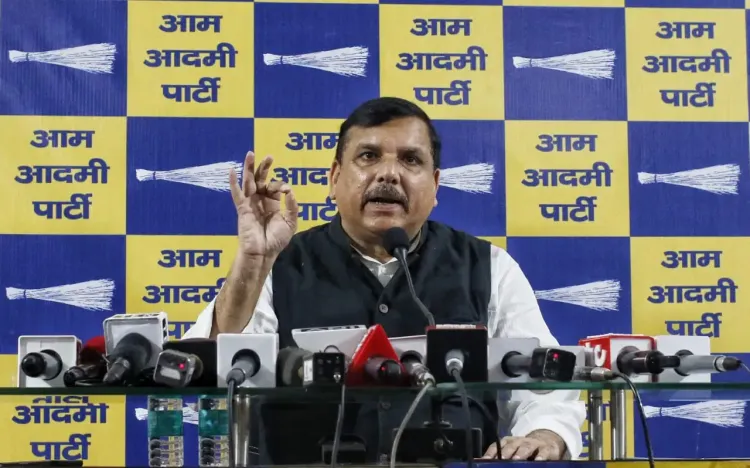
New Delhi, April 26: Aam Aadmi Party (AAP) Rajya Sabha MP Sanjay Singh on Sunday announced that the party has formally filed a disqualification petition under the Tenth Schedule of the Constitution against seven MPs who resigned from AAP and are set to join the Bharatiya Janata Party (BJP). Singh urged Rajya Sabha Chairman C. P. Radhakrishnan to schedule an early hearing and deliver a fair ruling on the anti-defection matter.
The Defection That Shook AAP's Rajya Sabha Strength
The political crisis erupted after Rajya Sabha MP Raghav Chadha announced his resignation from AAP on Friday, April 25, alongside six fellow MPs — Swati Maliwal, Harbhajan Singh, Sandeep Pathak, Ashok Mittal, Rajinder Gupta, and Vikram Sahni. All seven are expected to formally merge with the BJP in the coming days.
Chadha described the group as a two-thirds faction of AAP's Rajya Sabha members, a numerical threshold that carries specific legal significance under anti-defection law. Under the Tenth Schedule, a merger is legally valid only if at least two-thirds of a party's legislative members in a House join another party — a provision the departing MPs appear to be invoking as a shield against disqualification.
Sanjay Singh's Legal and Constitutional Argument
Addressing a press conference, Sanjay Singh cited prominent legal voices to reinforce AAP's case. He quoted: Senior advocate Kapil Sibal and constitutional expert P. D. T. Achary have clearly stated that the seven members who decided to break away from AAP and merge with BJP will have their memberships terminated, cancelled, and ended.
Singh argued that the petition formally requests the Rajya Sabha Chairman to invoke the Tenth Schedule and cancel the memberships of all seven defecting MPs. He emphasised that a prompt hearing is critical to uphold constitutional integrity.
Singh did not mince words on the moral dimension, stating that this move amounts to a betrayal of democracy, a betrayal of the people of Punjab, and a betrayal of the country's Constitution. He added that any elected representative with genuine ideological differences must first resign their seat before switching allegiances.
Anti-Defection Law: What the Tenth Schedule Says
The Tenth Schedule, introduced by the 52nd Constitutional Amendment in 1985, was designed specifically to curb opportunistic party-switching by elected representatives. It disqualifies members who voluntarily give up party membership or vote against party direction. However, a critical exception — Paragraph 4 — permits a merger if at least two-thirds of the party's members in that House agree to join another party.
This two-thirds clause is precisely what Chadha's faction is banking on. AAP currently has 10 Rajya Sabha members, and seven defecting MPs would constitute exactly 70% — numerically satisfying the merger threshold. However, AAP and constitutional experts like P. D. T. Achary argue that a valid merger requires the original party itself to merge, not just a faction of its parliamentary members in one House.
Notably, the Supreme Court of India has repeatedly held that the Speaker or Chairman's decision on disqualification petitions is subject to judicial review, meaning this battle could ultimately land in court regardless of the Chairman's ruling.
The Punjab Factor: Why This Matters Beyond Delhi
Five of the seven defecting MPs — including Harbhajan Singh, Sandeep Pathak, Ashok Mittal, Rajinder Gupta, and Vikram Sahni — were elected from Punjab, where AAP holds a decisive majority government under Chief Minister Bhagwant Mann. Their defection is not merely a parliamentary arithmetic issue; it strikes at the credibility of AAP's political narrative in its strongest state bastion.
Critics argue that this mass exodus signals deeper internal fractures within AAP, coming at a time when the party is already navigating the legal and political fallout from the arrest of its national convener Arvind Kejriwal in the Delhi liquor policy case. The BJP, meanwhile, stands to gain experienced upper-house voices with direct Punjab connections ahead of future electoral cycles.
What Happens Next
The petition now rests with Rajya Sabha Chairman C. P. Radhakrishnan, who must decide whether to admit the petition, schedule hearings, and ultimately rule on disqualification. Historically, such petitions have faced prolonged delays — the Manipur defection cases of 2020 and several Lok Sabha petitions lingered for months or years without resolution, a pattern critics cite as a systemic weakness in India's anti-defection enforcement.
If the Chairman rules in AAP's favour, the seven MPs could lose their Rajya Sabha seats, triggering by-elections or fresh nominations. If the two-thirds merger argument is accepted, all seven retain their seats under the BJP banner. Legal challenges before the Supreme Court are widely anticipated regardless of the outcome.
With the formal BJP merger expected within days and the constitutional petition now on record, the coming weeks will test both the robustness of India's anti-defection framework and the political futures of seven MPs who chose to cross the aisle.
Point of View
And the BJP absorbs battle-tested upper-house voices with Punjab roots ahead of future elections. The Tenth Schedule was designed to protect voter mandates, yet its merger clause has become a well-worn escape hatch for political opportunists. If the Rajya Sabha Chairman delays or dismisses this petition as has happened in similar cases, it will further erode public faith in parliamentary accountability mechanisms.
NationPress
27 Sept 2026
Frequently Asked Questions
Why has AAP filed a disqualification petition against the 7 MPs?
AAP filed the petition under the Tenth Schedule of the Constitution, arguing that the seven MPs who resigned and plan to join BJP were elected on an AAP mandate and their defection constitutes grounds for membership cancellation. The party has urged Rajya Sabha Chairman C. P. Radhakrishnan to hold an early hearing.
Who are the 7 MPs who left AAP to join BJP?
The seven MPs are Raghav Chadha, Swati Maliwal, Harbhajan Singh, Sandeep Pathak, Ashok Mittal, Rajinder Gupta, and Vikram Sahni. All are Rajya Sabha members and are expected to formally merge with the BJP within days.
What is the Tenth Schedule and how does it apply here?
The Tenth Schedule introduced in 1985 disqualifies MPs who voluntarily give up party membership or vote against party direction. However, it allows a merger if two-thirds of a party's members in a House join another party, a clause the defecting MPs are reportedly invoking.
Can the defecting MPs avoid disqualification using the two-thirds merger rule?
The seven MPs constitute approximately 70% of AAP's 10 Rajya Sabha members, numerically meeting the two-thirds threshold. However, constitutional experts cited by AAP argue that a valid merger requires the original party to merge, not just a parliamentary faction.
What happens if the Rajya Sabha Chairman accepts the disqualification petition?
If the Chairman rules in AAP's favour, all seven MPs could lose their Rajya Sabha seats. The matter could also be challenged before the Supreme Court, as the apex court has held that such decisions are subject to judicial review.