Breaking: Raghav Chadha, 6 AAP MPs Merge with BJP in Major Split
Synopsis
In a stunning political earthquake, Raghav Chadha and 6 other AAP Rajya Sabha MPs have formally merged with BJP, citing suffocation within the party. The defection — constitutionally protected under the anti-defection law — leaves AAP with just 3 Upper House members and signals a deepening crisis for Arvind Kejriwal's party.
Key Takeaways
Raghav Chadha and 6 other AAP Rajya Sabha MPs announced a formal merger with BJP on April 24, 2025 , citing suffocation within the party.
The defecting group represents 7 of AAP's 10 Rajya Sabha members — a constitutionally protected two-thirds majority under the Tenth Schedule .
Notable defectors include Harbhajan Singh , Swati Maliwal , Ashok Mittal , and Sandeep Pathak .
Ashok Mittal , appointed to replace Chadha as AAP Deputy Leader in Rajya Sabha just days ago, has also joined the merger — a significant irony.
Chadha's demotion from the post of Deputy Leader over alleged failure to raise issues against the government was reportedly the immediate trigger for the split.
The defection leaves AAP with only 3 Rajya Sabha MPs , severely weakening the party's legislative presence in the Upper House of Parliament .
New Delhi, April 24: In a seismic political development, Aam Aadmi Party (AAP) Rajya Sabha MP Raghav Chadha on Friday, April 24, announced that seven of AAP's ten Rajya Sabha members — a two-thirds majority — are formally merging with the Bharatiya Janata Party (BJP). Chadha cited a sense of suffocation within the party and a growing disconnect from the founding principles he had championed alongside Arvind Kejriwal over 15 years.
The Announcement and Who Is Leaving
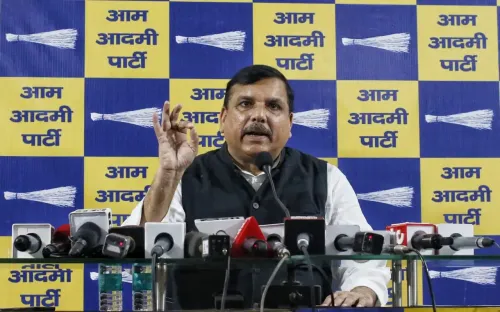
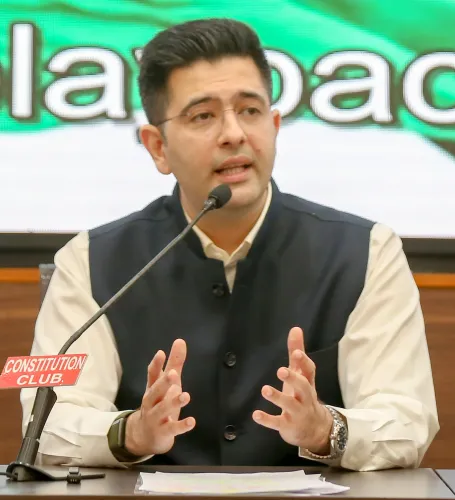
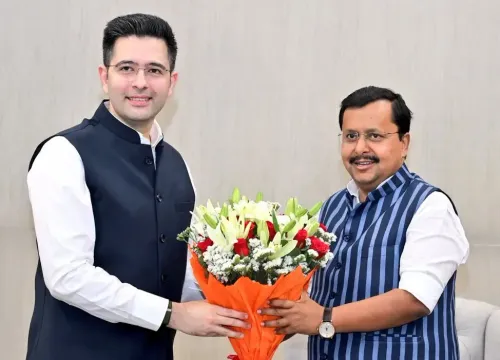
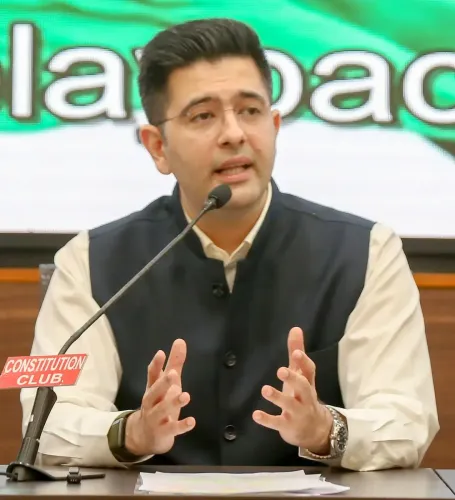
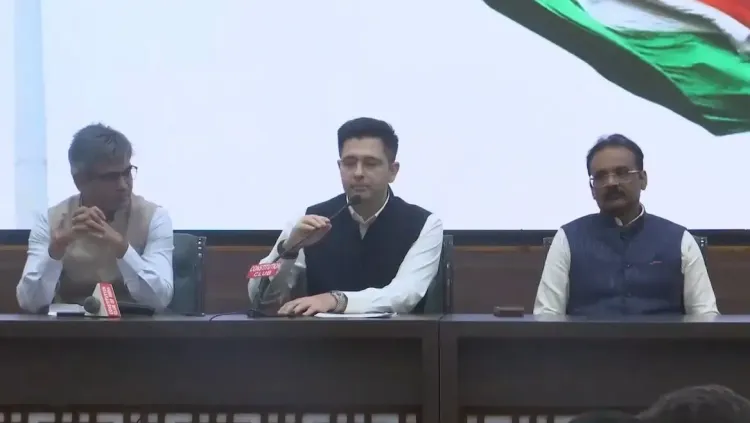
Speaking at a press conference flanked by AAP MPs Ashok Mittal and Sandeep Pathak, Chadha declared, We have decided that we, the 2/3rd members belonging to the AAP in Rajya Sabha, exercise the provisions of the Constitution of India and merge ourselves with the BJP.
Among those parting ways with AAP are prominent names including former cricketer Harbhajan Singh and Swati Maliwal, the former Delhi Commission for Women chief who had previously made headlines for her public fallout with the party leadership.
The defection is constitutionally significant — a merger of two-thirds of a legislative party group is protected under the Tenth Schedule of the Indian Constitution, meaning these MPs cannot be disqualified under anti-defection rules.
The Trigger: Demotion and Internal Rift
Chadha's departure comes within days of his demotion from the post of Deputy Leader of AAP in the Rajya Sabha. The party had reportedly stripped him of the position over allegations that he failed to raise critical issues against the ruling government — a charge he vehemently denied.
In a pointed rebuttal, Chadha posted a video compilation of his parliamentary interventions, writing: With respect, to those questioning my parliamentary performance, I'll let my work do the talking.
The video highlighted his work on issues ranging from data expiry policies, paternity leave legislation, minimum balance penalties in banks, food adulteration, incoming call charges, the 28-day recharge scam, taxation anomalies, and excess baggage charges by airlines.
In a striking irony, Ashok Mittal — the very MP elevated to replace Chadha as Deputy Leader — has also joined the merger with BJP, dealing a double blow to AAP's Rajya Sabha standing.
Deeper Context: AAP's Unravelling Upper House Presence
This defection is not happening in a vacuum. AAP has been under sustained pressure since Arvind Kejriwal's arrest in the Delhi liquor policy case in 2024, a period that exposed deep fault lines within the party's leadership structure. The party's crushing defeat in the February 2025 Delhi Assembly elections had already signalled that its political capital was eroding rapidly.
Critics argue that AAP, which built its brand on anti-corruption politics and citizen empowerment, has struggled to maintain internal democracy — the very values it once weaponised against rivals. The departure of Swati Maliwal, who had publicly accused a senior Kejriwal aide of assault, added credibility to concerns about the party's internal culture.
For BJP, absorbing seven Rajya Sabha MPs is a strategic gain that strengthens its numbers in the Upper House, where it has historically needed coalition support to pass key legislation.
What This Means for AAP and Indian Politics
With only 3 Rajya Sabha MPs remaining, AAP's Upper House group is now effectively decimated. The party loses its formal group status, which could further limit its ability to raise issues, demand votes, or influence legislative proceedings.
For Raghav Chadha personally, the move marks a dramatic pivot. Once considered among the most articulate young faces of the AAP movement, his defection to BJP represents one of the most significant individual political realignments in recent memory.
What Happens Next
The formal merger process will require submission of documentation to the Rajya Sabha Chairperson, after which the group will be officially recognised as part of the BJP parliamentary party in the Upper House. Legal challenges from AAP are possible but unlikely to succeed given the constitutional two-thirds threshold has been met. All eyes will now be on Arvind Kejriwal's response and whether AAP can stabilise its remaining parliamentary presence before the next round of state elections.
Point of View
Internal purges, and electoral decimation. The irony is sharp: a party that once accused rivals of horse-trading is now watching its own MPs exercise constitutional merger provisions to join the BJP. For BJP, this is a low-cost, high-reward acquisition of both parliamentary numbers and symbolic credibility. The real question is whether AAP can survive as a national political force, or whether it is quietly becoming a regional footnote.
NationPress
30 Sept 2026
Frequently Asked Questions
Why did Raghav Chadha leave AAP and join BJP?
Raghav Chadha cited a sense of suffocation within AAP and said the party had moved away from honest politics. His departure followed his demotion as Deputy Leader of AAP in the Rajya Sabha, reportedly for not raising issues against the government.
How many AAP Rajya Sabha MPs have joined BJP?
Seven out of AAP's ten Rajya Sabha MPs have merged with BJP, constituting a two-thirds majority of the party's Upper House group. This threshold provides constitutional protection from anti-defection disqualification under the Tenth Schedule.
Who are the AAP MPs joining BJP with Raghav Chadha?
The group includes Raghav Chadha, Ashok Mittal, Sandeep Pathak, Harbhajan Singh, and Swati Maliwal among others. Notably, Ashok Mittal had just been appointed to replace Chadha as AAP's Deputy Leader in the Rajya Sabha.
Can AAP stop the merger of its Rajya Sabha MPs with BJP?
Under the Tenth Schedule of the Indian Constitution, a merger of two-thirds of a legislative party group is legally protected from anti-defection action. Since seven of AAP's ten Rajya Sabha MPs are involved, AAP has limited legal recourse to block the merger.
What does this defection mean for AAP's future?
AAP is left with just three Rajya Sabha MPs, effectively ending its formal group presence in the Upper House. Coming after its heavy defeat in the 2025 Delhi Assembly elections and Kejriwal's legal battles, this defection deepens the party's existential crisis.