Raghav Chadha Quits AAP: 7 MPs Join BJP, Cite 'Corrupt Hands'
Synopsis
Seven AAP Rajya Sabha MPs, led by Raghav Chadha, resigned Friday citing corrupt and compromised leadership and are set to formally merge with BJP — a two-thirds bloc satisfying anti-defection law thresholds. The mass exit marks AAP's deepest internal crisis since its founding on an anti-corruption platform.
Key Takeaways
Seven AAP Rajya Sabha MPs — Raghav Chadha, Swati Maliwal, Harbhajan Singh, Sandeep Pathak, Ashok Mittal, Rajinder Gupta, and Vikram Sahni — resigned from AAP on Friday, April 24, 2025 .
The group represents a two-thirds majority of AAP's Rajya Sabha strength, satisfying the constitutional threshold under the Tenth Schedule for a valid merger with the BJP .
Chadha stated the MPs left because AAP had fallen into corrupt and compromised hands and denied allegations that fear drove their exit.
The Sheesh Mahal controversy — the alleged luxury renovation of Arvind Kejriwal's official residence using public funds — was cited as a decisive factor in AAP's defeat in the February 2025 Delhi Assembly elections .
The BJP responded by releasing images of what it called Sheesh Mahal 2 and labelled Kejriwal the Rahman Dakait of Delhi , escalating its political offensive.
The defection marks one of the most serious internal crises for AAP since its founding in 2012 on an anti-corruption platform.
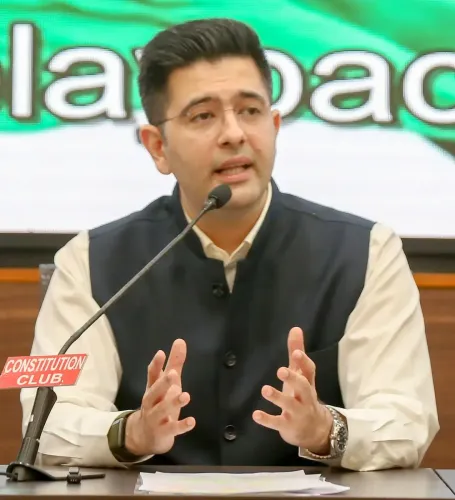
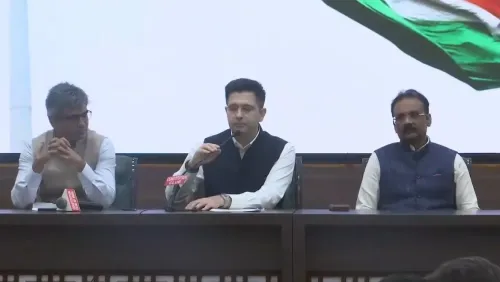
New Delhi, April 25: In a seismic political development, Rajya Sabha MP Raghav Chadha announced on Saturday, April 25 that he along with six other Members of Parliament have formally resigned from the Aam Aadmi Party (AAP), declaring that the party had fallen into corrupt and compromised hands — leaving them disappointed, disenchanted, and disgusted. The mass exit, representing a two-thirds majority of AAP's Rajya Sabha strength, is widely seen as one of the most damaging internal collapses the party has faced since its founding.
The Seven MPs Who Walked Out
Chadha triggered the political earthquake on Friday, April 24, when he announced his resignation alongside Swati Maliwal, Harbhajan Singh, Sandeep Pathak, Ashok Mittal, Rajinder Gupta, and Vikram Sahni — all sitting Rajya Sabha MPs from AAP. The group is set to formally merge with the Bharatiya Janata Party (BJP) in the coming days, pending procedural formalities in the Upper House.
This bloc constitutes a constitutionally significant two-thirds faction of AAP's Rajya Sabha representation — the exact threshold required under the Tenth Schedule of the Indian Constitution to execute a valid merger without inviting disqualification under anti-defection laws. Chadha explicitly referenced this legal provision, stating that elected representatives have the constitutional right to leave a party when they believe it has deviated from its founding principles.
Chadha's Explosive Accusations Against AAP Leadership
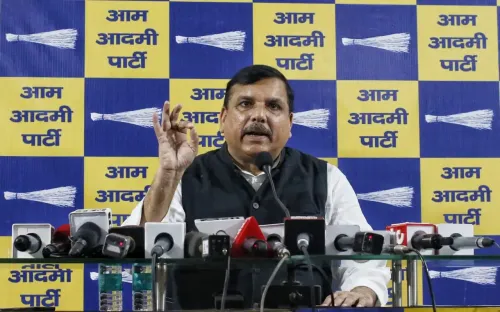
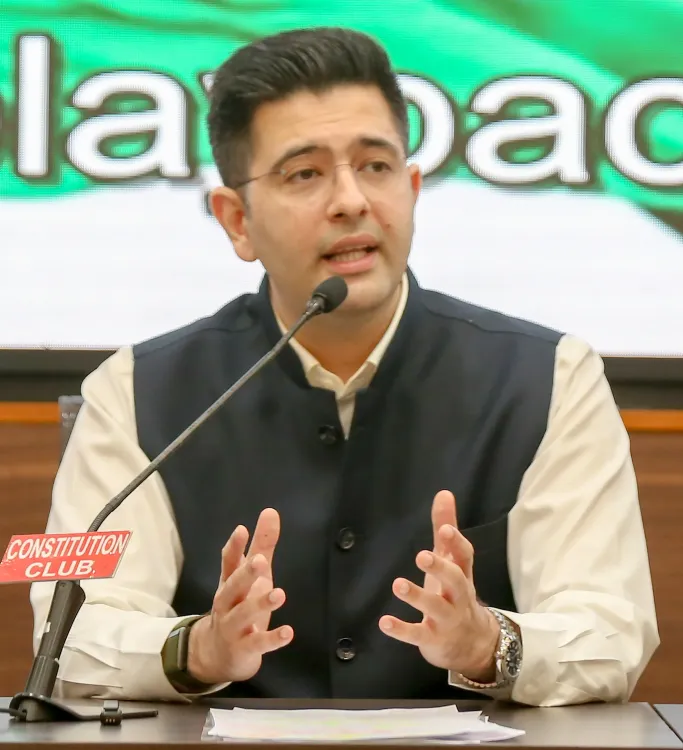
Speaking to reporters in New Delhi, Chadha delivered a scathing indictment of AAP's current direction. He said every true patriot who nurtured the Aam Aadmi Party with their blood and sweat has either already left or is in the process of leaving, because honest and hardworking members no longer see a future within the party.
Chadha directly rebutted claims from AAP leadership that the departing MPs were acting out of political fear. We did not leave the Aam Aadmi Party out of fear; we left because we felt disappointed, disenchanted, and disgusted, he stated emphatically. The choice of words — mirroring the language of a moral reckoning rather than a political calculation — is notable, given that many of these MPs were once among AAP's most prominent faces.
Notably, Swati Maliwal's inclusion in the group carries significant weight. Maliwal, a former Delhi Commission for Women (DCW) Chairperson, had previously made headlines in 2024 when she alleged she was assaulted by Arvind Kejriwal's aide Bibhav Kumar inside the Chief Minister's official residence — an incident that had already created a deep fault line between her and the AAP high command.
The Sheesh Mahal Controversy: The Breaking Point
Chadha identified the Sheesh Mahal controversy — referring to the lavish renovation of Arvind Kejriwal's official bungalow at 6 Flagstaff Road, Civil Lines, New Delhi — as a pivotal reason behind AAP's crushing defeat in the Delhi Assembly Elections of February 2025. He said if there was one single overriding reason for the defeat in the Delhi elections, it was precisely that Sheesh Mahal episode.
The BJP, seizing on the political moment, described Arvind Kejriwal as the Rahman Dakait of Delhi and released fresh images of what it termed Sheesh Mahal 2 — allegedly another luxury property associated with the former Chief Minister. Chadha echoed this concern, urging AAP's remaining workers to reflect on how they would defend these controversies before the public.
The irony is stark: AAP was founded in 2012 on the back of the India Against Corruption movement led by Anna Hazare, with Kejriwal positioning himself as the anti-corruption crusader who would cleanse Indian politics. The Sheesh Mahal episode — where public money was reportedly spent on luxury amenities at the CM's residence — became a symbol of the very excess the party once vowed to fight.
Political Fallout and What This Means for AAP
This mass resignation is not an isolated event but the culmination of a pattern of high-profile exits from AAP. Over the past several years, the party has lost numerous prominent leaders and state-level figures. The February 2025 Delhi election result — where AAP was reduced to a fraction of its earlier legislative strength — had already signaled a crisis of credibility.
The formal merger of these seven Rajya Sabha MPs into the BJP will significantly alter the arithmetic in the Upper House, strengthening the ruling party's numbers while further weakening AAP's already diminished parliamentary presence. For Kejriwal, who is currently out on bail in connection with the Delhi liquor policy case, this represents a compounding political crisis at a time when the party is struggling to rebuild its public image.
What Happens Next
The formal merger process requires the submission of a petition to the Rajya Sabha Chairman, after which the office will verify that the two-thirds threshold has been met. Once cleared, the group will be officially recognized as part of the BJP parliamentary party in the Upper House.
Political observers are watching closely to see whether any additional AAP legislators — in state assemblies like Punjab — follow suit in the coming weeks, which could further destabilize the party's only remaining government. As AAP faces its most existential crisis since formation, the coming weeks will determine whether Arvind Kejriwal can arrest the collapse — or whether the party that once promised to transform Indian politics becomes a cautionary tale about the very corruption it was built to fight.
Point of View
It is a legally calibrated move. The BJP gains Upper House numbers while the departing MPs gain political shelter, but the deeper story is AAP's identity crisis: when the anti-corruption crusader becomes the accused, the ideological foundation crumbles.
NationPress
16 Sept 2026
Frequently Asked Questions
Why did Raghav Chadha and other MPs leave AAP?
Raghav Chadha and six other Rajya Sabha MPs left AAP stating the party had fallen into corrupt and compromised hands. They cited the Sheesh Mahal controversy and AAP's electoral defeat in Delhi as key reasons for their departure.
Which MPs resigned from AAP along with Raghav Chadha?
The seven MPs who resigned from AAP are Raghav Chadha, Swati Maliwal, Harbhajan Singh, Sandeep Pathak, Ashok Mittal, Rajinder Gupta, and Vikram Sahni. All seven are Rajya Sabha members and are set to join the BJP.
Will the AAP MPs who joined BJP face disqualification under anti-defection law?
No, because the seven MPs constitute a two-thirds majority of AAP's Rajya Sabha strength, meeting the constitutional threshold under the Tenth Schedule for a valid merger. This exempts them from disqualification under anti-defection provisions.
What is the Sheesh Mahal controversy that Raghav Chadha mentioned?
The Sheesh Mahal controversy refers to the alleged lavish renovation of Arvind Kejriwal's official residence at 6 Flagstaff Road, New Delhi, reportedly using public funds on luxury fittings. Chadha identified it as the primary reason behind AAP's defeat in the February 2025 Delhi Assembly elections.
What impact will the AAP MPs merger with BJP have on Rajya Sabha?
The formal merger of seven AAP MPs into the BJP will strengthen the ruling party's numerical position in the Rajya Sabha while significantly weakening AAP's parliamentary presence. It further isolates Arvind Kejriwal's party at the national legislative level.