AAP Collapses: Raghav Chadha Leads 7 Rajya Sabha MPs to BJP
Synopsis
Seven of AAP's ten Rajya Sabha MPs, including Raghav Chadha and Punjab strategist Sandeep Pathak, have formally merged with BJP — invoking the Constitution's anti-defection bypass clause. The mass exodus reduces AAP's Upper House strength to just three MPs and deals a potentially fatal blow to the party ahead of the 2027 Punjab elections.
Key Takeaways
Seven of AAP's ten Rajya Sabha MPs , including Raghav Chadha , Sandeep Pathak , Ashok Mittal , Swati Maliwal , Harbhajan Singh , Vikram Sahney , and Rajinder Gupta , formally joined the BJP on April 25, 2025 .
The defectors invoked the Tenth Schedule's group merger clause , requiring two-thirds of a legislative group, to legally bypass anti-defection disqualification.
AAP's Rajya Sabha strength has collapsed from 10 MPs to just 3 , severely limiting the party's parliamentary influence and bill-blocking capacity.
Sandeep Pathak , AAP's chief organizational strategist credited with the 2022 Punjab election victory , is among the defectors — a critical loss ahead of the 2027 Punjab polls .
Ashok Mittal's departure is linked by observers to recent Enforcement Directorate (ED) raids on his Lovely Professional University institutions.
The defection follows AAP's catastrophic 2025 Delhi Assembly election loss and its exit from the opposition INDIA bloc , compounding the party's existential crisis.
New Delhi, April 25: In one of the most dramatic political defections in recent Indian parliamentary history, Aam Aadmi Party (AAP) suffered a devastating blow on Friday, April 25, as seven of its ten Rajya Sabha MPs — led by senior leader Raghav Chadha — formally announced their merger with the Bharatiya Janata Party (BJP), invoking the constitutional two-thirds group merger clause under the Tenth Schedule to shield themselves from anti-defection disqualification. The mass walkout has effectively gutted AAP's presence in the Upper House and cast a long shadow over the party's future, particularly ahead of the 2027 Punjab Assembly elections.
The Defection: Who Left and How It Unfolded
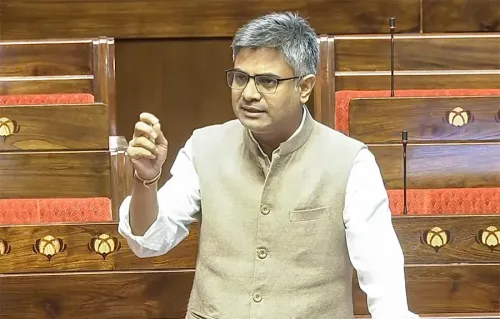
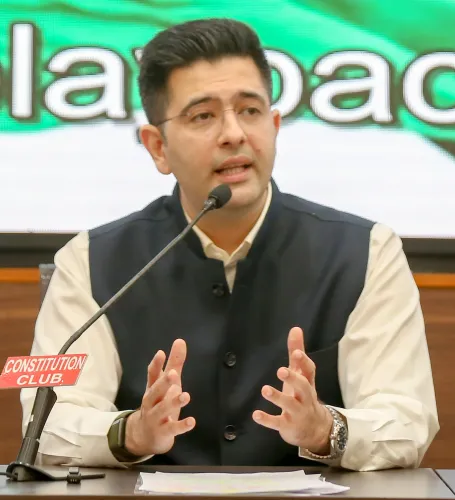
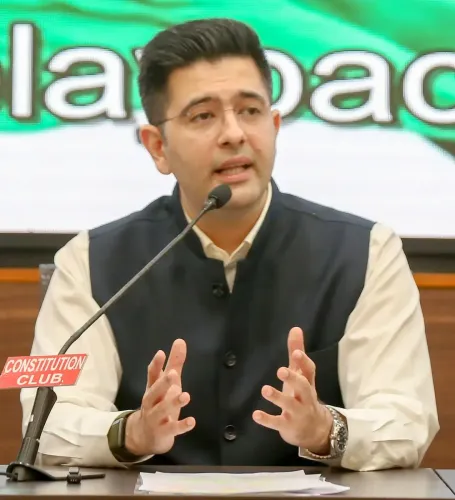
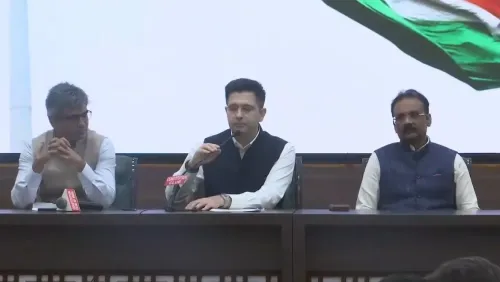
The exodus was announced at a high-profile press conference where Raghav Chadha, flanked by fellow Rajya Sabha MPs Ashok Mittal and Sandeep Pathak, read out a joint statement declaring their formal merger with the BJP. Chadha stated that "we, the two-thirds members belonging to the AAP in the Rajya Sabha, exercise the provisions of the Constitution and merge ourselves with the BJP."
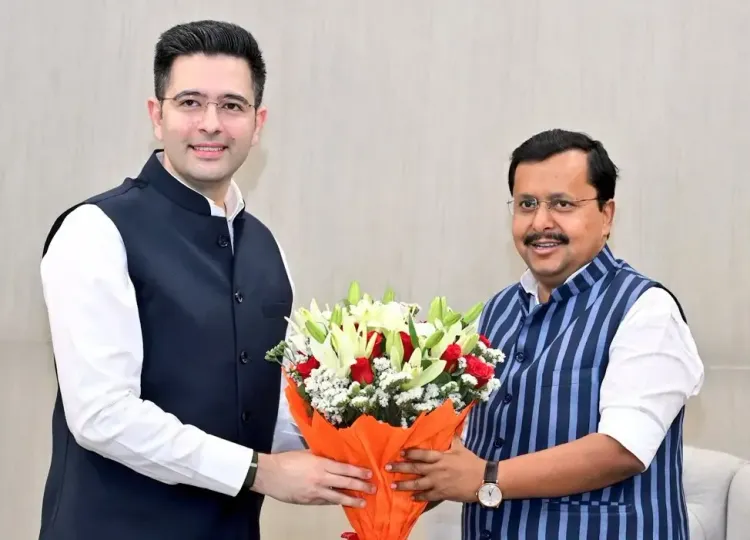
The group formally joined the ruling party at BJP's New Delhi headquarters, where BJP President Nitin Nabin welcomed them with bouquets and sweets in a carefully choreographed ceremony. The seven MPs who made the switch include Raghav Chadha, Sandeep Pathak, Ashok Mittal (founder of Lovely Professional University), Swati Maliwal, former cricketer Harbhajan Singh, Punjab entrepreneur Vikram Sahney, and industrialist Rajinder Gupta.
By invoking the Tenth Schedule's group merger provision — which requires at least two-thirds of a party's legislative group to merge — the defectors have legally insulated themselves from disqualification, a constitutional manoeuvre that has been used sparingly but effectively in Indian political history.
Who Are the Seven Defectors and Why It Matters
Raghav Chadha was not merely a Rajya Sabha MP — he was AAP's most visible face in Parliament, a frontline spokesperson, and one of Arvind Kejriwal's closest political confidants. His departure is akin to a general abandoning his own army mid-campaign.
Sandeep Pathak, AAP's national general secretary and principal organizational strategist, was widely credited with engineering the party's landslide victory in Punjab in 2022. His exit strips AAP of its most critical ground-level architect at a time when the party desperately needs organizational muscle.
Swati Maliwal, former chairperson of the Delhi Commission for Women, had been publicly feuding with the party leadership for months. In a social media post ahead of the formal announcement, she recounted her frustrations, including the alleged physical assault at Kejriwal's former Chief Minister's residence — an incident that had already triggered a national controversy in 2024.
Ashok Mittal's departure is being viewed through a different lens. The Lovely Professional University founder's exit is being attributed by political observers to mounting pressure following recent raids by the Enforcement Directorate (ED) on his institutions — a pattern critics say has been used to engineer political realignments.
Harbhajan Singh, the celebrated spin bowler who was elected unopposed to the Rajya Sabha from Punjab in 2022, and businessmen Vikram Sahney and Rajinder Gupta — both active voices on Punjab's economic and rural development issues — complete the group of seven.
AAP's Arithmetic Nightmare and Organizational Crisis
The immediate parliamentary consequence is stark: AAP's Rajya Sabha strength has collapsed from 10 MPs to just 3. This dramatically weakens the party's ability to raise issues, block or delay legislation, and maintain any meaningful presence in India's Upper House.
This comes at the worst possible time. AAP had already suffered a catastrophic defeat in the February 2025 Delhi Assembly elections, losing power in its home bastion after a decade. Kejriwal himself lost his own constituency. The party had also recently announced its withdrawal from the opposition INDIA bloc, further isolating itself politically.
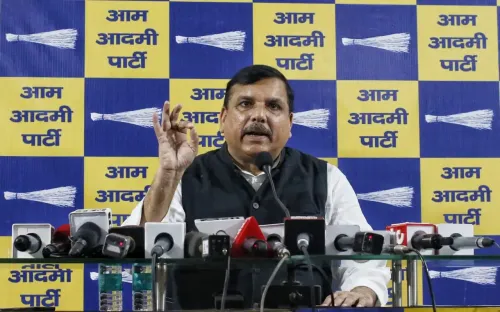
AAP hit back swiftly, holding its own press conference and labelling the seven departing MPs as "traitors". However, the optics were deeply damaging — the party that once positioned itself as the moral antithesis of Indian political corruption now finds itself defending against allegations of being "corrupt, compromised, and self-serving" — the very language AAP once used against its rivals.
BJP's Strategic Gain and the Punjab 2027 Calculation
For the BJP, the defection is a significant strategic windfall. The ruling party has struggled to establish a meaningful foothold in Punjab, where AAP holds power with a commanding majority. Absorbing seven AAP MPs — including the party's chief Punjab strategist Sandeep Pathak — gives BJP both organizational intelligence and symbolic momentum heading into the 2027 Punjab polls.
BJP spokespersons framed the defection as evidence that AAP had become "a failed idealism turned into another corrupt establishment", welcoming the defectors as "realists who placed national interest above party loyalty." The narrative is clearly calibrated to erode AAP's reformist brand among Punjab's voters.
Notably, this is not the first time a regional party built on anti-establishment credentials has seen its Rajya Sabha bloc fracture under BJP's political gravity. Similar patterns were observed with factions of the Trinamool Congress and regional outfits in earlier election cycles — raising broader questions about the structural vulnerabilities of newer political parties in India's parliamentary system.
What Happens Next for AAP and Indian Politics
With the 2027 Punjab Assembly elections now the only major electoral prize AAP can realistically contest, the party faces a survival test. Losing Pathak — its Punjab mastermind — and Chadha — its national communicator — in a single day is a blow that goes beyond arithmetic. It is a crisis of credibility, narrative, and organizational depth simultaneously.
The Rajya Sabha Chairman will now need to formally recognise the merger, after which the seven MPs will sit and vote with the BJP. Legal challenges from AAP cannot be ruled out, though constitutional experts suggest the two-thirds threshold invoked makes disqualification proceedings extremely difficult to sustain.
As AAP scrambles to rebuild its narrative and shore up its Punjab government ahead of 2027, the coming weeks will be critical — both in terms of whether more defections follow at the state level and whether Kejriwal can reassert his personal brand as the glue holding a fractured party together.
Point of View
Using the same constitutional loopholes that older parties have always exploited. The irony is brutal: a party that once accused everyone else of being corrupt is now being called corrupt by its own founding architects. With Delhi lost, the INDIA bloc abandoned, and Punjab now under threat, Kejriwal faces not just an electoral crisis — but an existential one.
NationPress
14 Oct 2026
Frequently Asked Questions
Why did Raghav Chadha and other AAP MPs join BJP?
Raghav Chadha and six other AAP Rajya Sabha MPs joined BJP citing that AAP had deviated from its founding principles and become 'corrupt, compromised, and self-serving.' They invoked the Constitution's Tenth Schedule group merger clause, requiring two-thirds of the party's legislative group, to avoid anti-defection disqualification.
How many AAP Rajya Sabha MPs are left after the defection?
After the departure of seven MPs, AAP now has only three Rajya Sabha MPs remaining. This drastically reduces the party's voice and legislative leverage in India's Upper House.
What is the Tenth Schedule group merger clause used by AAP MPs?
The Tenth Schedule of the Indian Constitution allows a group of legislators to merge with another party without facing disqualification under anti-defection law, provided at least two-thirds of the original party's legislative group agrees to the merger. The seven AAP MPs used this provision to legally join BJP.
How does the AAP defection impact the 2027 Punjab elections?
The defection of Sandeep Pathak — AAP's chief Punjab strategist — and other key leaders significantly weakens the party's organizational capacity ahead of the 2027 Punjab Assembly elections. It simultaneously strengthens BJP's intelligence and momentum in a state where it has historically struggled.
What was Swati Maliwal's reason for leaving AAP?
Swati Maliwal cited long-standing frustrations with the AAP leadership, including the alleged physical assault at Arvind Kejriwal's former Chief Minister's residence — an incident that had triggered national controversy in 2024. She had been publicly at odds with the party leadership for several months before the formal defection.