India-Tajikistan ties: MoS Kirti Vardhan Singh meets FM Muhriddin in Dushanbe

Synopsis
India's MoS for External Affairs Kirti Vardhan Singh used a two-day Dushanbe visit to deepen ties with Tajikistan and personally invite its foreign minister to India's 1st SCO Civilizational Dialogue in Kolkata — a move that signals New Delhi's push to anchor its soft-power ambitions within the SCO framework as Tajikistan holds the grouping's chair.
Key Takeaways
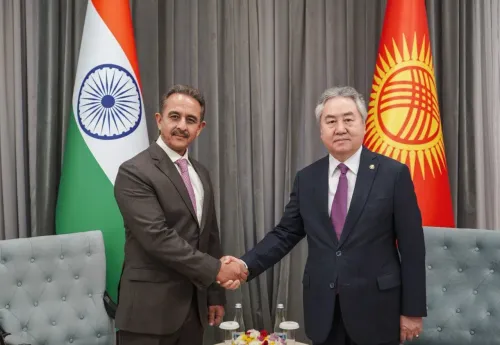
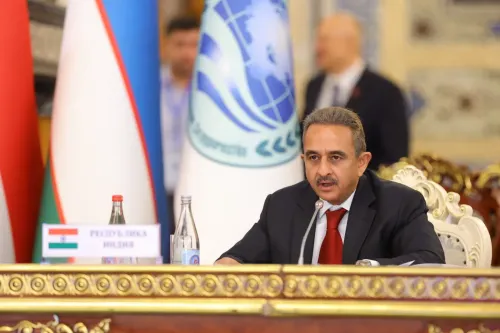
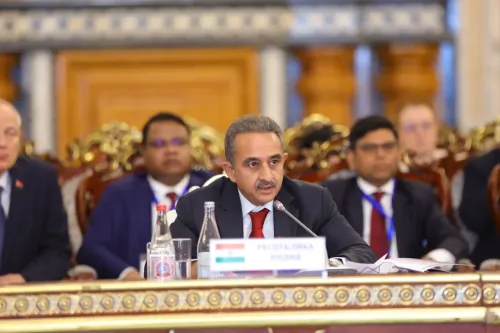
MoS Kirti Vardhan Singh met Tajikistan FM Sirojiddin Muhriddin in Dushanbe on 12 June .
Both sides reviewed the full spectrum of India–Tajikistan bilateral relations and discussed areas for deeper cooperation.
Singh invited Tajikistan to participate at a high level in the 1st SCO Civilizational Dialogue , to be hosted by India in Kolkata next month.
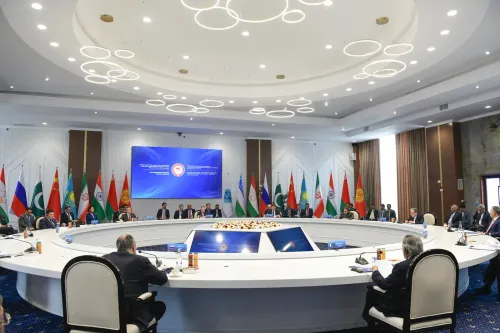
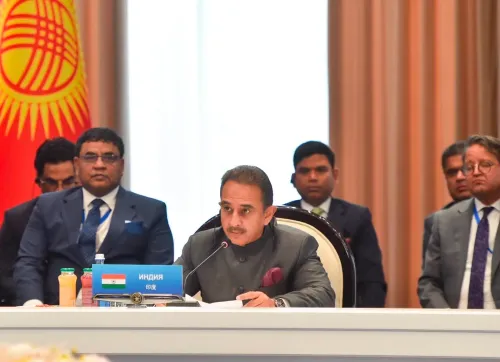
Singh also attended the SCO Conference on 'Central Asia – The Core of SCO' in Dushanbe, outlining India's priorities including youth engagement, cultural exchanges, and regional connectivity.
The MEA described Central Asia as India's 'extended neighbourhood' and a key partner for connectivity, security, and prosperity.
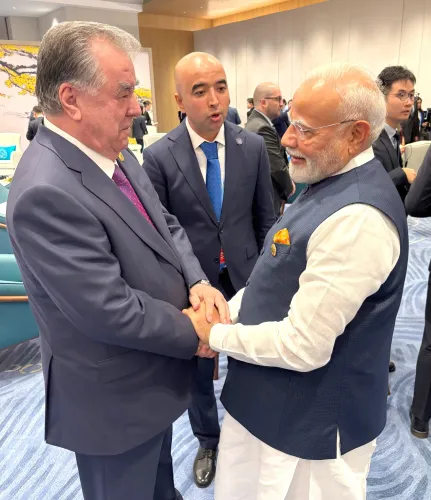
Minister of State for External Affairs Kirti Vardhan Singh on Friday, 12 June held talks with Sirojiddin Muhriddin, Minister of Foreign Affairs of Tajikistan, in Dushanbe, reviewing the full range of India–Tajikistan bilateral relations and identifying areas for deeper cooperation. The meeting underscored the two countries' longstanding strategic partnership.
Key Developments
During the bilateral meeting, MoS Singh reaffirmed the 'longstanding friendship and strategic partnership between India and Tajikistan.' He also formally requested high-level participation from Tajikistan in the 1st Shanghai Cooperation Organisation (SCO) Civilizational Dialogue, which India is set to host in Kolkata next month.
Singh posted on X that he was 'pleased to meet H.E. Mr. Sirojiddin Muhriddin' and had 'reviewed the entire spectrum of India–Tajikistan bilateral relations and discussed ways to further strengthen bilateral cooperation in the areas of mutual interest.'
India's Priorities at the SCO Conference
Earlier on the same day, Singh participated in the SCO Conference on 'Central Asia – The Core of SCO: A Space of Peace and Joint Development', also held in Dushanbe. Speaking at the conference, he reaffirmed India's commitment to its enduring partnership with Central Asia and the SCO, and outlined India's priorities within the grouping.
These priorities include youth engagement, cultural exchanges, strengthening regional connectivity, and deepening civilizational linkages. The upcoming 1st SCO Civilisation Dialogue Forum in Kolkata was highlighted as a key deliverable of India's SCO engagement.
Context of the Visit
Singh arrived in Dushanbe on Thursday for a two-day official visit to attend the SCO conference being hosted by Tajikistan, the current Chair of the SCO Heads of Government Council. The Ministry of External Affairs (MEA) noted that the conference theme 'aligns well with India's SCO priorities on youth, culture and civilisation.'
The MEA further stated that India recognises Central Asia as its 'extended neighbourhood' and a key partner in promoting 'regional connectivity, security, and prosperity.' This framing reflects a consistent diplomatic posture India has maintained across multiple SCO engagements in recent years.
What This Signals
The Dushanbe visit comes at a time when India is actively deepening its Central Asian outreach, leveraging the SCO platform to build bilateral ties alongside multilateral commitments. Hosting the 1st SCO Civilizational Dialogue in Kolkata positions India as a soft-power anchor within the grouping. With Tajikistan holding the SCO chair, securing its high-level participation in the Kolkata forum is both a diplomatic and symbolic priority for New Delhi.
Point of View
That endorsement carries weight. What mainstream coverage underplays is the soft-power competition within the SCO, where China and Russia have historically dominated the civilizational narrative. India's push to host the first-ever SCO Civilizational Dialogue is a direct bid to reshape that narrative. Whether New Delhi can convert conference optics into durable Central Asian partnerships — on connectivity, trade, and security — remains the harder, less photogenic question.
NationPress
20 Sept 2026
Frequently Asked Questions
Why did MoS Kirti Vardhan Singh visit Dushanbe?
Singh travelled to Dushanbe on a two-day official visit to attend the SCO Conference on 'Central Asia – The Core of SCO: A Space of Peace and Joint Development,' hosted by Tajikistan as the current SCO Heads of Government Council chair. He also held a bilateral meeting with Tajikistan's Foreign Minister Sirojiddin Muhriddin on the sidelines.
What is the 1st SCO Civilizational Dialogue that India is hosting?
It is a forum India is hosting in Kolkata next month under its SCO engagement priorities, focused on civilizational and cultural linkages among SCO member states. Singh formally invited Tajikistan to participate at a high level during his meeting with FM Muhriddin.
What are India's stated priorities within the SCO?
According to the Ministry of External Affairs, India's SCO priorities include youth engagement, cultural exchanges, strengthening regional connectivity, and deepening civilizational linkages. India also views Central Asia as its extended neighbourhood and a key partner for regional security and prosperity.
What is the significance of Tajikistan's SCO chairmanship for India?
Tajikistan currently holds the chair of the SCO Heads of Government Council, making it a pivotal partner for India's SCO agenda. Securing Tajikistan's high-level participation in the Kolkata Civilizational Dialogue would lend diplomatic weight to India's hosting role within the grouping.
What did Singh say about India–Tajikistan relations?
Singh reaffirmed the 'longstanding friendship and strategic partnership between India and Tajikistan' during the bilateral meeting. He said both sides reviewed the entire spectrum of bilateral relations and discussed ways to further strengthen cooperation in areas of mutual interest.