Shekhawat Campaigns for BJP in Falodi's Panchayat Polls
Synopsis
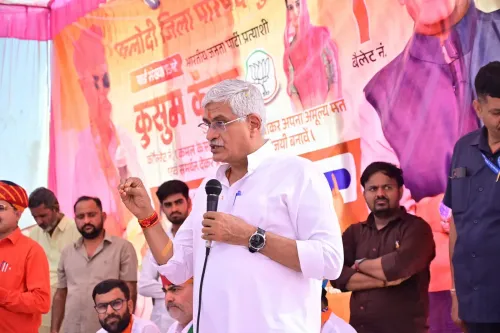
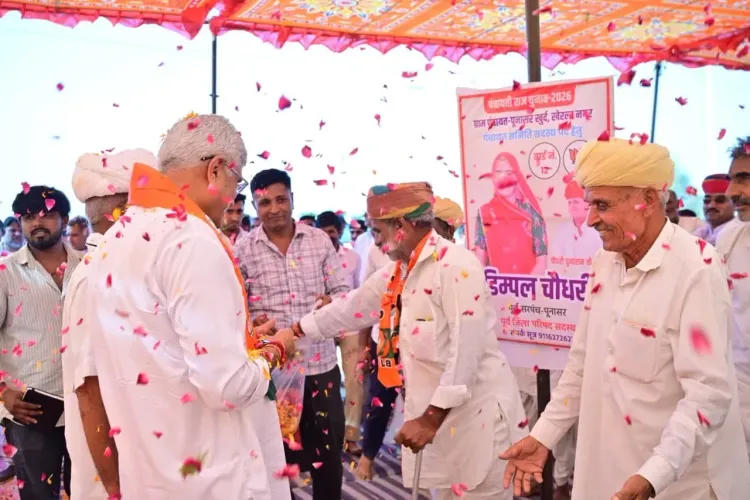
Union Minister Gajendra Singh Shekhawat joined a BJP campaign rally at Poonasar village in Falodi on October 20, backing four candidates across Zila Parishad and Panchayat Samiti wards in the Rajasthan Panchayati Raj elections.
Key Takeaways
Union Culture and Tourism Minister Gajendra Singh Shekhawat addressed a campaign rally at Poonasar village, Falodi district on October 20, 2026 .
He supported four BJP candidates: Kusum Kanwar (Zila Parishad Ward 15), Babudi (Panchayat Samiti Ward 10), Deep Singh (Ward 11), and Dimple Choudhary (Ward 12).
All four wards fall under the Lohawat assembly constituency of Falodi district.
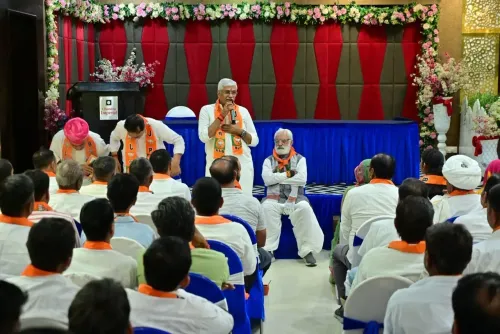
Shekhawat held a dialogue with villagers on development and public welfare issues in the rural area.
Local leaders including Falodi Nagar Palika President Meghraj Kalla and former Sarpanch Radheshyam were present at the rally.
Rajasthan's Panchayati Raj elections are held every five years under the state election commission for zila parishads, panchayat samitis, and gram panchayats.
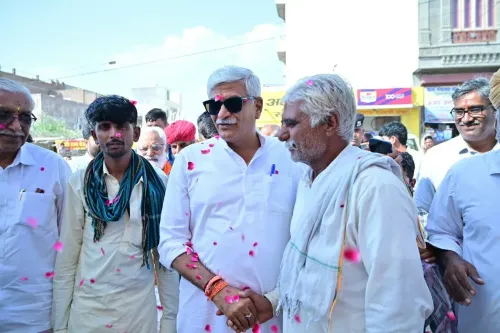
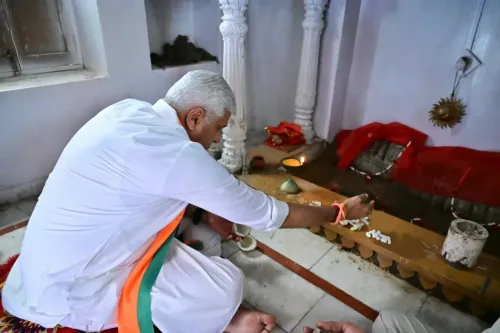
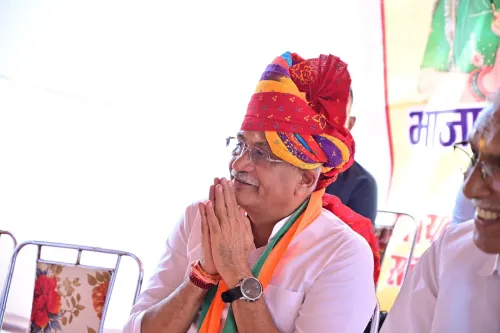
From a dusty village square in Poonasar, Falodi district, Union Culture and Tourism Minister Gajendra Singh Shekhawat on Tuesday, October 20, 2026, threw his weight behind four BJP candidates contesting the Rajasthan Panchayati Raj elections — a reminder that in Indian democracy, no election is too small for a Cabinet minister from the home state.
Shekhawat participated in a campaign rally at Poonasar village in the Lohawat assembly constituency of Falodi, lending support to Smt. Kusum Kanwar, the BJP candidate from Zila Parishad Ward No. 15. Alongside her, the minister backed Smt. Babudi (Panchayat Samiti Ward No. 10), Shri Deep Singh (Ward No. 11), and Dimple Choudhary (Ward No. 12) — a slate of four candidates whose fate will shape local governance in this arid corner of western Rajasthan.
Dialogue in the Dhanis: Development at the Village Level
Rather than a one-way rally speech, Shekhawat described the gathering as a sanvaad — a dialogue — with rural residents on issues of village and hamlet development and public welfare. It is precisely this ground-up engagement that national leaders seek to cultivate ahead of grassroots polls, where voter turnout in Rajasthan's Panchayati Raj contests often outpaces assembly elections in rural belts.
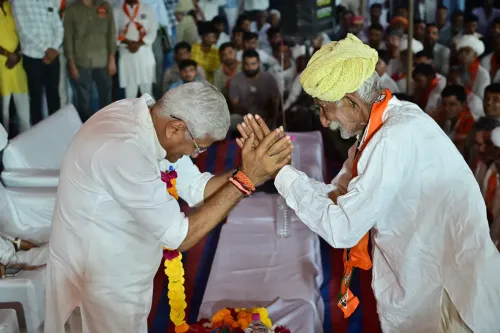
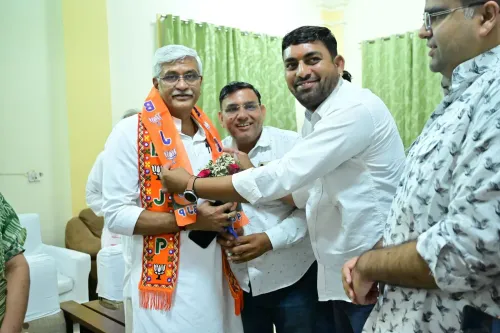
Sharing the stage were Falodi Nagar Palika President Shri Meghraj Kalla, Shri Vikramaditya Singh, and former Sarpanch Shri Radheshyam — the local scaffolding that makes such national-level outreach land in the lanes and fields of Marwar.
Why a Union Minister Knocks on Panchayat Doors
Rajasthan's three-tier Panchayati Raj structure — mandated by the 73rd Constitutional Amendment of 1992 — spans zila parishads, panchayat samitis, and gram panchayats. Elections to these bodies are held every five years under the state election commission and serve as a crucial pulse-check on the ruling party's rural health between state assembly cycles.
For the BJP, deploying senior leaders like Shekhawat — a Lok Sabha MP from Jodhpur who holds sway across western Rajasthan — into micro-level ward campaigns is a calculated investment. Zila parishad and samiti seats form the organisational backbone of the party in villages, feeding into both voter mobilisation and candidate pipelines for future state elections. In a state where the BJP and Congress have historically alternated power, winning the panchayat layer is rarely symbolic.
With results for these wards still ahead, the formation of block and district-level bodies in Falodi will test how effectively that investment paid off on the ground.
Point of View
A swing state where local-body results signal rural mood between assembly cycles. Western Rajasthan, where Shekhawat holds his Jodhpur Lok Sabha base, is a critical belt for the party's rural infrastructure, and zila parishad seats directly feed party mobilisation for future state contests. The minister's framing of the event as a 'dialogue' on village development rather than a traditional rally speech reflects the BJP's broader pivot toward local-governance messaging at the panchayat level. With Rajasthan having historically alternated between the BJP and Congress, holding firm in these micro-contests is as much about organisational depth as it is about the four wards in question.
NationPress
20 Oct 2026
Frequently Asked Questions
Where did Gajendra Singh Shekhawat hold a campaign rally on October 20, 2026?
Shekhawat held the campaign rally at Poonasar village in Lohawat constituency, Falodi district, Rajasthan, in support of BJP candidates contesting Panchayati Raj elections.
Which BJP candidates did Shekhawat support at the Falodi rally?
He supported Smt. Kusum Kanwar (Zila Parishad Ward 15), Smt. Babudi (Panchayat Samiti Ward 10), Shri Deep Singh (Ward 11), and Dimple Choudhary (Ward 12).
What are Rajasthan Panchayati Raj elections?
Rajasthan's Panchayati Raj elections are held every five years under the state election commission to elect members to three-tier local bodies: zila parishads, panchayat samitis, and gram panchayats, as mandated by the 73rd Constitutional Amendment of 1992.
Why do Union ministers campaign in Panchayati Raj elections?
Senior BJP leaders, including Union ministers, campaign in panchayat polls to strengthen party organisation at the grassroots level, mobilise rural voters, and build the local candidate network that supports state-level election efforts.
Who accompanied Shekhawat at the Poonasar village rally?
Falodi Nagar Palika President Meghraj Kalla, Vikramaditya Singh, and former Sarpanch Radheshyam were present alongside Shekhawat at the rally.