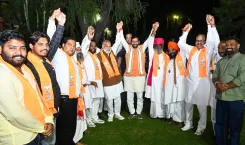
Shekhawat campaigns for BJP in Rajasthan Panchayat polls
Synopsis
Union Culture and Tourism Minister Gajendra Singh Shekhawat addressed a BJP election rally in Sanwarij on October 18, backing Falodi Zila Parishad and Dechu Panchayat Samiti candidates, invoking PM Modi's development record and urging maximum voter turnout.
Key Takeaways
Union Minister Gajendra Singh Shekhawat addressed a Panchayati Raj election rally in Sanwarij village on the night of October 18, 2026 .
He campaigned for Sarita Bhadu (Falodi Zila Parishad Ward 4), Damaram Panwar (Ward 5), and Dechu Panchayat Samiti BJP candidates.
Shekhawat highlighted PM Narendra Modi's development programmes and criticised what he called Congress's 'negative politics'.
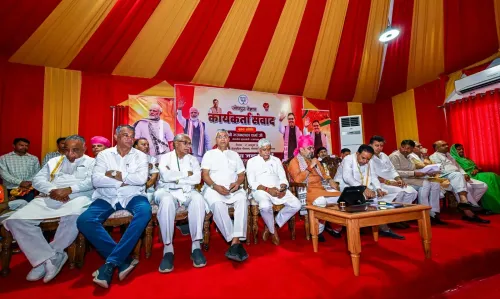
Senior BJP leaders including Falodi MLA Pabbaram Bishnoi and former MLA Laxmi Barupal (district election in-charge) shared the stage.
The rally reflects BJP's strategy of deploying central ministers to link national scheme delivery with local Panchayati Raj contests in Rajasthan.
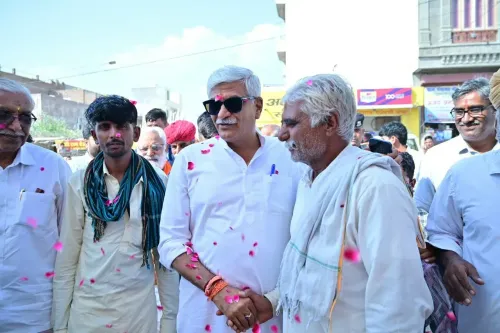
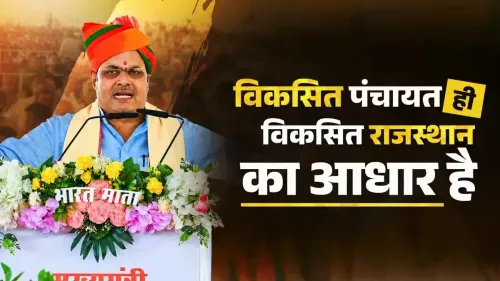
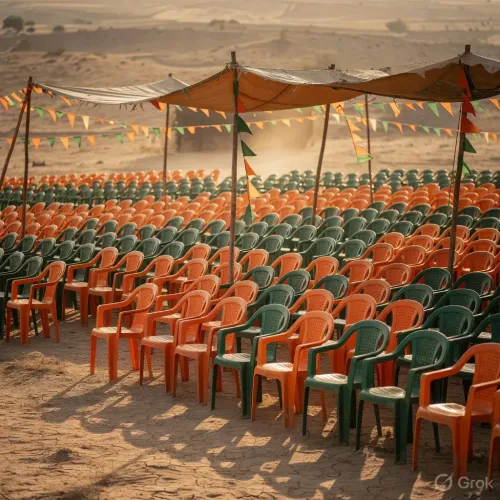
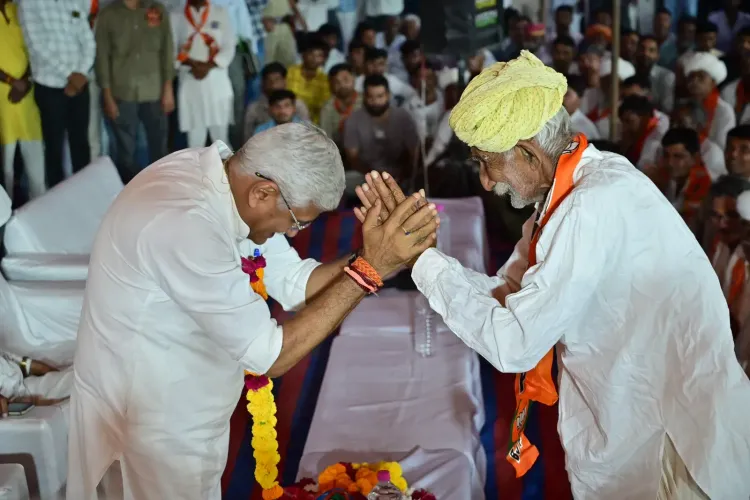
Under the desert sky of Sanwarij village on the night of Sunday, October 18, 2026, Union Culture and Tourism Minister Gajendra Singh Shekhawat took the campaign trail to the grassroots — addressing a Panchayati Raj election rally in support of BJP candidates from Falodi district and the Dechu Panchayat Samiti in Rajasthan.
Shekhawat appealed to villagers to vote in maximum numbers for BJP candidates — Smt. Sarita Bhadu from Ward No. 4 of the Falodi Zila Parishad, Damaram Panwar from Ward No. 5, and candidates of the Dechu Panchayat Samiti. In his address, he highlighted development works being carried out under the leadership of Prime Minister Narendra Modi and drew a sharp contrast with what he called the 'negative politics of Congress', urging rural voters to bring a BJP government to the village level.
A Cabinet minister on the Panchayat trail
The rally at Sanwarij is part of a broader BJP strategy that has become a signature of the party's campaign playbook — deploying senior central ministers into Panchayati Raj contests to anchor local races to the national narrative. Shekhawat, who represents neighbouring Jodhpur in the Lok Sabha, carried visible weight in this region where his constituency's influence runs deep into the surrounding villages of western Rajasthan.
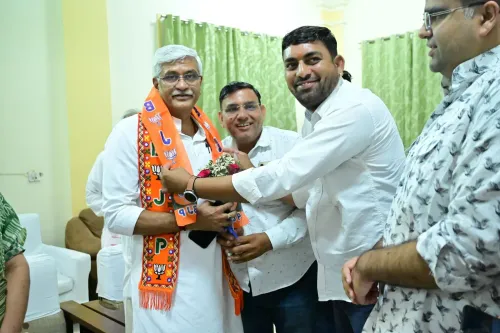
Present alongside him were Jaswant Singh Bishnoi, chairman of the Rajasthan State Animal Welfare Board; Falodi MLA Pabbaram Bishnoi; election district in-charge and former MLA Laxmi Barupal; Bhupendra Dewasi; and Ramniwas Bhadu. The assembled local leadership underscored the organisational depth BJP is attempting to project at the block and district level.
Panchayati Raj polls — why the stakes run deeper than the ward level
India's Panchayati Raj system — mandated by the 73rd Constitutional Amendment Act of 1992 — distributes governance of rural India across roughly 2.5 lakh elected bodies, making these contests the most localised expression of democratic competition in the country. In Rajasthan, where state power has historically swung between BJP and Congress, control of Zila Parishads and Panchayat Samitis is not just administrative — it is the organisational spine of rural politics. Winning these wards builds the cadre network, the voter-contact infrastructure, and the local credibility that feeds directly into assembly and parliamentary election cycles.
By framing the election around PM Modi's development record, Shekhawat was deploying the BJP's established playbook: translate central scheme delivery — roads, housing, sanitation, water — into a local endorsement vote. The explicit targeting of 'Congress's negative politics' signals that the opposition's presence in the contest is real enough to be worth rebutting from a podium that included a sitting Union minister.
The results of Rajasthan's Panchayati Raj elections will be a closely watched indicator of which party holds the organisational edge in rural Rajasthan as the state looks ahead to the next cycle of assembly elections.
Point of View
A state with a history of anti-incumbency swings. By tethering local races to PM Modi's development narrative, the party attempts to make central scheme delivery the common thread from Delhi to the Zila Parishad ward — a strategy that worked for the party in previous Rajasthan local-body cycles. The explicit attack on Congress's 'negative politics' suggests the opposition is putting up a credible contest in this belt, making Shekhawat's home-region mobilisation politically necessary rather than merely ceremonial. The outcome in Falodi and Dechu will be read as a granular verdict on BJP's rural Rajasthan standing ahead of future assembly elections.
NationPress
18 Oct 2026
Frequently Asked Questions
What is the Rajasthan Panchayati Raj election 2026?
Rajasthan's Panchayati Raj elections are polls for rural local-government bodies — Gram Panchayats, Panchayat Samitis, and Zila Parishads — mandated by the 73rd Constitutional Amendment Act of 1992. These contests decide who governs villages and district-level rural bodies across the state.
Why did Union Minister Shekhawat campaign in Falodi for Panchayat elections?
Gajendra Singh Shekhawat is the Lok Sabha MP from Jodhpur, the region to which Falodi belongs. BJP routinely deploys senior ministers in their home regions to bolster local candidates and link central development programmes to grassroots contests.
Who are the BJP candidates Shekhawat supported at the Sanwarij rally?
Shekhawat expressed support for Smt. Sarita Bhadu (BJP candidate, Falodi Zila Parishad Ward 4), Damaram Panwar (Ward 5), and candidates of the Dechu Panchayat Samiti — all part of the Panchayati Raj election campaign in western Rajasthan.
What is the Dechu Panchayat Samiti election?
Dechu is a block in the Falodi district of Rajasthan. A Panchayat Samiti is the block-level tier of the Panchayati Raj system, and its elections determine the governing body for all gram panchayats within that block.
What is BJP's strategy in Rajasthan Panchayati Raj elections?
BJP has consistently used its central government's scheme-delivery record — including housing, roads, water and sanitation programmes — as the campaign backbone in Rajasthan Panchayat elections, with senior leaders bridging national narratives to local contests to build grassroots organisational strength.