Shekhawat Spotlights Sikkim's Khangchendzonga as India's Heritage Model
Synopsis
Union Culture and Tourism Minister Gajendra Singh Shekhawat spotlighted Sikkim's Khangchendzonga National Park, India's first UNESCO Mixed World Heritage Site, as proof that development, cultural heritage and nature conservation can reinforce one another. His post frames the Himalayan park's snow peaks, forests and folk traditions as a living Indian model of sustainable heritage stewardship.
Key Takeaways
Union Minister Gajendra Singh Shekhawat spotlighted Khangchendzonga National Park in Sikkim in a post on 3 June 2026 .
The park became India's first UNESCO Mixed World Heritage Site in 2016 , recognised on both natural and cultural criteria.
It was first notified as a national park in 1977 and is named after the world's third-highest peak.
The site holds deep sacred significance for the indigenous Lepcha and Bhutia communities.
Shekhawat framed the park as evidence that development, heritage and conservation are complementary, not opposed.
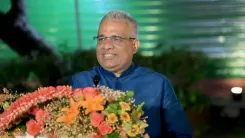
Union Culture and Tourism Minister Gajendra Singh Shekhawat on 3 June 2026 highlighted Sikkim's Khangchendzonga National Park as a living example of India's integrated approach to culture and nature conservation. In a post on X, he framed the Himalayan site, inscribed by UNESCO in 2016 as India's first Mixed World Heritage Site, as a showcase of how development, heritage and ecology can advance together.
'Some legacies are not merely seen, they are felt,' the minister wrote, describing the park's snow-clad peaks, dense forests and folk traditions as narrators of a centuries-old bond between culture and nature. He added that the site presents to the world an Indian worldview in which vikas, sanskritik virasat aur prakriti sanrakshan (development, cultural heritage and nature conservation) are complementary rather than contradictory.
Context
The Khangchendzonga National Park, spread across the northern and western reaches of Sikkim, takes its name from the world's third-highest peak, Mount Khangchendzonga. Originally notified in 1977, the protected area covers high-altitude meadows, glaciers and old-growth forests that shelter species such as the snow leopard, red panda and Himalayan tahr.
For the indigenous Lepcha and Bhutia communities, the mountain is a guardian deity and the surrounding landscape a sacred geography woven into oral epics, ritual practice and pilgrimage routes. It is this fusion of biological richness and living cultural meaning that earned the park its dual recognition.
Policy backdrop
In 2016, UNESCO inscribed the park on the World Heritage List under both natural and cultural criteria, making it India's first and so far only Mixed Heritage Site. The nomination dossier emphasised the co-existence of high-altitude ecosystems with sacred sites tied to indigenous belief systems.
The recognition fits within a longer policy arc in which Indian governments have used the World Heritage framework to project a development model that treats conservation and cultural continuity as drivers of growth rather than constraints on it. The Ministry of Culture has consistently leaned on such inscriptions to anchor heritage diplomacy and shape domestic tourism narratives.
Stakeholders and impact
For Sikkim, the inscription has carried tangible weight. Local Lepcha and Bhutia communities, whose ritual calendars revolve around the mountain, have a formal stake in management decisions, while the state's eco-tourism sector has used the World Heritage tag to position Sikkim as a premium, low-impact destination.
Conservation agencies see the site as a test case for community-led stewardship in the eastern Himalayas, where infrastructure pressure and climate stress are rising. The minister's framing aligns with this approach, casting heritage protection as a partner to livelihoods rather than an obstacle.
What's next
Attention now turns to India's pipeline of future UNESCO nominations, including other potential mixed sites that combine biodiversity with intangible cultural traditions. State-level eco-tourism master plans for Himalayan protected areas are also expected to draw on the Khangchendzonga template.
With global heritage forums increasingly weighing climate resilience and indigenous rights, the Sikkim park's profile is likely to grow as a reference point. For the Culture and Tourism Ministry, sustaining that visibility while balancing visitor inflow against ecological limits will be the next, more difficult chapter.
Point of View
Slotting a single Himalayan park into a wider narrative about an indigenous Indian development model. By foregrounding a mixed natural-cultural site, the Culture Ministry is signalling that India's heritage diplomacy will continue to lean on properties where biodiversity and living traditions reinforce each other. It also quietly positions the Northeast, often peripheral in national heritage conversations, at the centre of that pitch. The harder test will be matching the rhetoric with on-the-ground management as visitor pressure and climate stress mount.
NationPress
20 Oct 2026
Frequently Asked Questions
Where is Khangchendzonga National Park located?
Khangchendzonga National Park is located in the northern and western parts of Sikkim in the eastern Himalayas. It surrounds Mount Khangchendzonga, the world's third-highest peak, and spans high-altitude forests, meadows and glaciers.
Why is Khangchendzonga National Park a UNESCO World Heritage Site?
UNESCO inscribed Khangchendzonga National Park in 2016 as a Mixed Heritage Site for both its outstanding natural features and its deep cultural significance. The recognition reflects its biodiversity along with the sacred status of the mountain for the indigenous Lepcha and Bhutia communities.
What is India's first Mixed World Heritage Site?
Khangchendzonga National Park in Sikkim is India's first Mixed World Heritage Site. It received this status from UNESCO in 2016 under both natural and cultural criteria.
When was Khangchendzonga National Park established?
Khangchendzonga National Park was notified as a national park in 1977. It was later expanded and gained UNESCO World Heritage status in 2016.
Who is the Union Minister of Culture and Tourism?
Gajendra Singh Shekhawat is the Union Minister of Culture and Tourism. He is a senior BJP leader and Lok Sabha MP from Jodhpur in Rajasthan.