Pralhad Joshi Hails UP as First State to Log 50,000+ Solar Rooftop Installs for 3 Months
Synopsis
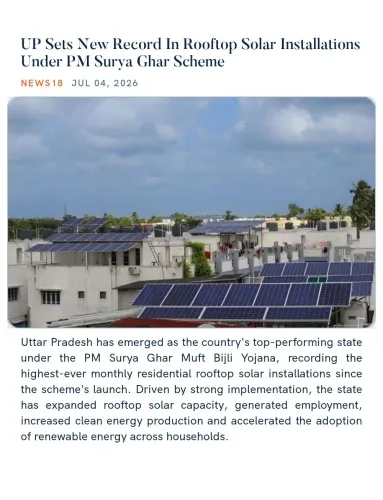
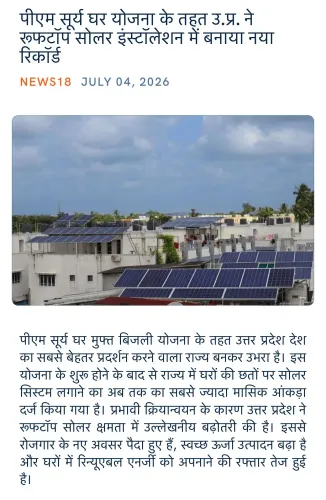
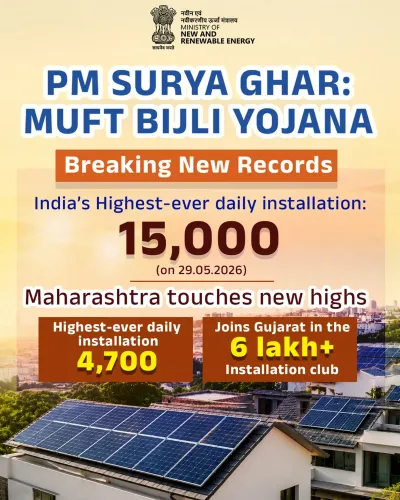
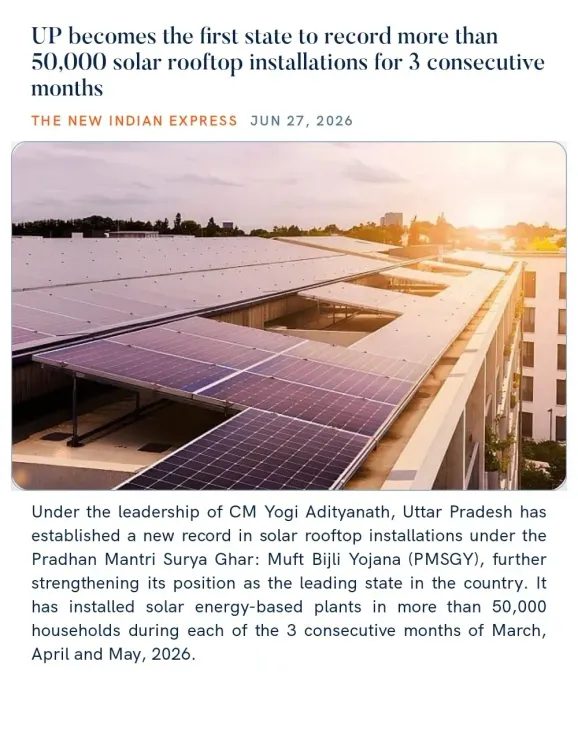
Uttar Pradesh has become the first Indian state to surpass 50,000 solar rooftop installations for three consecutive months, Union Minister Pralhad Joshi announced on June 27, 2026. The milestone reflects the state's sustained execution of the PM Surya Ghar Muft Bijli Yojana and India's broader push toward 500 GW of non-fossil fuel capacity by 2030.
Key Takeaways
Uttar Pradesh is the first state in India to record more than 50,000 solar rooftop installations in three consecutive months.
Union Minister Pralhad Joshi shared the milestone on June 27, 2026 via the NaMo App .
The achievement is linked to central subsidies under the PM Surya Ghar Muft Bijli Yojana , which targets one crore household installations nationwide.
India's overall rooftop solar push is part of the national goal of 500 GW non-fossil fuel capacity by 2030 .
Key beneficiaries include households, solar installers, and state discoms managing net-metering at scale.
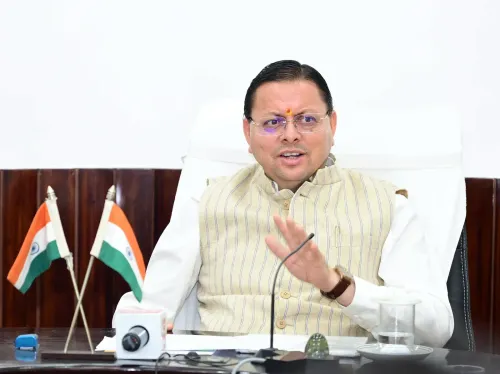
Union Minister of New and Renewable Energy Pralhad Joshi on Saturday, June 27, 2026, highlighted that Uttar Pradesh has become the first state in India to record more than 50,000 solar rooftop installations in each of three consecutive months, marking a significant milestone in the country's distributed solar push.
Context
Sharing the development via the NaMo App, Minister Joshi drew attention to Uttar Pradesh's sustained installation pace, which sets it apart from every other state in the country. The achievement underlines how India's most populous state has translated central subsidy policy into ground-level execution at an unprecedented scale.
The minister's post did not cite specific monthly figures beyond the 50,000-installation threshold, but the three-consecutive-month streak signals a structural shift rather than a one-off surge in the state's rooftop solar uptake.
Policy Backdrop
The momentum in Uttar Pradesh is closely tied to the PM Surya Ghar Muft Bijli Yojana, the central government scheme announced in 2024 that extended subsidies for one crore household rooftop solar installations across the country. The scheme built on the earlier Rooftop Solar Programme Phase-II, approved in 2019, which had set a national target of 38 GW of rooftop capacity by 2022.
India's solar policy lineage stretches back to the Jawaharlal Nehru National Solar Mission launched in 2010, which first set grid-connected rooftop targets. The current architecture of central financial assistance routed through state nodal agencies and discoms is a direct evolution of that framework, now operating at far greater scale and subsidy depth.
The broader national goal is 500 GW of non-fossil fuel power capacity by 2030, with the rooftop segment viewed as critical for reducing transmission losses and lowering household electricity bills in states like Uttar Pradesh where grid infrastructure is under strain.
Stakeholders and Impact
Urban and peri-urban households in Uttar Pradesh are the primary beneficiaries, gaining access to subsidised solar panels that reduce monthly electricity expenditure. The scale of installations also generates sustained demand for the state's solar installer ecosystem, supporting local employment in equipment supply, installation, and maintenance.
State distribution companies (discoms) stand to benefit from reduced peak-load pressure as more households generate their own power. However, high installation volumes also require discoms to manage net-metering connections efficiently — a logistical challenge that will test administrative capacity as the pace continues.
What's Next
The focus now shifts to whether Uttar Pradesh can sustain or exceed the 50,000-per-month benchmark through the remainder of 2026 and whether other large states — including Maharashtra, Rajasthan, and Gujarat — can close the gap. Parliamentary updates on revised capacity targets under PM Surya Ghar and quarterly subsidy disbursement data will be the key metrics to watch.
For Minister Joshi's ministry, Uttar Pradesh's record provides a replicable model: sustained state-level administrative drive, aligned with central subsidy flows, can produce installation volumes that were considered aspirational just two years ago. The question is whether the policy architecture can be replicated with equal fidelity in states with weaker discom finances and lower consumer awareness.
Point of View
000 rooftop solar installations is a politically significant data point for the BJP-led central government, demonstrating that the PM Surya Ghar Muft Bijli Yojana can deliver measurable ground-level outcomes in the country's largest state. For Minister Pralhad Joshi, amplifying this milestone reinforces his ministry's narrative of execution-led energy transition ahead of any mid-term policy reviews. The record also implicitly pressures other large states to accelerate their own installation pipelines, framing rooftop solar as a competitive federal performance metric. If UP sustains this pace, it could become the template cited in parliamentary debates on India's 2030 renewable targets.
NationPress
25 Sept 2026
Frequently Asked Questions
Which state has the most solar rooftop installations in India in 2026?
Uttar Pradesh has emerged as the leading state in 2026, becoming the first to record more than 50,000 solar rooftop installations for three consecutive months, according to Union Minister Pralhad Joshi.
What is PM Surya Ghar Muft Bijli Yojana?
PM Surya Ghar Muft Bijli Yojana is a central government scheme announced in 2024 that provides financial subsidies for rooftop solar installations, targeting one crore households across India to reduce electricity bills and expand renewable capacity.
Who is Pralhad Joshi and what ministry does he head?
Pralhad Joshi is a senior BJP leader from Karnataka who serves as Union Minister of Consumer Affairs, Food and Public Distribution, and Minister of New and Renewable Energy, overseeing India's central renewable energy programmes.
What is India's solar energy target for 2030?
India aims to achieve 500 GW of non-fossil fuel power capacity by 2030, with rooftop solar playing a key role in meeting that target by reducing transmission losses and supporting distributed generation.
How does the NaMo App relate to solar rooftop schemes?
The NaMo App is a government-linked mobile platform used for citizen services, including registrations and tracking related to renewable energy schemes such as PM Surya Ghar Muft Bijli Yojana.