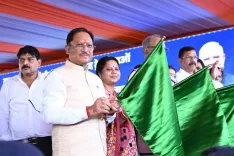
Shekhawat: Andaman Volcanoes join UNESCO Tentative List
Synopsis
Union Culture and Tourism Minister Gajendra Singh Shekhawat announced on 20 October 2026 that the Andaman Subduction Volcanoes have been added to UNESCO's Tentative List, crediting Home Minister Amit Shah's initiative for advancing the nomination.
Key Takeaways
Andaman Subduction Volcanoes have been formally included in UNESCO's Tentative List — the mandatory first step toward World Heritage inscription.
Union Culture and Tourism Minister Gajendra Singh Shekhawat made the announcement on 20 October 2026 .
Home Minister Amit Shah was credited for the initiative, reflecting the Andaman Islands' status as a Union Territory under the Ministry of Home Affairs.
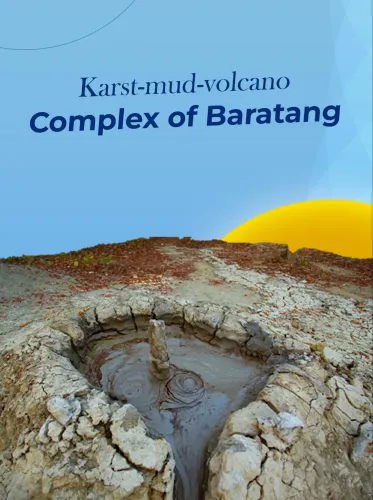
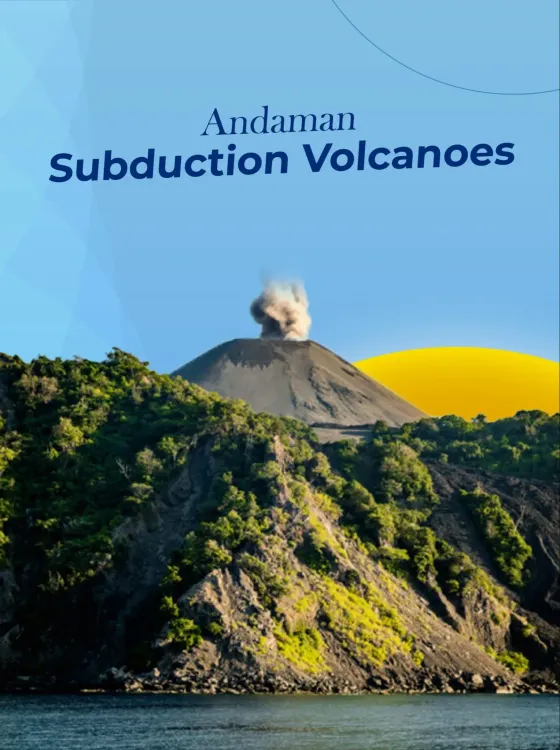
The Andaman Subduction Volcanoes are linked to the tectonic collision of the Indian and Burmese plates, representing a rare active geological system.
India's existing UNESCO World Heritage natural sites include the Western Ghats and Great Himalayan National Park; the Andaman nomination extends the portfolio into geological heritage.
Full World Heritage inscription requires a formal nomination dossier, independent conservation assessment, and World Heritage Committee approval — a multi-year process.
India's geological identity just earned a new chapter on the world stage. Union Culture and Tourism Minister Gajendra Singh Shekhawat announced on Tuesday, 20 October 2026 that the Andaman Subduction Volcanoes have been included in UNESCO's Tentative List — a formal step toward potential World Heritage status for one of India's most dramatic and scientifically significant natural formations.
What the Tentative List inclusion actually means
UNESCO's Tentative List is not a ceremonial catalogue — it is the mandatory first gate. No site can be formally nominated for World Heritage inscription without first spending time on this list, making this inclusion a concrete, procedurally significant milestone. The Andaman Subduction Volcanoes — shaped by the tectonic collision of the Indian and Burmese plates — represent a rare class of geological heritage: active subduction-linked volcanic systems accessible within Indian sovereign territory.
India has been steadily building its UNESCO portfolio over two decades, with natural inclusions such as the Western Ghats and the Great Himalayan National Park already carrying full World Heritage status. The Andaman nomination signals a deliberate expansion of that effort into geological heritage — terrain that sits at the intersection of earth science and conservation policy.
Amit Shah's role and the Andaman connection
Shekhawat specifically credited Union Home Minister Amit Shah for the initiative driving this recognition forward. The acknowledgment is notable: the Andaman and Nicobar Islands fall under the administrative oversight of the Ministry of Home Affairs as a Union Territory, making Shah's institutional involvement a direct factor in advancing the nomination. The minister's post described Shah's contribution as an 'initiative in advancing this recognition' — a phrase that suggests active inter-ministerial coordination rather than passive support.
For the Andaman administration and the island's tourism ecosystem, the listing carries immediate practical weight. UNESCO recognition — even at the Tentative stage — sharpens a site's profile on the global heritage circuit, often preceding a measurable uptick in research interest and curated tourism.
The road from Tentative List to full inscription
Inclusion on the Tentative List triggers a multi-year process: India must prepare a formal nomination dossier, commission an independent conservation assessment, and secure approval from UNESCO's World Heritage Committee. Past Indian nominations have taken anywhere from a few years to over a decade to complete that journey. The Andaman Subduction Volcanoes will need a robust management plan for the surrounding marine and terrestrial ecosystem — a challenge and an opportunity for the islands' administration.
The Andaman archipelago already draws visitors for its beaches and dive sites. A UNESCO World Heritage designation — if achieved — would position the volcanic geology as a marquee scientific-tourism draw, potentially reshaping the islands' long-term development narrative.
India now has one more geological wonder in the global queue. Whether it crosses the finish line to full inscription will depend on the bureaucratic and scientific groundwork laid in the years ahead — but the starting gun has officially fired.
Point of View
Particularly for Union Territories. For the BJP, UNESCO milestones serve a dual purpose: international legitimacy for India's soft-power narrative under PM Modi, and tangible development hooks for strategically sensitive regions like the Andaman and Nicobar Islands. The real test will come in the quality of the nomination dossier and the conservation framework India tables before the World Heritage Committee.
NationPress
20 Oct 2026
Frequently Asked Questions
What is UNESCO's Tentative List and why does it matter for India?
UNESCO's Tentative List is a register of sites that member states intend to nominate for World Heritage status. Inclusion is a mandatory prerequisite — no site can be formally nominated without first being on this list. For India, adding the Andaman Subduction Volcanoes to the Tentative List is the official first step toward potential World Heritage inscription.
Where are the Andaman Subduction Volcanoes located?
The Andaman Subduction Volcanoes are located in the Andaman Islands , a Union Territory of India in the Bay of Bengal. They are linked to the subduction of the Indian tectonic plate beneath the Burmese plate, making them a rare and scientifically significant geological formation.
What role did Amit Shah play in the UNESCO Tentative List nomination?
Union Home Minister Amit Shah was credited by Culture Minister Shekhawat for initiating the push for UNESCO recognition of the Andaman Subduction Volcanoes. As the Andaman and Nicobar Islands are a Union Territory administered by the Ministry of Home Affairs, Shah's institutional backing was directly relevant to advancing the nomination.
Which other Indian natural sites have UNESCO World Heritage status?
India's UNESCO-listed natural World Heritage Sites include the Western Ghats and the Great Himalayan National Park , among others. The Andaman Subduction Volcanoes nomination would extend India's natural heritage portfolio into active geological formations if it achieves full inscription.
What happens next after UNESCO's Tentative List inclusion for Andaman Volcanoes?
India must prepare a detailed nomination dossier, commission an independent conservation assessment, and submit the candidacy for review by UNESCO's World Heritage Committee. The full inscription process can take several years and requires a credible management and conservation plan for the site.