CM Dhami: Environment protection needs individual action
Synopsis
Chief Minister Pushkar Singh Dhami says environmental protection cannot rest with government alone, urging crores of Indians to make small lifestyle changes that collectively drive large-scale transformation — a message that aligns with India's national climate strategy and Uttarakhand's acute ecological vulnerabilities.
Key Takeaways
CM Pushkar Singh Dhami stated that environmental protection is not solely the government's responsibility.
He called on crores of citizens to adopt small personal changes to drive large-scale environmental transformation.
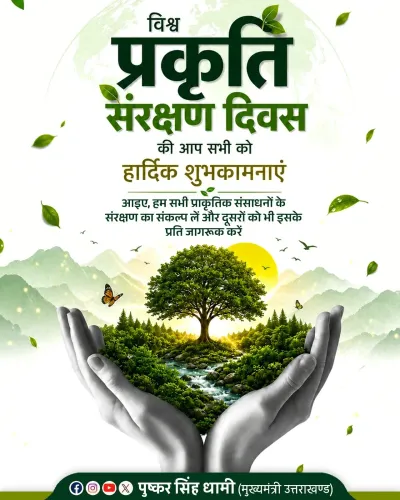
The statement was shared on 6 June 2026 , a day after World Environment Day , amplifying its public-awareness intent.
Uttarakhand 's Himalayan ecosystem faces acute threats including glacial melt, deforestation, and extreme weather events.
India has committed to reaching net-zero emissions by 2070 , with state-level citizen engagement forming a key pillar of that strategy.
The post was tagged #Environment , #ClimateChange , and #SustainableDevelopment , indicating a deliberate outreach campaign.
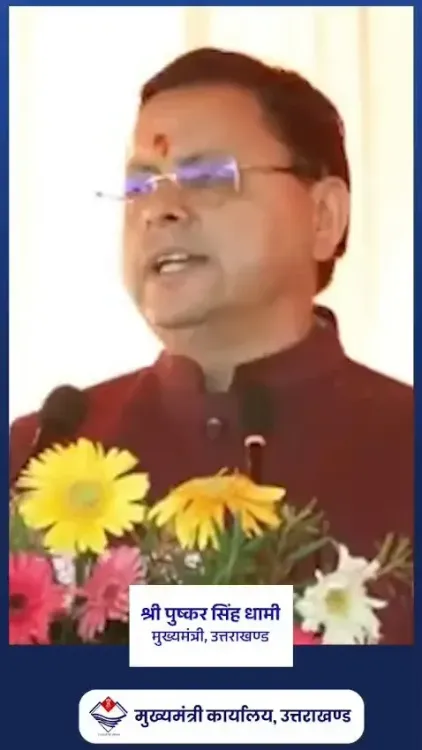
The Chief Minister's Office of Uttarakhand on Saturday, 6 June 2026, shared a statement by Chief Minister Pushkar Singh Dhami calling on citizens to adopt small personal changes as the foundation of large-scale environmental transformation, framing conservation as a shared societal responsibility rather than a government obligation alone.
Context
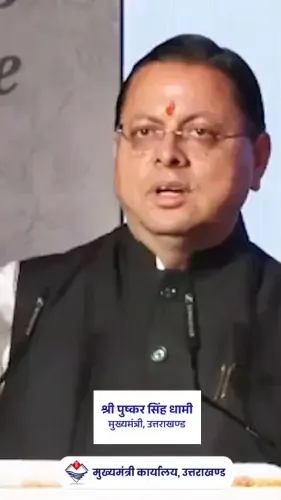
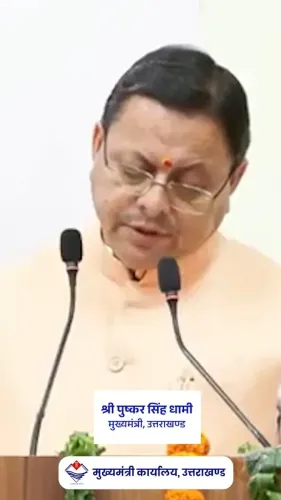
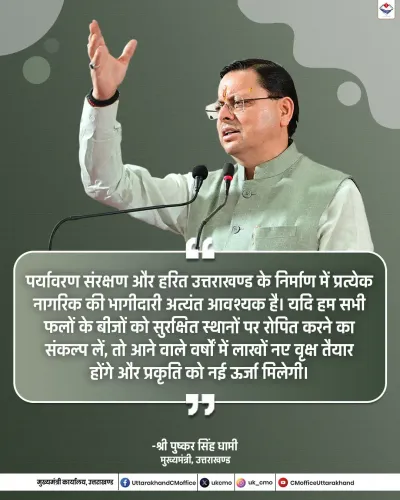
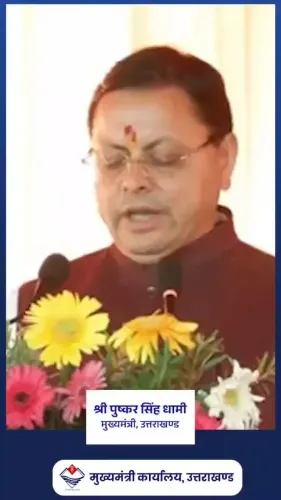
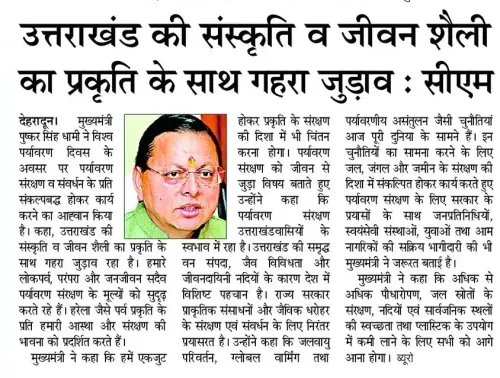
Speaking on the occasion, CM Dhami said: 'Paryavaran sanrakshan keval sarkar ki zimmedari nahin hai' ('Environmental protection is not solely the government's responsibility. When crores of people begin making small changes in their lives, large transformations start becoming possible on their own.')
The statement was posted alongside a video on the official CMO Uttarakhand X account, tagged under #Environment, #ClimateChange, and #SustainableDevelopment, marking the message as part of a deliberate public-awareness push.
Policy Backdrop
Uttarakhand sits at the frontline of India's climate vulnerability — its Himalayan ecosystem faces accelerating glacial melt, deforestation, and erratic weather patterns that directly affect millions of residents and downstream communities across the Ganga basin.
India's National Action Plan on Climate Change (NAPCC), launched in 2008, established eight national missions integrating sustainable development across energy, forestry, and water sectors. Himalayan states have since been expected to translate these national targets — including India's commitment to net-zero emissions by 2070 — into ground-level citizen engagement.
CM Dhami's BJP government has consistently positioned development and conservation as complementary goals, a messaging approach that mirrors the broader national narrative around 'LiFE' (Lifestyle for Environment), the Centre's campaign urging individual behavioural shifts as a climate tool.
Stakeholders and Impact
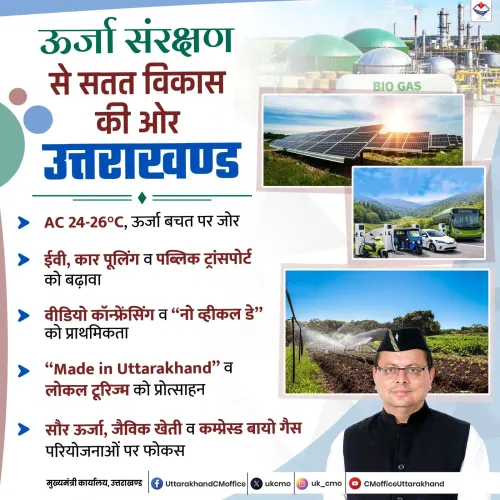
Uttarakhand's roughly 1.1 crore residents — many dependent on agriculture, tourism, and forest resources — are the primary audience for this call to action. Community-level practices such as water conservation, reduced single-use plastics, and local afforestation have been recurring themes in state outreach.
The statement also carries significance for the state's urban centres like Dehradun and Haridwar, where rapid growth has intensified pressure on green cover and air quality. Civil society groups and gram sabhas in ecologically sensitive zones are potential partners in translating this rhetoric into structured local programmes.
What's Next
The message signals continued state-level emphasis on public participation in environmental governance. Observers will watch whether this communication is followed by concrete announcements — such as state budget provisions for green initiatives or Uttarakhand's participation in national climate forums and COP follow-up meetings.
With World Environment Day falling on 5 June, the timing of this post underscores the government's intent to keep climate consciousness on the public agenda beyond a single day of observance, embedding it in everyday civic discourse.
Point of View
The communication aligns neatly with the Centre's LiFE campaign while also building political goodwill ahead of potential policy announcements. For Uttarakhand, where ecological degradation has direct electoral salience, such messaging serves both governance and optics. The real test will be whether this public call is backed by measurable state programmes or remains aspirational rhetoric.
NationPress
14 Sept 2026
Frequently Asked Questions
What did CM Pushkar Singh Dhami say about environment protection?
CM Dhami said that environmental protection is not solely the government's responsibility and that when crores of people begin making small changes in their daily lives, large-scale transformations become possible on their own.
Why is Uttarakhand important for India's climate goals?
Uttarakhand is a Himalayan state with fragile ecology including glaciers, forests, and biodiversity. It faces acute risks from glacial melt and deforestation, making it a frontline state in India's climate strategy.
What is India's net-zero emissions target?
India has committed to achieving net-zero carbon emissions by 2070 , a target announced at the COP26 summit in Glasgow in 2021.
What is the LiFE campaign mentioned in the context of this statement?
LiFE, or 'Lifestyle for Environment,' is a Central Government initiative that encourages individual citizens to adopt environmentally friendly behaviours as a complement to large-scale policy action on climate change.
When was India's National Action Plan on Climate Change launched?
India's National Action Plan on Climate Change (NAPCC) was launched in 2008 , establishing eight national missions to integrate sustainable development across sectors including energy, water, and forestry.