CM Dhami Calls for Citizen Role in Green Uttarakhand
Synopsis
Chief Minister Pushkar Singh Dhami, through the official CMO Uttarakhand account, called on every citizen to actively participate in environmental protection and the construction of a green Uttarakhand, reinforcing the state's community-centred conservation approach.
Key Takeaways
CM Pushkar Singh Dhami stated that every citizen's participation is 'extremely necessary' for environmental protection in Uttarakhand .
The message was shared by the official Chief Minister's Office of Uttarakhand on 23 July 2026 .
Uttarakhand has pursued afforestation and sustainable development programs since its formation in 2000 .
The Himalayan state faces acute ecological risks including deforestation, glacial retreat, and climate-linked extreme weather.
The citizen-participation framing aligns with India's national framework for community-based natural resource management.
Upcoming state budget sessions and assembly deliberations may carry concrete green targets linked to this messaging.
The Chief Minister's Office of Uttarakhand, on Thursday, 23 July 2026, shared a statement from Chief Minister Pushkar Singh Dhami emphasising that every citizen's participation is essential for environmental protection and building a greener Uttarakhand.
Context
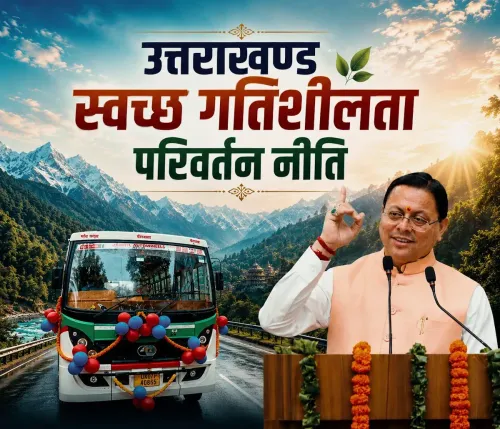
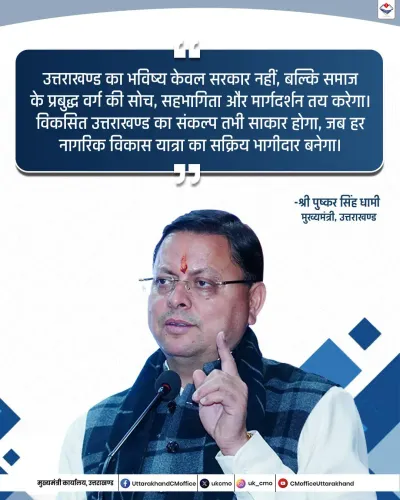
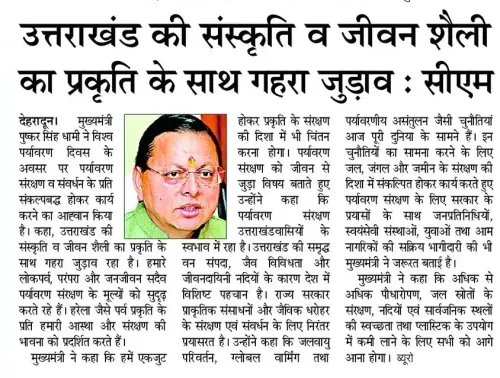
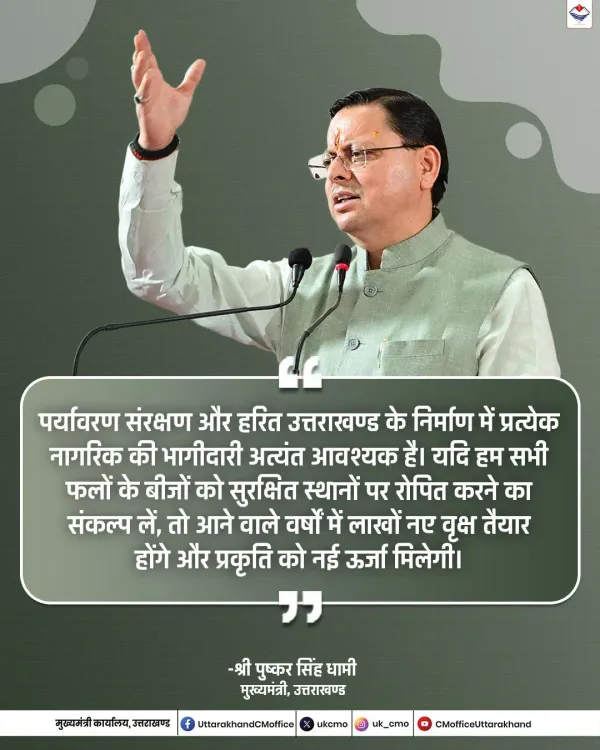
In the post, CM Dhami stated — 'पर्यावरण संरक्षण और हरित उत्तराखण्ड के निर्माण में प्रत्येक नागरिक की भागीदारी अत्यंत आवश्यक है' ('The participation of every citizen is extremely necessary in environmental protection and the creation of a green Uttarakhand'). The message underscores the administration's view that conservation is a collective responsibility, not solely a governmental one. The statement was accompanied by an image, reinforcing the campaign's visual communication.
Policy Backdrop
Uttarakhand, formed in 2000, has historically pursued afforestation and sustainable development as core pillars of its state climate action plans. The Himalayan state is ecologically sensitive, facing persistent threats from deforestation, glacial retreat, and extreme weather events linked to climate change. CM Dhami, who has led the state since 2021, has consistently sought to balance infrastructure-led development with environmental stewardship in the mountain region.
The state's approach aligns with India's broader national environmental framework, which includes missions targeting increased green cover and community-based natural resource management. Citizen participation models have been central to conservation efforts in hill communities, where local knowledge and on-ground presence are critical to forest protection.
Stakeholders and Impact
The call to action directly addresses Uttarakhand's citizens, particularly hill communities whose livelihoods are intertwined with forest and water resources. For these communities, green cover translates into watershed security, agricultural stability, and protection against landslides — risks that have intensified in recent years. Civil society groups, gram sabhas, and local forest committees are the primary institutional channels through which such citizen participation is typically mobilised.
The broader environmental community and urban residents of cities like Dehradun and Haridwar are also implicit stakeholders, as urban green initiatives and pollution control increasingly feature in state environmental conversations.
What's Next
Observers will watch for concrete follow-through in the form of new afforestation targets, citizen-level green pledges, or scheme announcements tied to this messaging — potentially in upcoming state budget sessions or assembly deliberations. The framing of environmental conservation as a citizen duty, rather than a top-down mandate, signals that the Dhami government may be building public groundwork for a larger policy or campaign rollout. Whether this statement translates into measurable green commitments will be the key test of its policy significance.
Point of View
A state whose identity and tourism economy are inseparable from its natural landscape, green branding also carries electoral resonance. The statement's impact will ultimately depend on whether it is followed by structured programmes that give citizens tangible roles in conservation.
NationPress
21 Oct 2026
Frequently Asked Questions
What did CM Pushkar Singh Dhami say about environment protection in Uttarakhand?
CM Pushkar Singh Dhami stated that the participation of every citizen is extremely necessary for environmental protection and building a green Uttarakhand, as shared by the official CMO account on 23 July 2026.
What is the 'Green Uttarakhand' initiative?
'Green Uttarakhand' refers to the state government's broader push for afforestation, sustainable development, and ecological conservation in the Himalayan state, a policy direction pursued since the state's formation in 2000.
Why is citizen participation important for Uttarakhand's environment?
Uttarakhand is ecologically sensitive, facing deforestation, glacial retreat, and climate risks. Hill communities have direct stakes in forest and watershed health, making local participation critical to effective conservation.
What environmental challenges does Uttarakhand face?
Uttarakhand faces deforestation, glacial retreat, landslides, and extreme weather events intensified by climate change, all of which threaten biodiversity, water security, and the livelihoods of hill communities.
How does Uttarakhand's environment policy connect to India's national framework?
Uttarakhand's community-based conservation approach aligns with India's national environmental missions targeting increased green cover and local natural resource management, placing the state within a wider federal climate strategy.