CM Hemant Soren Calls for AI-Driven Scientific Mining in Jharkhand
Synopsis
Chief Minister Hemant Soren has called for AI-powered scientific mining in Jharkhand, insisting that technological expansion must go hand-in-hand with protecting the state's tribal heritage of water, forests and land. The statement signals a policy direction that seeks to reconcile mineral extraction with constitutional safeguards for indigenous communities.
Key Takeaways
CM Hemant Soren stated that mining in Jharkhand must be conducted scientifically as technology and AI expand.
He emphasised protecting the inherited triad of jal, jungle, zameen (water, forest, land) central to tribal identity.
The Mines and Minerals Amendment Act, 2015 and the Forest Rights Act, 2006 provide the legislative framework for balancing extraction and community rights.
Jharkhand holds major reserves of coal, iron ore and bauxite, with large Scheduled Tribe populations holding constitutionally protected customary rights.
Observers will watch for state-level AI and remote-sensing pilots in mine monitoring and new conditions in mining-lease renewals.
The state's approach could serve as a model for other mineral-rich Indian states navigating the same tension between revenue and rights.
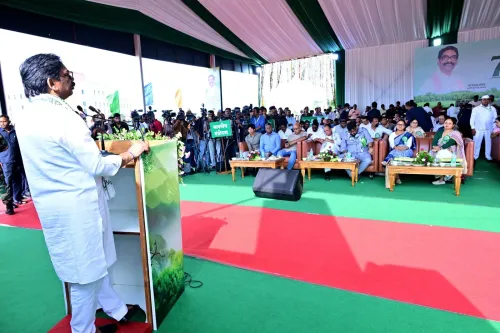
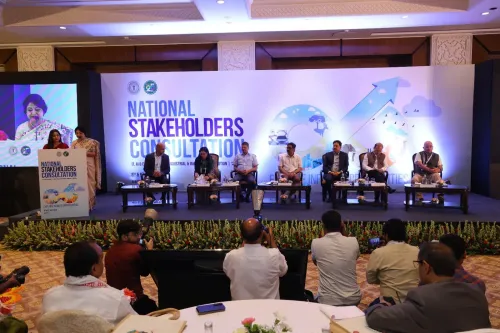
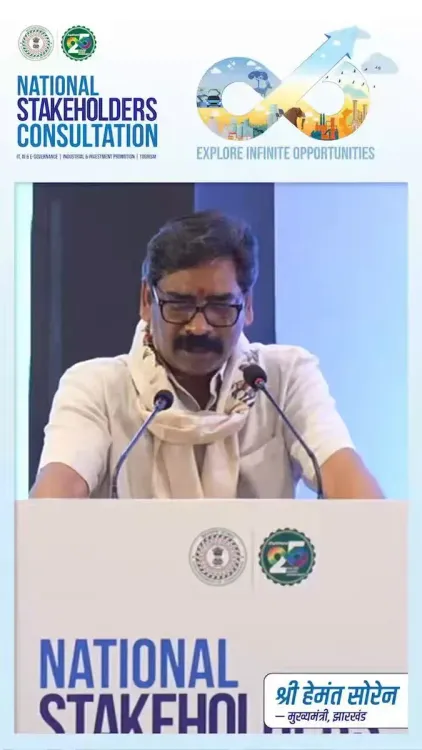
The Chief Minister's Office of Jharkhand, citing Chief Minister Hemant Soren, on Wednesday, 8 July 2026 underscored the need to adopt technology and artificial intelligence in the state's mining sector while simultaneously protecting the heritage of water, forests and land that define Jharkhand's tribal identity.
Context
Speaking in what the official CMO account shared on X, CM Soren said: 'जैसे-जैसे टेक्नोलॉजी और AI का विस्तार हो रहा है, हमें माइनिंग को Scientific रूप से करने की जरूरत है' ('As technology and AI expand, we need to conduct mining scientifically'). He added that the state must make better use of its resources while keeping safe the inherited triad of jal, jungle, zameen — water, forest and land. The statement reflects a dual imperative that Jharkhand has navigated for decades: extracting mineral wealth without displacing the communities and ecosystems that sit above it.
Policy Backdrop
The call for scientific mining is not without legislative grounding. The Mines and Minerals (Development and Regulation) Amendment Act, 2015 mandated scientific mining practices, transparent auction processes and the creation of District Mineral Foundations to channel royalty revenues back to affected communities. Separately, the Scheduled Tribes and Other Traditional Forest Dwellers (Recognition of Forest Rights) Act, 2006 — commonly called the Forest Rights Act — recognised community rights over forest land and resources in mineral-bearing states, including Jharkhand.
Jharkhand sits atop some of India's most significant reserves of coal, iron ore and bauxite. The state is home to large Scheduled Tribe populations whose customary rights over jal-jungle-zameen carry constitutional protection, making any mining policy a sensitive balance between revenue generation and rights preservation.
Stakeholders and Impact
The primary stakeholders in this equation are tribal communities across Jharkhand's mineral belt and the private and public-sector mining lease holders who operate within the state. For tribal groups, the integration of AI and remote-sensing tools in mine monitoring could reduce illegal encroachment, improve environmental compliance and provide verifiable data on land and water impact — concerns that have historically been documented only after damage occurred.
For the mining industry, technology adoption aligns with national sustainable-development frameworks and can raise operational efficiency. Successive central and state governments have promoted such adoption to meet environmental clearance norms, and CM Soren's remarks signal that Jharkhand's administration intends to push that agenda further under the current technology cycle driven by AI.
What's Next
Attention will now turn to whether the state government follows the statement with concrete action — specifically, state-level pilots deploying AI or remote-sensing tools for mine monitoring, and any fresh notifications on mining-lease renewals or environmental clearances that incorporate technology-compliance conditions. CM Soren has previously positioned the protection of tribal land rights as a non-negotiable alongside economic development, and observers will watch whether the two goals are operationalised together in upcoming policy notifications.
As India's mining sector enters a phase shaped by automation and data-driven governance, Jharkhand's approach could set a template for other mineral-rich states where resource extraction and indigenous rights remain in tension.
Point of View
He is signalling to both industry and tribal constituents that neither interest will be sacrificed. This mirrors a broader pattern in mineral-rich Indian states where governments are leaning on technology as a political and administrative buffer against displacement conflicts. The real test will be whether policy instruments and budgetary allocations follow the rhetoric.
NationPress
7 Oct 2026
Frequently Asked Questions
What did Hemant Soren say about AI and mining in Jharkhand?
CM Hemant Soren said that as technology and AI expand, Jharkhand must conduct mining scientifically while protecting the heritage of water, forests and land belonging to its tribal communities.
What is jal jungle zameen in the context of Jharkhand?
Jal, jungle, zameen — water, forest and land — is a phrase that encapsulates the customary and constitutional rights of Jharkhand's tribal communities over natural resources, and has been central to political discourse in the state for decades.
What law protects tribal land rights in mining areas of Jharkhand?
The Scheduled Tribes and Other Traditional Forest Dwellers (Recognition of Forest Rights) Act, 2006 recognises community rights over forest land and resources in mineral-bearing states including Jharkhand .
How can AI be used in mining in Jharkhand?
AI and remote-sensing technologies can be deployed for mine monitoring, environmental compliance tracking and detection of illegal encroachment, helping balance resource extraction with ecological and community safeguards.
What is the District Mineral Foundation in Jharkhand?
The District Mineral Foundation was mandated under the Mines and Minerals Amendment Act, 2015 to channel a share of mining royalties back to communities affected by extraction activities in districts like those in Jharkhand .