CM Soren Demands Jharkhand Be Treated as Dev Partner, Not Just Miner
Synopsis
Jharkhand Chief Minister Hemant Soren demanded on June 11, 2026, that the Centre stop treating Jharkhand as a mere mineral-extraction state, calling for pending Jal Jeevan Mission funds, coal PSU dues, DMFT rule reforms, and easier PSU land clearances to build industries around critical minerals and innovation.
Key Takeaways
CM Hemant Soren demanded Jharkhand be treated as a Viksit Bharat @2047 development partner, not just a mineral-extraction state.
He called for the Centre to release pending Jal Jeevan Mission funds to Jharkhand without further delay.
Soren urged coal companies and central PSUs — including DVC, CCL, and ECL — to clear outstanding dues owed to the state.
He sought a review of DMFT rules under the 2015 MMDR Amendment Act to give states a stronger governance role over mining royalty funds.
Soren asked for simplified land and clearance processes inside PSU command areas to enable faster social infrastructure construction.
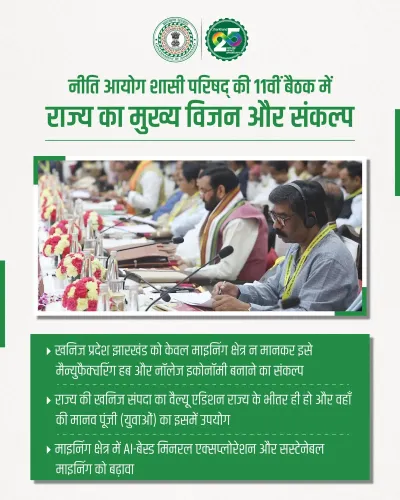
He articulated an ambition for value addition, critical minerals manufacturing, research, and innovation hubs in Jharkhand.
Jharkhand Chief Minister Hemant Soren on Thursday, June 11, 2026, called on the Centre to stop viewing Jharkhand purely as a mineral-extraction state and instead recognise it as a development partner, demanding pending dues from coal companies and central public sector undertakings, faster release of Jal Jeevan Mission funds, and a review of District Mineral Foundation Trust (DMFT) rules to strengthen state-level governance.
Context
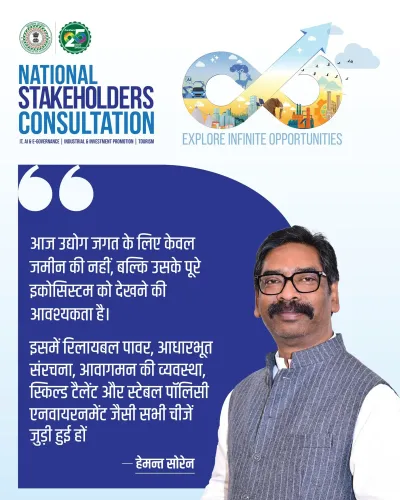
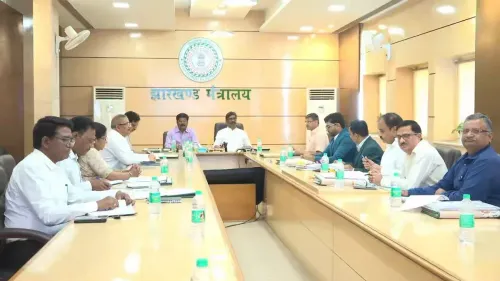
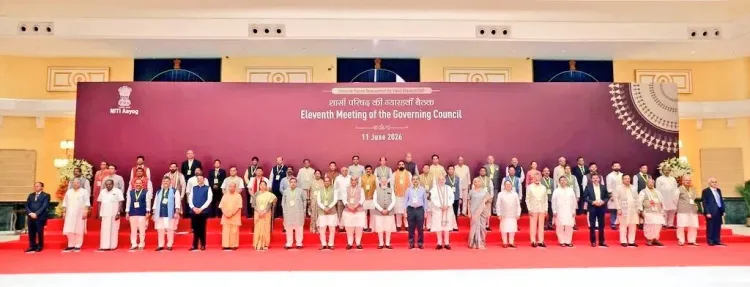
Posting in Hindi on X, Soren stated: 'Jharkhand ko kewal khanij nikalne wale rajya ke roop mein nahi dekha jana chahiye' ('Jharkhand should not be seen merely as a state that extracts minerals'). He articulated an ambition for the state to host industries built around value addition, manufacturing, critical minerals, research, and innovation. The remarks came in the context of a meeting — the exact date and participants of which have not been officially confirmed — at which Soren said he raised these demands directly.
The Chief Minister linked Jharkhand's aspirations to the national Viksit Bharat @2047 vision, arguing that resource-rich states must be treated as partners in development rather than mere suppliers of raw materials. 'Mineral wealth must be linked to human wealth, industry to employment, and development to social justice,' he said.
Policy Backdrop
DMFT was established under the Mines and Minerals (Development and Regulation) Amendment Act, 2015, which mandates contributions from mining royalties into district-level trusts for local welfare. Soren urged a review of these rules to give states a stronger role in how those funds are governed and deployed. Jal Jeevan Mission, launched in 2019, aims to provide piped water connections to all rural households, and Jharkhand has flagged that a portion of its allocated funds remains unreleased by the Centre.
On critical minerals, India's National Policy on Critical Minerals, 2023, had already identified domestic value addition and processing as strategic priorities. Soren's call for research and innovation hubs in Jharkhand aligns directly with that national policy direction, even as he frames it as a demand for equity rather than a favour.
Soren also specifically requested that approvals for social infrastructure projects inside the command areas of Damodar Valley Corporation (DVC), Central Coalfields Limited (CCL), Eastern Coalfields Limited (ECL), and other central PSUs be simplified — a long-standing friction point where land and clearance processes have slowed welfare construction in mining-affected districts.
Stakeholders and Impact
The demands directly affect residents of Jharkhand's mining-affected districts, where DMFT funds are the primary mechanism for compensating communities displaced or impacted by extraction. Delays in Jal Jeevan Mission disbursements affect rural households still awaiting tap-water connections. Central coal PSUs — including CCL and ECL, both subsidiaries of Coal India Limited — and DVC are the principal counterparties on the dues and land-clearance issues.
Jharkhand's position mirrors demands made by other mineral-rich states such as Odisha and Chhattisgarh in forums like the NITI Aayog and the Inter-State Council, reflecting a broader coalition of resource states seeking a larger share of the value generated from their sub-soil wealth.
What's Next
The immediate test will be whether the Union government releases pending Jal Jeevan Mission funds to Jharkhand in the next supplementary grants cycle and whether the Centre moves to amend DMFT governance rules. Any Cabinet-level decision on critical-mineral processing zones or simplified PSU land-clearance norms could also determine how much of Soren's agenda translates into policy action. If these demands remain unaddressed, they are likely to resurface as a political flashpoint ahead of the next round of centre-state fiscal negotiations.
Point of View
He turns the Centre's own flagship vision into leverage, making it politically costly to deny a resource state its share of downstream value. The bundling of DMFT governance, Jal Jeevan Mission arrears, and PSU land clearances into a single statement signals a coordinated fiscal-political pressure campaign rather than isolated grievances. This positions Jharkhand alongside Odisha and Chhattisgarh in an emerging bloc of mineral-rich states that are increasingly vocal about the asymmetry between extraction and benefit.
NationPress
26 Oct 2026
Frequently Asked Questions
What did Hemant Soren demand from the Centre on June 11, 2026?
Chief Minister Hemant Soren demanded that the Centre release pending Jal Jeevan Mission funds, direct coal companies and central PSUs to clear dues owed to Jharkhand, review DMFT rules to strengthen state governance, and simplify land clearances inside PSU command areas for social infrastructure.
What is DMFT and why does Jharkhand want its rules changed?
District Mineral Foundation Trusts were created under the 2015 MMDR Amendment Act to channel a share of mining royalties into welfare for communities affected by extraction. Jharkhand wants the governance rules revised so that states have a greater say in how these funds are planned and spent.
What is Viksit Bharat @2047 and how does Soren connect it to Jharkhand?
Viksit Bharat @2047 is the Government of India's vision to make India a fully developed nation by the centenary of independence. Soren argued that this goal cannot be achieved if mineral-rich states like Jharkhand are treated only as raw-material sources rather than as partners in industrial and social development.
Which central PSUs does Jharkhand have outstanding dues disputes with?
Soren specifically named the Damodar Valley Corporation (DVC), Central Coalfields Limited (CCL), and Eastern Coalfields Limited (ECL), along with other unnamed central undertakings, as entities that owe dues to Jharkhand.
What is Jharkhand's position on critical minerals?
Soren called for Jharkhand to become a hub for value addition, manufacturing, and research based on critical minerals rather than simply exporting raw ore — a position that aligns with India's National Policy on Critical Minerals, 2023, which prioritises domestic processing.