CM Hemant Soren to NITI Aayog: Make Jharkhand a Dev Partner
Synopsis
Chief Minister Hemant Soren has called on NITI Aayog to reframe Jharkhand's role in national development — from a raw-material supplier to an equal partner — insisting that industry must generate local employment and that growth must be grounded in justice for tribal communities.
Key Takeaways
CM Hemant Soren stated on June 11, 2026 that states like Jharkhand must be treated as development partners, not merely mineral extraction zones.
The message was directed at NITI Aayog and tagged #JharkhandSeJohar , signalling a formal federal-level push.
Jharkhand , formed in 2000 , holds major coal and iron ore reserves but has persistent human development and employment gaps relative to its mineral wealth.
2015 MMDR Act amendments introduced District Mineral Foundations , but mineral-bearing states argue the structural imbalance in value addition and jobs remains unaddressed.
Soren's position links industry to employment and development to justice — a formulation that encapsulates JMM's long-standing tribal-rights platform.
Policy watchers will track NITI Aayog Governing Council meetings and any revisions to royalty formulas or industrial incentives for eastern states.
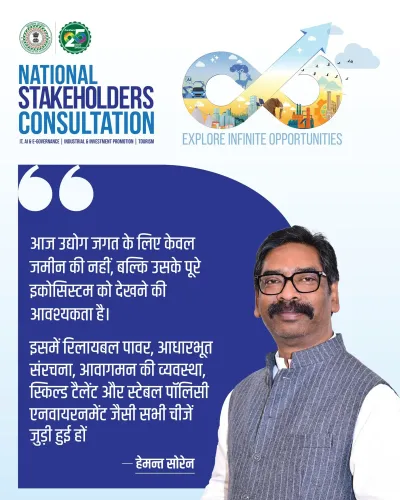
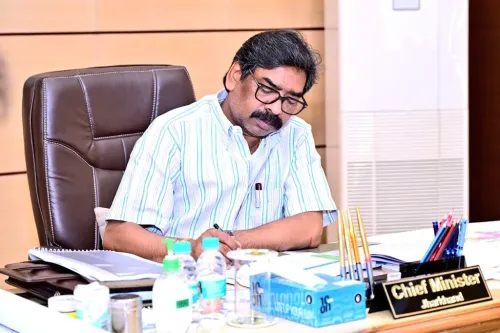
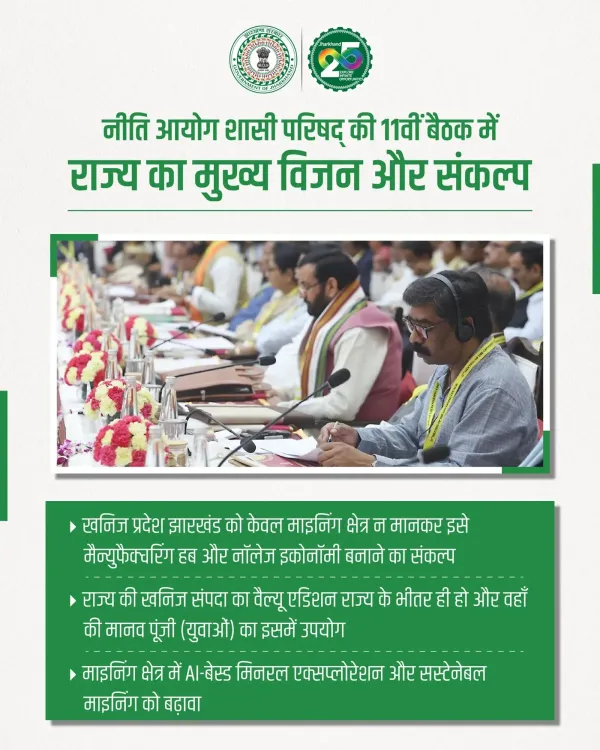
The Chief Minister's Office of Jharkhand, on behalf of Chief Minister Hemant Soren, on Thursday, June 11, 2026, stated that mineral-rich states like Jharkhand must be treated as partners in national development — not merely as sources of resource extraction — and that industry must be linked to employment and growth to justice.
The post, addressed to NITI Aayog and tagged #JharkhandSeJohar, conveyed CM Soren's position that a truly developed India cannot be built unless states like Jharkhand receive equitable returns on their natural wealth. In his words: 'yadi desh ko viksit banana hai' ('if the country is to be developed'), then Jharkhand must be seen as a development partner where industry is tied to local employment and development is inseparable from justice.
Context
Jharkhand, carved out of southern Bihar in November 2000, holds some of India's largest reserves of coal, iron ore, and other minerals. Despite this resource wealth, the state has consistently recorded significant gaps in human development indicators and local employment relative to its contribution to national mineral output. The creation of the state was itself a response to decades of extraction without commensurate local benefit in the Chota Nagpur plateau region.
The tension between resource extraction and local development has been a defining political and economic fault line in Jharkhand since its formation. CM Soren and his party, the Jharkhand Mukti Morcha (JMM), have consistently placed tribal autonomy and equitable revenue sharing at the centre of their governance agenda.
Policy Backdrop
Amendments to the Mines and Minerals (Development and Regulation) Act in 2015 introduced higher royalty rates and mandated District Mineral Foundations (DMFs) to channel a portion of mining proceeds toward communities affected by extraction. However, mineral-bearing states have argued that these measures fall short of addressing the structural imbalance between where minerals are extracted and where value addition and skilled employment actually occur.
Successive Finance Commission consultations since 2010 have featured demands from states like Jharkhand for higher revenue shares and incentives to establish downstream processing industries locally. NITI Aayog, established in 2015 to foster cooperative federalism, has become a key forum for states to press these arguments directly to the Union government's planning architecture.
Stakeholders and Impact
The constituencies most directly affected by this debate are Jharkhand's tribal communities and mining workers, who live closest to extraction zones but have historically seen limited employment in higher-value segments of the mineral supply chain. A shift in policy that links mining licences or royalty structures to local job creation would materially alter their economic prospects.
Broader stakeholders include other mineral-rich eastern and central Indian states that share Jharkhand's concerns — a coalition that carries collective weight in GST compensation negotiations, industrial location policy, and fiscal federalism discussions. For the Union government and NITI Aayog, the challenge is designing incentive structures that attract private investment in processing and manufacturing without distorting national industrial geography.
What's Next
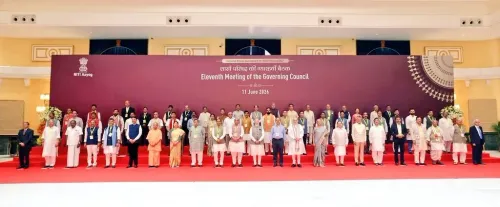
NITI Aayog Governing Council meetings and any forthcoming revisions to royalty formulas or industrial incentive frameworks for eastern states will be the immediate policy arenas to watch. CM Soren's public articulation of this position — directed explicitly at NITI Aayog — signals that Jharkhand intends to press this agenda through formal federal channels rather than limit it to electoral rhetoric.
If the Union government responds with concrete policy adjustments — whether through revised DMF utilisation norms, preferential industrial corridors, or updated mineral royalty formulas — Jharkhand's model could set a precedent for how India's resource-rich but development-lagging states are integrated into the national growth story.
Point of View
He is turning the Union's own development vocabulary back on the Centre. The explicit linkage of industry to employment and growth to justice is not new for JMM, but directing it publicly at NITI Aayog elevates it from campaign rhetoric to a formal policy demand. This fits a broader pattern among mineral-rich eastern states seeking structural remedies — better royalty sharing, downstream industrial incentives — rather than one-off grants. The political calculus is clear: if the Centre aspires to a developed India by 2047, it cannot afford to leave its resource base states behind.
NationPress
26 Oct 2026
Frequently Asked Questions
What did CM Hemant Soren say to NITI Aayog about Jharkhand?
CM Hemant Soren stated that Jharkhand must be treated as a development partner — not just a source of mineral extraction — and that industry must be linked to local employment while development must be grounded in justice.
Why does Jharkhand demand a larger share of mining revenues?
Jharkhand holds vast coal and iron ore reserves but has historically seen limited local employment and human development gains from extraction, prompting successive state governments to demand higher royalties and downstream industrial investment.
What is the District Mineral Foundation and how does it help Jharkhand?
District Mineral Foundations were introduced under the 2015 MMDR Act amendments to channel a portion of mining royalties toward communities affected by extraction, though states like Jharkhand argue the mechanism does not fully address structural development gaps.
What is NITI Aayog's role in centre-state development disputes?
NITI Aayog, established in 2015, promotes cooperative federalism by coordinating policy between the Union and states; its Governing Council meetings are a key forum where states like Jharkhand press demands on fiscal and industrial policy.
What does JharkhandSeJohar mean and why was it used?
'Johar' is a traditional greeting among tribal communities in Jharkhand; the hashtag #JharkhandSeJohar is used by the state government to assert Jharkhand's distinct identity and signal pride in its tribal heritage while engaging on national policy platforms.