Hemant Soren raises ₹1.36 lakh crore coal dues, key demands at NITI Aayog meet
Synopsis
At the NITI Aayog Governing Council meeting chaired by PM Modi, Jharkhand CM Hemant Soren put a ₹1.36 lakh crore coal dues demand on the table — a figure that underscores how much the Centre owes mineral-rich states even as it pitches 'Viksit Bharat 2047'. From medical colleges to a sports university, Soren's list reveals the depth of Jharkhand's infrastructure deficit.
Key Takeaways
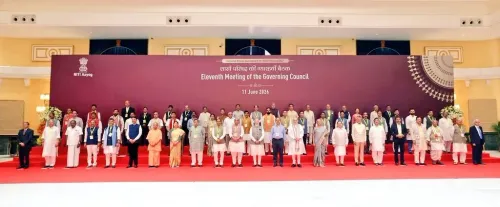
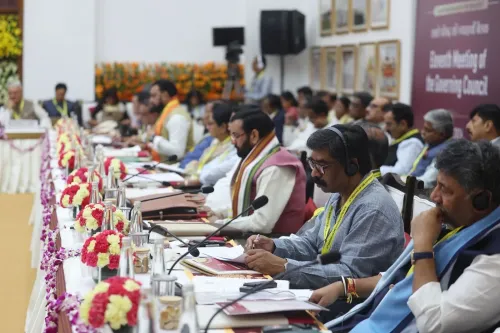
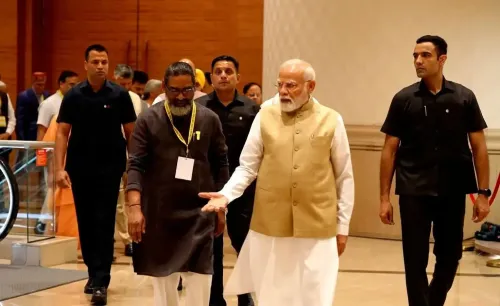
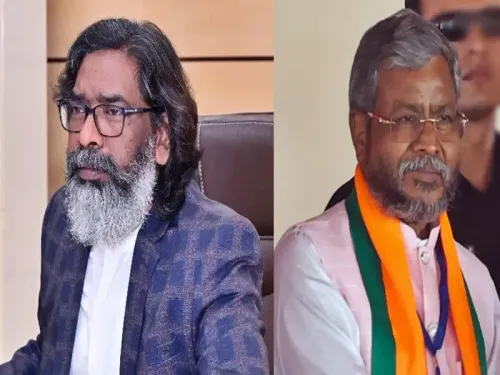
Jharkhand CM Hemant Soren raised long-pending state demands at the NITI Aayog Governing Council meeting on 11 June , chaired by PM Narendra Modi .
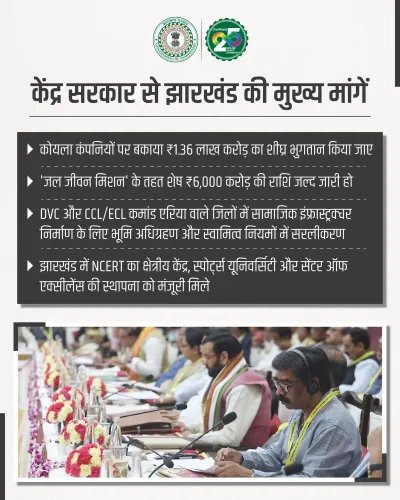
Soren demanded clearance of approximately ₹1.36 lakh crore in outstanding dues owed by coal companies to Jharkhand.
He called for release of pending Jal Jeevan Mission funds and approval of 2 remaining medical colleges under the PPP model.
Soren urged the Centre to simplify land acquisition in districts under DVC , CCL , and ECL operational zones.
He proposed 5,000 model schools , a regional NCERT centre , more PM SHRI schools , and a sports university for Jharkhand.
Soren linked Jharkhand's mineral and human resource potential to the Centre's Viksit Bharat 2047 vision.
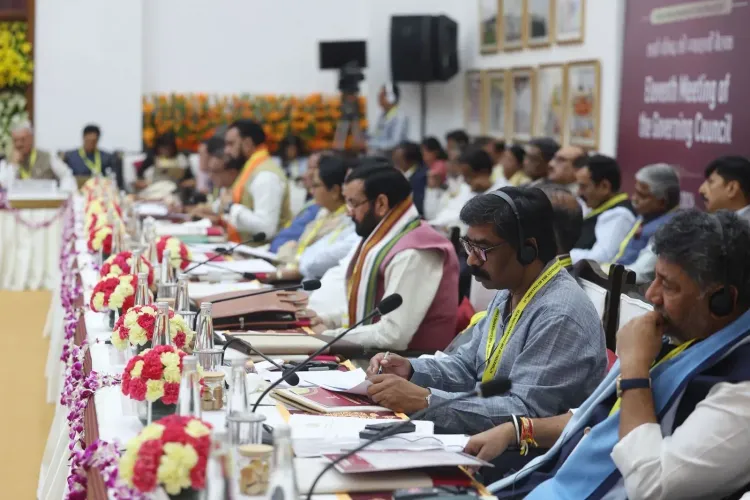
Jharkhand Chief Minister Hemant Soren on Thursday, 11 June raised a series of long-pending demands before the NITI Aayog Governing Council, chaired by Prime Minister Narendra Modi in New Delhi, urging the Centre to clear outstanding dues and accelerate development projects in the state. Among the most pressing demands was the release of approximately ₹1.36 lakh crore owed by coal companies to Jharkhand, along with the disbursement of pending funds under the Jal Jeevan Mission.
Key Demands Raised
Soren called on the Centre to simplify land acquisition procedures, particularly in districts falling within the operational zones of central public sector undertakings such as DVC, CCL, and ECL. He argued that procedural bottlenecks in land-related matters were hampering the development of social infrastructure in these regions.
The Chief Minister also pressed for approval of the remaining two of six proposed medical colleges under the PPP model, describing them as essential to expanding healthcare and medical education access across the state.
Beyond Minerals: Jharkhand's Development Vision
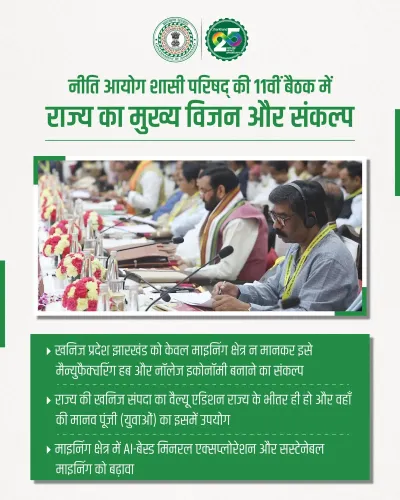
Soren urged the Centre not to view Jharkhand solely as a mineral-producing state, but to recognise its potential as a hub for industry, manufacturing, and a knowledge-based economy. He stressed the importance of value addition of mineral resources within the state rather than their export in raw form, and sought Centre support for industries based on critical minerals.
He also called for investment promotion in sectors including textiles, electronics, green energy, logistics, and agro-food processing, and advocated for the establishment of research institutions and innovation centres in Jharkhand.
Education, Health and Skill Development
Highlighting the state government's ongoing initiatives, Soren proposed increasing the number of PM SHRI schools and Kendriya Vidyalayas in Jharkhand, and requested the establishment of a regional centre of the NCERT in the state. He noted that the government is working toward developing 5,000 model schools.
On skill development, he said that under the Sarathi scheme, lakhs of youth have been trained and are being prepared for emerging sectors such as artificial intelligence, drones, electric vehicles, and solar energy.
Sports and Infrastructure Push
Soren also requested Centre support for establishing a sports university and centres of excellence in Jharkhand, along with opportunities to host national and international sporting events. This comes amid a broader push by several states to leverage sports infrastructure for youth employment and regional visibility.
Notably, Soren framed Jharkhand's mineral wealth, human resources, and agricultural potential as central to realising the 'Viksit Bharat 2047' vision — signalling an attempt to align state priorities with the Centre's flagship long-term development agenda. Whether the Centre acts on these demands will be closely watched in the months ahead.
Point of View
But it sits awkwardly alongside the state's persistent infrastructure deficits in health and education. The real question is whether the Governing Council translates these representations into time-bound commitments or files them as yet another round of federal dialogue without follow-through. For a state that contributes disproportionately to national coal output, the gap between resource extraction and local development remains a credibility test for cooperative federalism.
NationPress
27 Sept 2026
Frequently Asked Questions
What did Jharkhand CM Hemant Soren demand at the NITI Aayog meeting?
Soren demanded clearance of around ₹1.36 lakh crore in dues owed by coal companies to Jharkhand, release of pending Jal Jeevan Mission funds, approval for two remaining PPP medical colleges, more PM SHRI schools and Kendriya Vidyalayas, and support for a sports university and innovation centres.
Why is the ₹1.36 lakh crore coal dues issue significant for Jharkhand?
Jharkhand is one of India's largest coal-producing states, and the outstanding dues from central coal companies represent a major fiscal grievance. The state argues that these unpaid dues have constrained its ability to fund local infrastructure and social services.
What is the Sarathi scheme mentioned by CM Soren?
The Sarathi scheme is a Jharkhand government skill development initiative under which lakhs of youth have reportedly been trained for emerging sectors including artificial intelligence, drones, electric vehicles, and solar energy.
How does Soren's pitch connect to the Viksit Bharat 2047 vision?
Soren argued that Jharkhand's mineral wealth, agricultural potential, and human resources — if properly developed — could make the state a significant contributor to the Centre's Viksit Bharat 2047 long-term development goal, using the national framework to strengthen his case for federal support.
Which central PSUs operate in Jharkhand and why are they relevant to land acquisition?
DVC (Damodar Valley Corporation), CCL (Central Coalfields Limited), and ECL (Eastern Coalfields Limited) operate across several Jharkhand districts. Soren said complex land-related procedures in these PSU zones are blocking social infrastructure development and called for simplification.